MAPS OF HISTORY · IB HISTORY · PAPER 2 · CONFLICT
IB HISTORY · PAPER 2 · THEMATIC STUDY
Paper 2: Conflict
Conflict is one of the four Paper 2 Thematic Studies of the new IB History course, first examined in May 2028, and it draws its examples from 750 onwards. The theme is about wars, revolutions and civil conflicts: why they broke out, what decided them, what they did to the people caught in them, and how they ended. It is organised around four questions, and a strong essay uses examples from more than one region, so under each question below the chapters are grouped by region.
Open any chapter listed here in its atlas and its IB notes offer evidence to quote, primary sources and a practice question with a model essay plan. Between them they cover twenty chapters in four atlases, set in Europe, the Americas, Asia and Oceania, and Africa and the Middle East.
WW2 is free in full, and chapter 1 of every atlas is free. A free account opens 3 more chapters a day. Opening a new atlas uses one of them. Membership opens all 21 — Join.
1. Why did conflict emerge?
3 CHAPTERS WITH IB NOTES · 3 REGIONS
Europe
- A State at War with ItselfREMAKING THE STATE · CHAPTER 11 · 1994–1998
On 15 February 1994 Tatarstan signed a treaty with Moscow that kept the republic inside Russia. Russians made up about two-fifths of its population, and the agreement left Tatarstan extensive control over its oil, budget, and much of its law. Bargaining had held this part of the federation together.— Remaking the State, chapter 11: A State at War with Itself
The Americas
- The Flower Wars and the End of the SystemCLIMATE AND INNOVATION · CHAPTER 11 · 1450s–1521
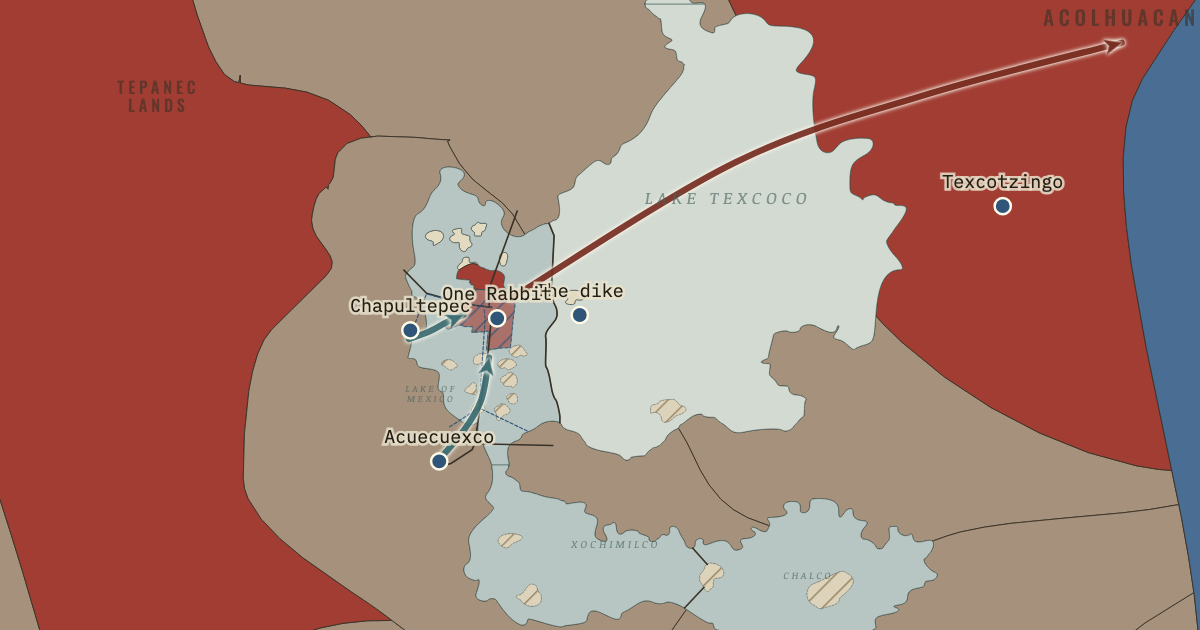
According to Alva Ixtlilxochitl, the Triple Alliance agreed in 1454 to fight Tlaxcala, Huexotzinco and Cholula in ritual flower wars to take captives. Ross Hassig interprets these wars as a form of attrition; Barry Isaac sees the ritual explanation as a cover for failure to conquer.— Climate and Innovation, chapter 11: The Flower Wars and the End of the System
Asia and Oceania
- A Great PowerREMAKING THE STATE · CHAPTER 6 · 1894–1912
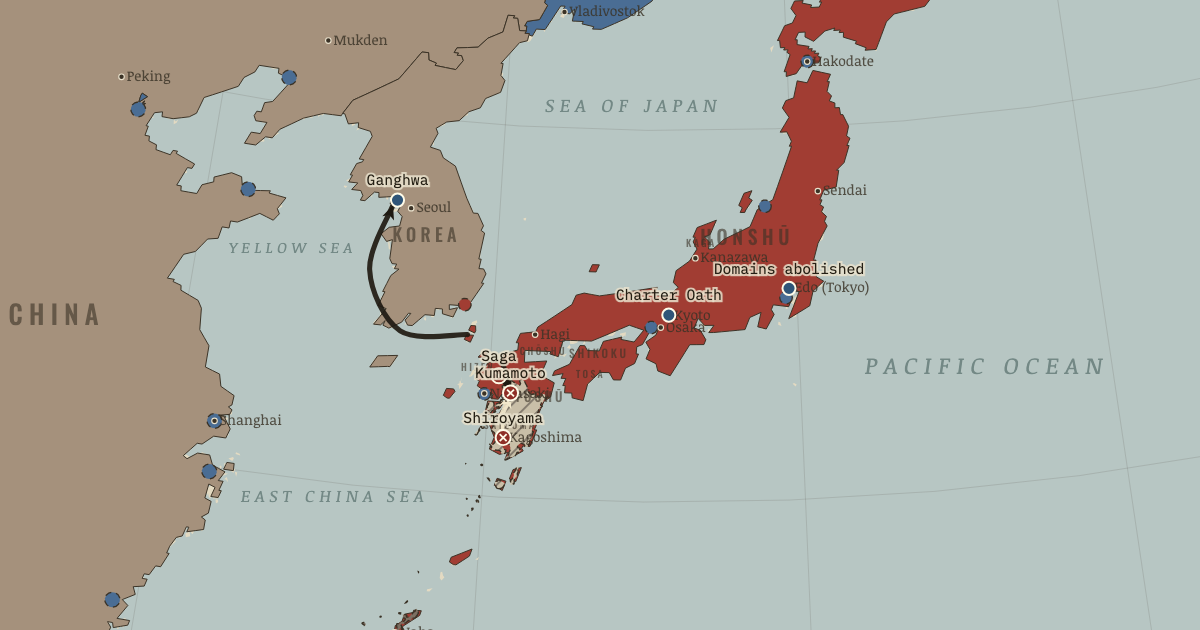
In 1894, a Donghak peasant rebellion prompted Korea to ask China for troops. Japan sent a larger force and seized the royal palace in Seoul. It declared war in August: Japanese leaders considered control of Korea vital to their country’s security.— Remaking the State, chapter 6: A Great Power
2. What determined the outcome?
4 CHAPTERS WITH IB NOTES · 2 REGIONS
The Americas
- The Flower Wars and the End of the SystemCLIMATE AND INNOVATION · CHAPTER 11 · 1450s–1521
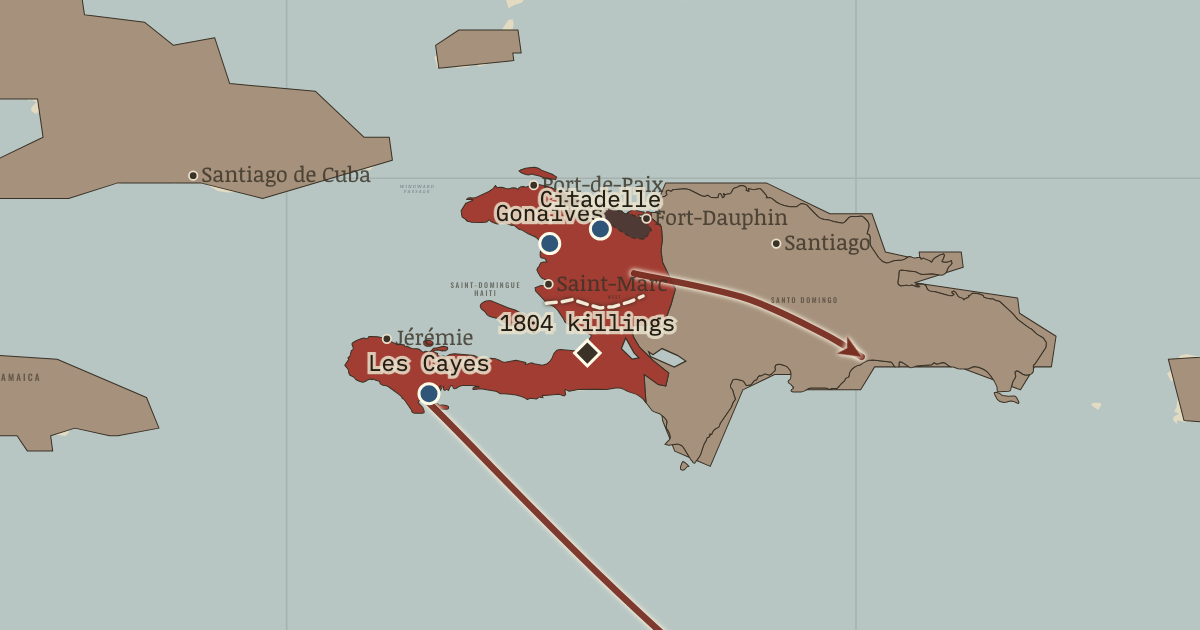
- Toussaint LouvertureTWO ROADS TO INDEPENDENCE · CHAPTER 3 · 1793–1801
- Napoleon’s ExpeditionTWO ROADS TO INDEPENDENCE · CHAPTER 4 · 1802–1803
Around 1478–79, the Tarascan kingdom destroyed a Mexica army near Taximaroa. The frontier remained fortified for the rest of the empire’s life: the Mexica fortress at Oztuma faced Tarascan strongholds.— Climate and Innovation, chapter 11: The Flower Wars and the End of the System
Asia and Oceania
- The Fall of the ShogunateREMAKING THE STATE · CHAPTER 3 · 1858–1869
Chōshū founded the Kiheitai in 1863, training samurai, farmers and townsmen together with modern rifles. In early 1865 Takasugi Shinsaku used such mixed-class units to retake the domain from conservatives. Recruiting beyond the samurai had given Chōshū a stronger army.— Remaking the State, chapter 3: The Fall of the Shogunate
3. How did conflict affect people’s lives?
12 CHAPTERS WITH IB NOTES · 4 REGIONS
Europe
- A State at War with ItselfREMAKING THE STATE · CHAPTER 11 · 1994–1998
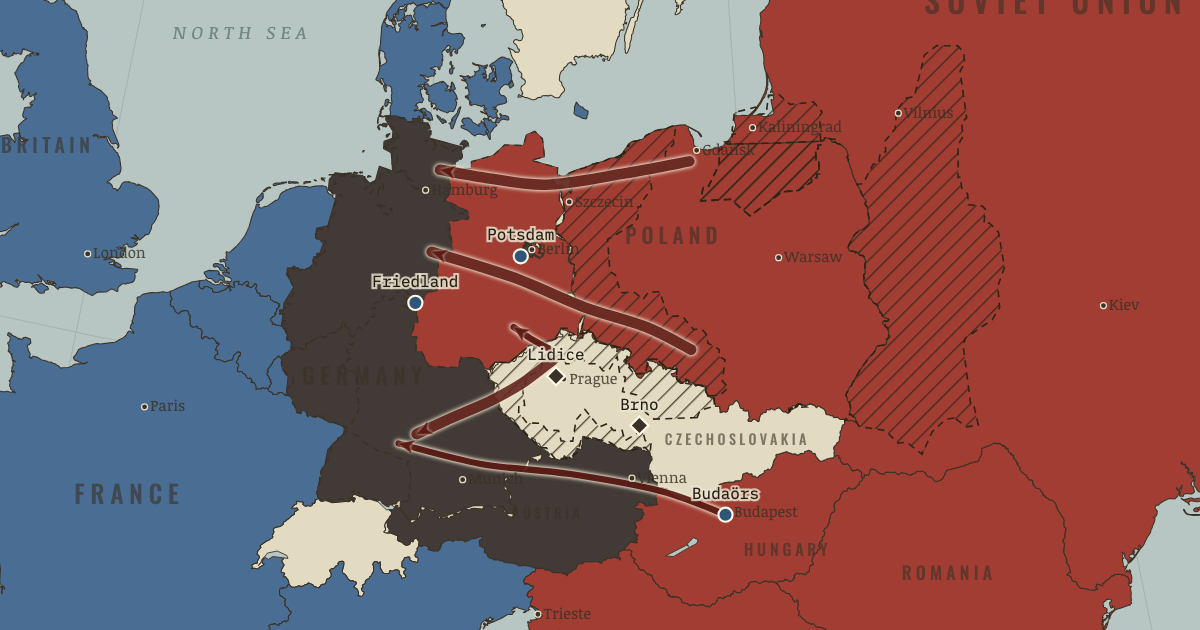
- Europe UprootedUPROOTED · CHAPTER 1 · MAY 1945
- The Expulsions of GermansUPROOTED · CHAPTER 2 · 1945–1950
- Borders Move, People FollowUPROOTED · CHAPTER 3 · 1944–1950
- The DP CampsUPROOTED · CHAPTER 4 · 1945–1947
- Integration and the Cold WarUPROOTED · CHAPTER 6 · 1950–1961
Russian forces took Grozny by March 1995 through artillery and air bombardment. Tens of thousands of civilians were killed, among them many older ethnic Russians. Estimates of the dead in the whole 1994–96 war range from about 35,000 to 100,000; most were civilians.— Remaking the State, chapter 11: A State at War with Itself
Asia and Oceania
- A Great PowerREMAKING THE STATE · CHAPTER 6 · 1894–1912
- Communist VictoryUPROOTED · CHAPTER 7 · 1975
- Re-education and FlightUPROOTED · CHAPTER 8 · 1975–1978
- The Boat PeopleUPROOTED · CHAPTER 9 · 1978–1979
Taiwanese defenders proclaimed a short-lived Republic of Formosa and resisted Japan’s conquest for five months in 1895. Japanese records count about 14,000 Taiwanese killed. Japan had acquired its first colony by force from a population that fought back.— Remaking the State, chapter 6: A Great Power
Africa and the Middle East
- The EmergencyTWO ROADS TO INDEPENDENCE · CHAPTER 9 · 1952–1960
Beginning in June 1954, villagisation moved over a million people into some 800 guarded villages. Caroline Elkins counts 1,050,899 people. By moving them, the authorities cut the forest fighters off from food and recruits.— Two Roads to Independence, chapter 9: The Emergency
More than one region
- Two Crises ComparedUPROOTED · EPILOGUE · 1945–1990
In 1956 UNHCR recognized Hungarians as refugees as a group, without individual hearings. Under the 1989 Comprehensive Plan of Action (CPA), arrivals after the cut-off underwent individual screening; about 28 percent were recognized.— Uprooted, chapter 12: Two Crises Compared
4. How was peace established?
6 CHAPTERS WITH IB NOTES · 3 REGIONS
Europe
- The Expulsions of GermansUPROOTED · CHAPTER 2 · 1945–1950
- Borders Move, People FollowUPROOTED · CHAPTER 3 · 1944–1950
- From Relief to RightsUPROOTED · CHAPTER 5 · 1947–1952
British support for mass transfer was already evident before the war ended. On 15 December 1944 Churchill told the House of Commons that expulsion was the most “satisfactory and lasting” method and that “a clean sweep will be made”.— Uprooted, chapter 2: The Expulsions of Germans
The Americas
- The Price of RecognitionTWO ROADS TO INDEPENDENCE · CHAPTER 6 · 1825–1947
Under the treaty of 12 February 1838, France recognised Haiti outright and reduced the unpaid balance to 60 million francs. The total indemnity was now 90 million francs, payable over thirty years.— Two Roads to Independence, chapter 6: The Price of Recognition
Asia and Oceania
- Geneva and the US ResponseUPROOTED · CHAPTER 10 · 1979–1982
- Camps, Screening and the CPAUPROOTED · CHAPTER 11 · 1980–1990
The US Refugee Act of 17 March 1980 adopted the Convention definition of a refugee, set a normal annual ceiling of 50,000 admissions, and created the Office of Refugee Resettlement.— Uprooted, chapter 10: Geneva and the US Response
Practice questions and essay plans
What would your answer be? Make a plan for each question, then compare it with the outline. The outline gives a thesis and a claim for each paragraph. For evidence, a counter-argument and a judgement, see the full plans in the chapters’ IB notes in each atlas.
PAPER 2 · CLIMATE AND INNOVATION · CHAPTER 11
To what extent was Indigenous opposition to the Mexica the main reason for the fall of Tenochtitlan in 1521?
Indigenous opposition was the main reason Tenochtitlan fell: it gave the Spaniards an army, a base and local knowledge that their few hundred men lacked. Smallpox and the lake city’s vulnerability accelerated the outcome, while Spanish ships and steel mattered most in combination with allied manpower.
Indigenous allies furnished both an army and a refuge.
Smallpox weakened Tenochtitlan before the siege began.
The lake city’s connections gave the besiegers targets.
The evidence for each point, the counter-argument and the judgement are in the IB notes of chapter 11 in the atlas. Read the chapter first: The Flower Wars and the End of the System.
PAPER 2 · TWO ROADS TO INDEPENDENCE · CHAPTER 3
How important was Toussaint Louverture’s leadership to the defeat of Spain and Britain in Saint-Domingue between 1794 and 1798? Evaluate its importance.
Toussaint’s leadership was the most important single factor. He built an army and made alliances that gave French emancipation the force of a military victory. Yet he relied on conditions he had not created: yellow fever, Spain’s departure from the war, and the emancipation policy that secured his army’s loyalty to the Republic.
Toussaint created a disciplined army and kept it together.
Toussaint used diplomacy to deal with his rivals.
His opponents were also weakened by forces outside his control.
The evidence for each point, the counter-argument and the judgement are in the IB notes of chapter 3 in the atlas. Read the chapter first: Toussaint Louverture.
PAPER 2 · REMAKING THE STATE · CHAPTER 3
Assess why Satsuma and Chōshū succeeded in overthrowing the shogunate between 1863 and 1869.
By 1868 Satsuma and Chōshū had brought together three advantages: modern rifles and armies recruited beyond the samurai, a claim to the emperor’s authority, and an alliance between former rivals. Military organization helped decide the battles; the imperial banner helped determine how few domains would fight for the shogun. The shogunate’s own decisions also contributed to its defeat.
Military reform allowed the south-western domains to fight above their size.
The emperor’s authority gave the opposition legitimacy and divided the shogun’s camp.
The alliance brought together rivals whose division had protected the shogunate.
The evidence for each point, the counter-argument and the judgement are in the IB notes of chapter 3 in the atlas. Read the chapter first: The Fall of the Shogunate.
PAPER 2 · UPROOTED · CHAPTER 1
Examine why the end of the Second World War in Europe led to mass displacement.
Mass displacement at the war’s end had several connected causes. Nazi labor and population policies had already uprooted millions; the collapse of the eastern front sent German civilians fleeing; and Allied decisions at Yalta shaped further movements across borders. The end of fighting brought returns as well as new removals, some planned before surrender.
Nazi policy had uprooted millions before Germany surrendered.
As the eastern front collapsed, German civilians began a second mass movement west.
Allied wartime agreements gave further population movements a place in the peace.
The evidence for each point, the counter-argument and the judgement are in the IB notes of chapter 1 in the atlas. Read the chapter first: Europe Uprooted.
Key concepts
These are the concepts the IB notes of the twenty chapters above name most often for this theme, with chapters to read for each.
- Consequence · 12 CHAPTERS
What followed from an event or decision, intended and unintended, in the short and the long term. For example: The Flower Wars and the End of the System, Napoleon’s Expedition, The Price of Recognition, The Emergency. - Causation · 10 CHAPTERS
Why something happened: the long-term conditions, the triggers and the choices behind it, and which of them mattered most. For example: The Flower Wars and the End of the System, Napoleon’s Expedition, The Fall of the Shogunate, A State at War with Itself. - Significance · 9 CHAPTERS
Why an event, person or idea matters, judged by its effects and by how it has been remembered. For example: Toussaint Louverture, The Price of Recognition, The Emergency, A Great Power. - Perspectives · 9 CHAPTERS
How people at the time, and historians since, have seen the same events differently, and why. For example: The Flower Wars and the End of the System, Toussaint Louverture, The Emergency, The Expulsions of Germans. - Change · 8 CHAPTERS
What was different afterwards, how quickly it changed, and for whom. For example: Toussaint Louverture, The Fall of the Shogunate, The DP Camps, From Relief to Rights. - Continuity · 5 CHAPTERS
What stayed the same through an apparent upheaval, and why it survived. For example: The Price of Recognition, Borders Move, People Follow, Integration and the Cold War, Camps, Screening and the CPA.
More atlases for this theme
These atlases are filed under Conflict. An “IB notes” mark means that every chapter has those notes. The other atlases cover the theme in their chapters; each has an IB History page with study notes and essay questions.
Two refugee crises, forty years apart
A slave revolution and a colony’s Emergency, side by side
How Japan and Russia changed their systems
The Norse and the Aztecs
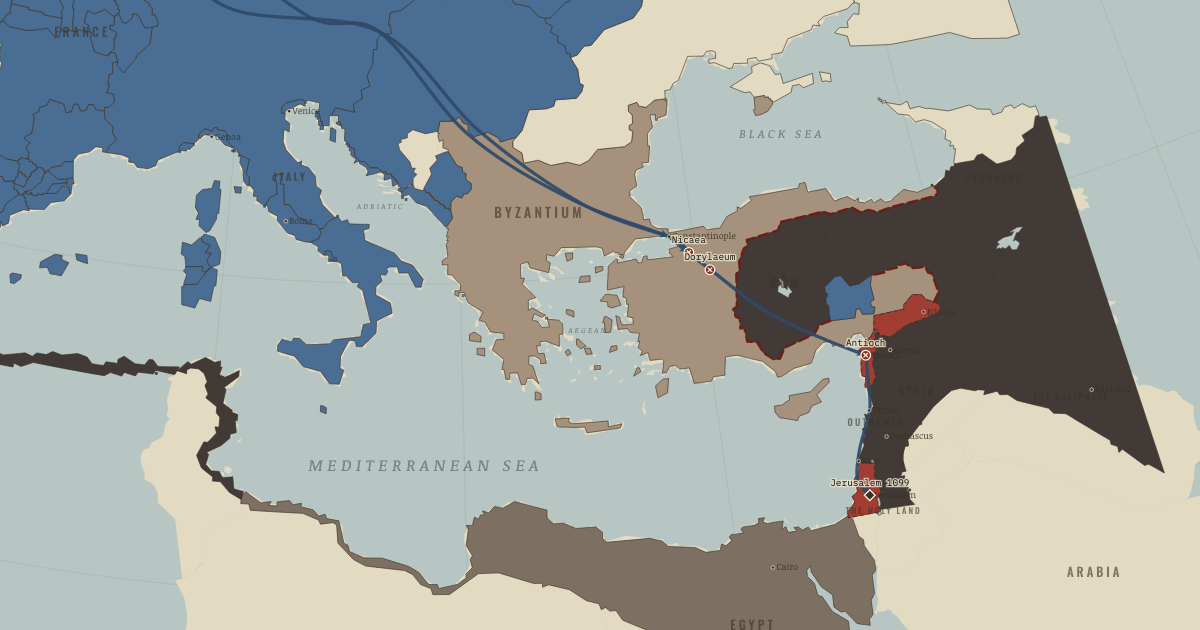
Two centuries of war for the Holy Land
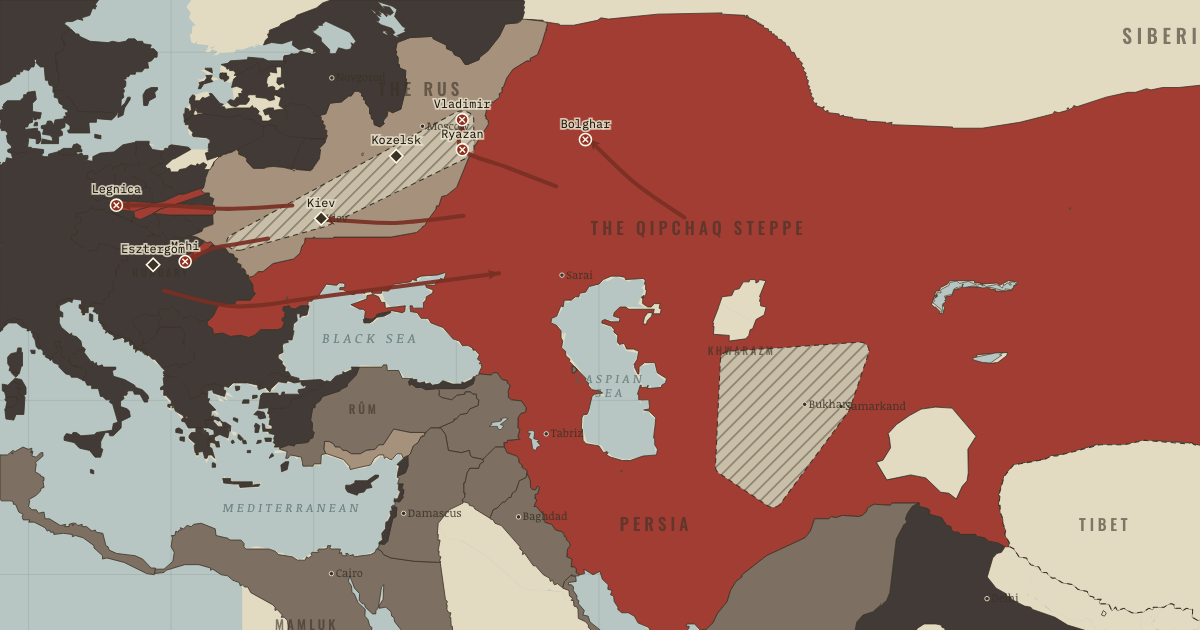
Genghis Khan and the largest land empire in history
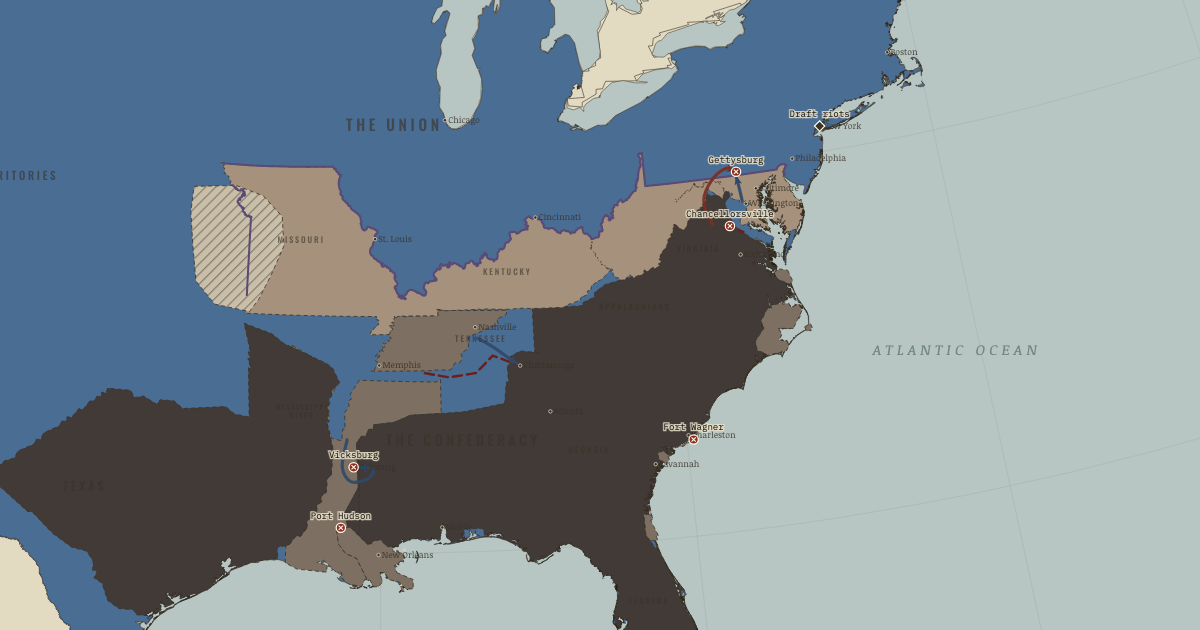
From the Mexican War to Reconstruction
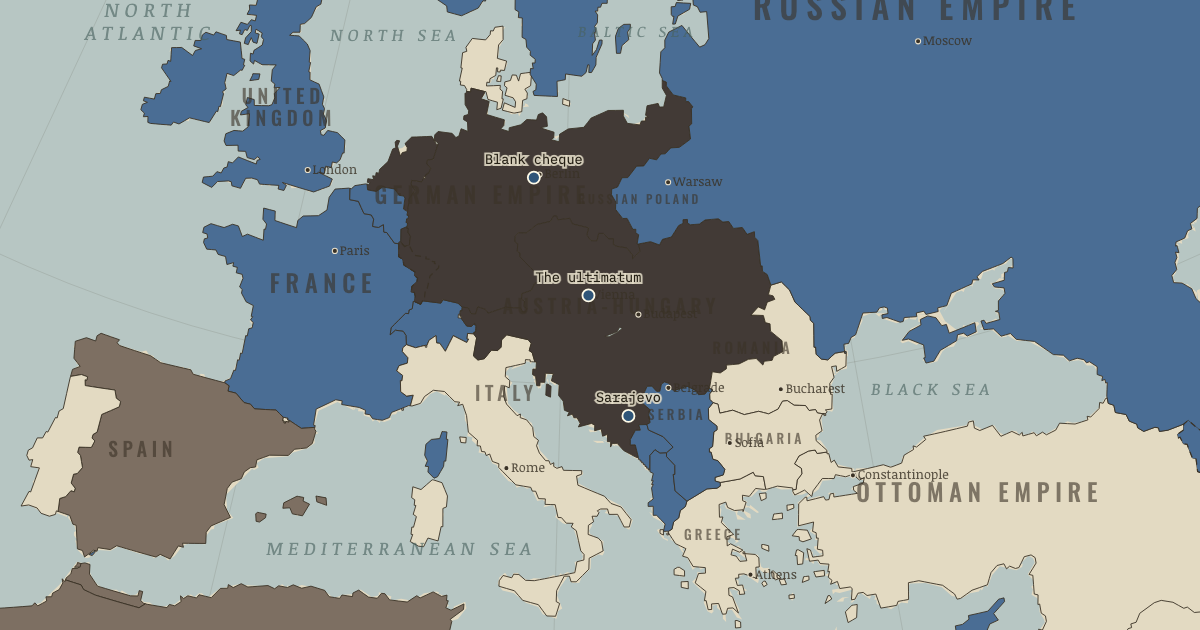
From Bismarck’s blocs to the map of 1923
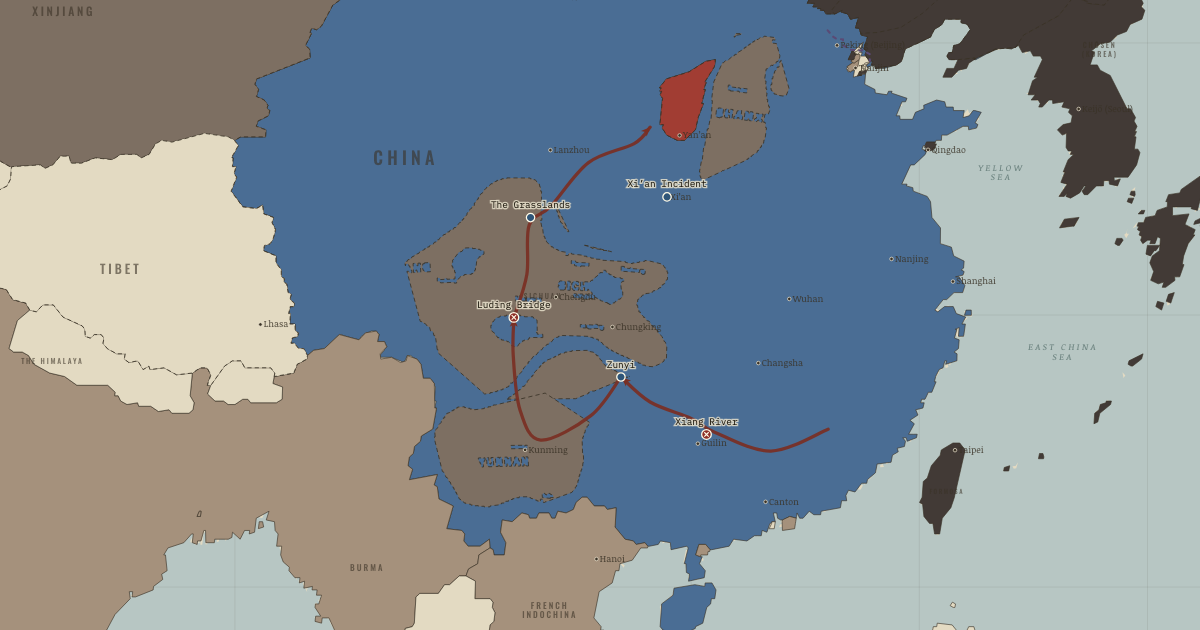
From the last emperor to the People’s Republic
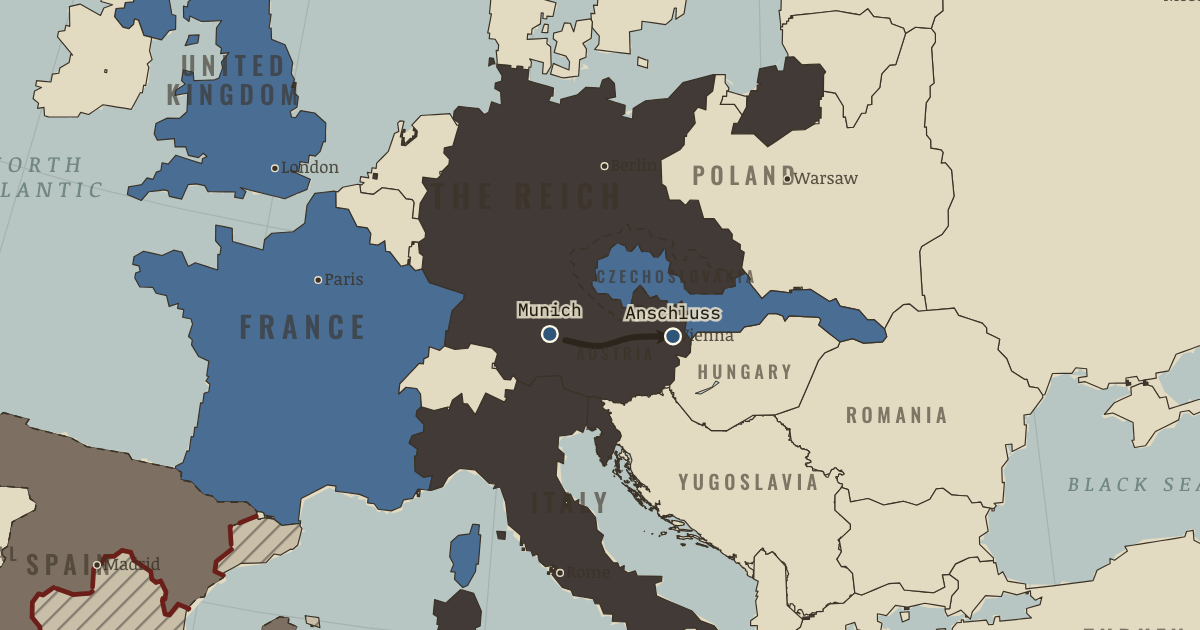
How the 1930s led to the Second World War
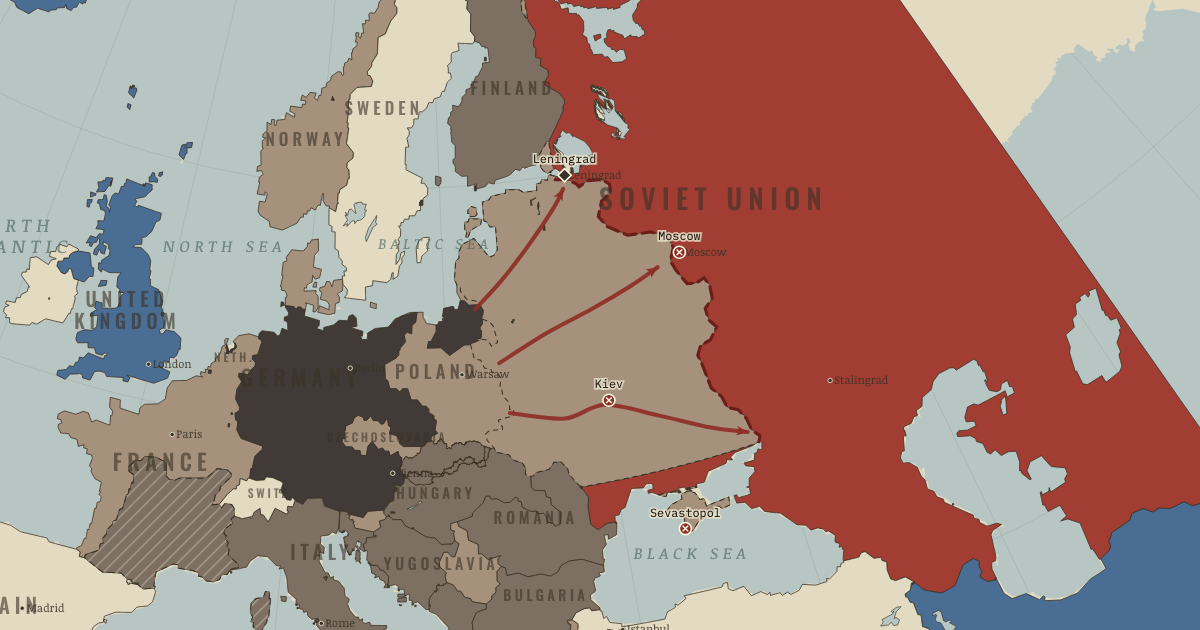
From the Rhineland to Hiroshima
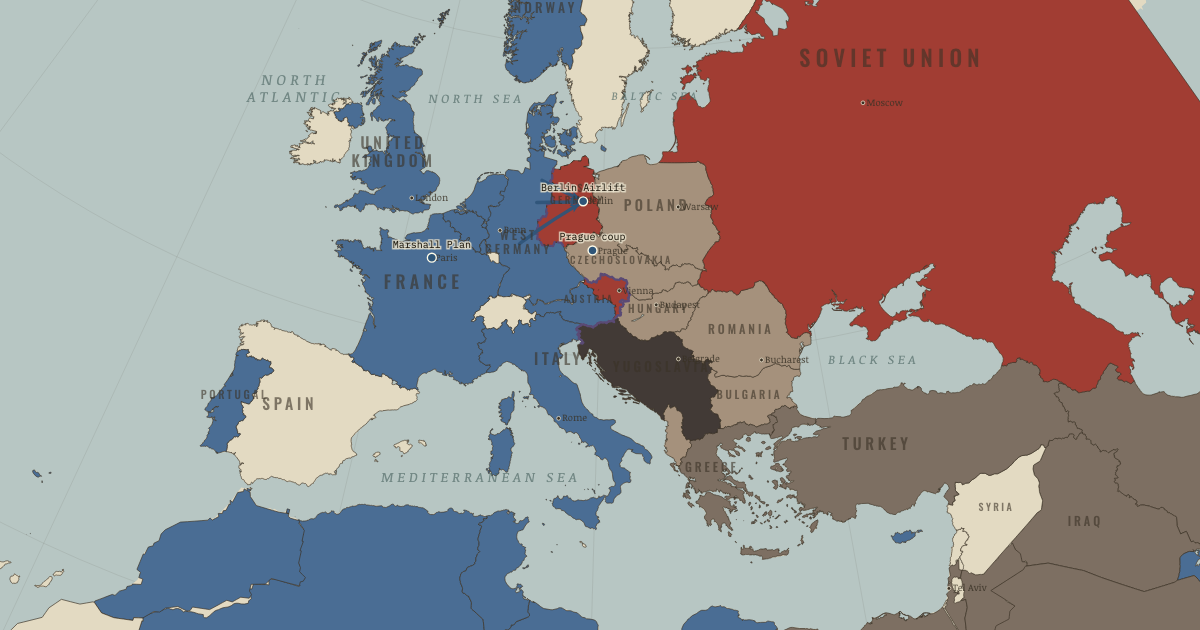
The United States, the Soviet Union and their rivalry
How each began and what it left
The atlases without IB notes still answer the first and last questions of any theme: each opening chapter argues why its story began, and each closing chapter what it left behind. Here are those arguments in headline form, with the chapters that make them in full.
The Crusades
1095 – 1291 · 12 CHAPTERS
How it began. Three Civilizations, One Sea: Manzikert and the Byzantine appeal · The Seljuk fracture · The reform papacy and the Peace of God · Jerusalem and the pull of pilgrimage
What it left. What the Crusades Made: A catastrophe for Europe’s Jews · A maimed Byzantium, an advancing Islam · A word that would not die
The Mongol Empire
1206 – 1294 · 12 CHAPTERS
How it began. The World of the Steppe: Pasture and mobility · The bow and the hunt · The Jin frontier · Feuds and pressure on pasture
What it left. The Long Shadow: Successor states and Mongol authority · Routes toward the sea · Return to the map
The American Civil War
1840 – 1877 · 13 CHAPTERS
How it began. Manifest Destiny and the Mexican War: Land hunger and an ideology of destiny · Polk’s determination to have California · A Mexican state at its weakest · Texas and the politics of slavery
What it left. Memory and Meaning: The Union and abolition endure · Citizenship remains contested · Follow a change on the map
The First World War
1871 – 1923 · 15 CHAPTERS
How it began. Bismarck’s Europe and the Two Blocs: A new giant in the middle of Europe · Alsace-Lorraine and the French grievance · The Eastern Question · The Kaiser’s new course
What it left. The New Map of Europe: Guardians and revisionists · Minorities as pretexts · Hyperinflation and the radical right · From Lausanne to the next war
China in Revolution
1911 – 1949 · 12 CHAPTERS
How it began. The Fall of the Qing: Defeats that accumulated · Reform and its consequences · The railway dispute · A revolutionary idea already in place
What it left. The People’s Republic: Governing after victory · Two governments endure · Revolutionary methods abroad
The Road to War
1931 – 1941 · 12 CHAPTERS
How it began. The World the Slump Made: The Depression and a closing world · The Washington order and its limits · The army and the cabinet · China’s divided position
What it left. Pearl Harbor: The Roads Meet: The perimeter, then the tide · The arsenal opens both doors · Asia’s empires never come back
The Second World War
1936 – 1945 · 15 CHAPTERS
How it began. The Gathering Storm: Versailles and Nazi revisionism · Depression and political weakness · Memory of 1914–18 · Failed collective security
What it left. The World the War Made: The long peace — under a mushroom cloud · Never again — the unfinished project
The Cold War
1945 – 1991 · 12 CHAPTERS
How it began. The World the War Left: The security dilemma — two rational fears · Ideology made compromise read as defeat · Poland: the test case that failed · A power vacuum with two occupants
What it left. The End — and the Arguments: Who ended it? The four-way argument · What the new map inherits · The ledger of the “long peace”
On the old course (2027 exams)
Students sitting the old course in 2027 will find the closest match in these world history topics, which our IB notes also tag:
- World history topic 11: Causes and effects of 20th-century wars · 3 CHAPTERS
Uprooted, The People’s Republic under Mao - World history topic 12: The Cold War: superpower tensions and rivalries (20th century) · 5 CHAPTERS
The Soviet Union under Stalin, Uprooted, The People’s Republic under Mao
The old-course page lists every chapter by topic.
Revision tools
Test yourself on the atlases with IB notes for this theme. Each atlas ends with a map quiz that asks you to find places and moments on the map itself; the quick quiz and the printable study guide are free pages on this site.
- Uprooted: Refugees in Europe and Indochina
MAP QUIZ · QUICK QUIZ · PRINTABLE STUDY GUIDE - Two Roads to Independence: Haiti and Kenya
MAP QUIZ · QUICK QUIZ · PRINTABLE STUDY GUIDE - Remaking the State: Meiji Japan and Post-Soviet Russia
MAP QUIZ · QUICK QUIZ · PRINTABLE STUDY GUIDE - Climate and Innovation
MAP QUIZ · QUICK QUIZ · PRINTABLE STUDY GUIDE
Maps of History is independent and is not affiliated with or endorsed by the International Baccalaureate Organization. IB course names describe alignment only; paper, theme and section names follow the new course outline and may change when the final guide is published.
THE DISPATCH
Get the printable study guide for Uprooted free. I’ll send you a few short letters, then one when a new atlas opens. That’s all. — Paul
NO TRACKING · YOUR ADDRESS IS USED FOR THE DISPATCH AND NOTHING ELSE · UNSUBSCRIBE ANYTIME