Why did the Soviets choose to defend first at Kursk?
The seminar question: “Why did Soviet commanders choose to receive the German attack at Kursk before counterattacking?”
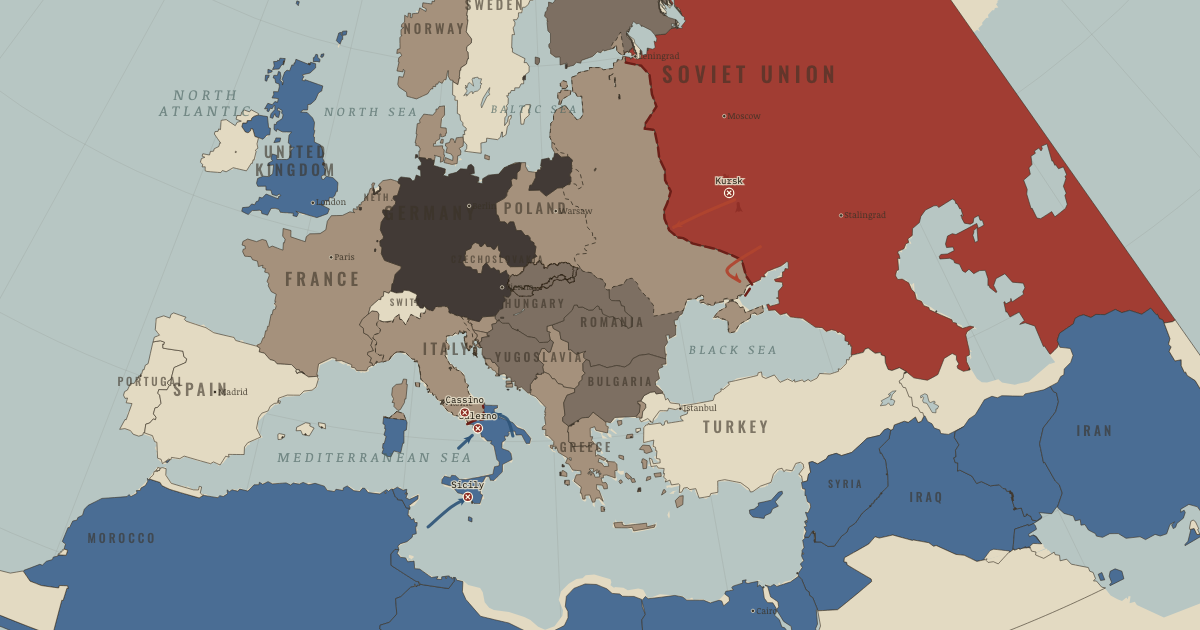
In July 1943 Germany attacked the Kursk salient, but Soviet forces, warned months in advance, had built deep defensive belts that halted the attack, and by autumn the Red Army reached the Dnieper. That month the Allies landed in Sicily; Mussolini was voted out and arrested, and Italy signed an armistice in September.
The front at Kursk offered Germany an appealing target. Soviet territory projected into German-held ground in a large salient, and attacks from north and south might meet behind it, trapping the forces inside. After Stalingrad, such a victory in Operation Citadel promised to restore confidence in Germany’s ability to take the initiative. Its very shape, however, made the likely target apparent. Soviet intelligence supplied warning, and German delays while awaiting new tanks gave Soviet commanders more time to prepare.
The short answer
A victory after defeat. Stalingrad and Tunis had damaged German standing. Berlin wanted its allies, neutral states and its own public to see that Germany could still seize the initiative. Kursk offered a conspicuous opportunity, even though victory there could not itself win the war; standing still risked displaying weakness.
Warning and preparation. Moscow received warning from the Lucy spy ring and British Ultra decrypts. The salient itself suggested where an attack might come, and German delays while awaiting new tanks allowed further preparation. Soviet commanders used the time to build defenses and gather reserves for a counterattack.
The Mediterranean compromise. The Allies had to decide where they could fight next. At Casablanca, Americans wanted an invasion of France in 1943; the British judged Sicily more realistic given the available shipping and experience. The Mediterranean compromise would maintain pressure, seek Italy’s exit and draw German divisions south while the invasion of France waited until 1944.
THE TURNING POINT
Prokhorovka and the halt order, 12–13 July. On 12 July the southern German attack met a Soviet reserve tank army near Prokhorovka. Hitler also received news of the Sicily landings. He halted Citadel and considered the need for forces elsewhere. Germany had failed to encircle the Soviet forces, and Soviet counteroffensives would carry the initiative westward.
What it changed
The retreat west. Soviet counteroffensives carried the Red Army toward the Dnieper in autumn; Kiev fell in November. The war was moving west, and Germany had to defend a long front against continuing Soviet attacks.
Italy’s divided war. Italy’s armistice left a divided country at war. Allied and co-belligerent Italian forces fought from the south; in German-occupied territory, Mussolini’s Salò Republic fought Italian partisans. The Gustav Line divided the opposing forces in the campaign. The civil war within the wider conflict left scars long after 1945.
Experience for another landing. Sicily and Salerno gave the Allies experience in amphibious command and naval gunfire, as well as mistakes to learn from. That experience helped prepare the invasion of Normandy in 1944.
The full answer, argued
Soviet commanders expected their prepared belts to slow the Germans and inflict losses before the reserves counterattacked. The choice required them to accept lost ground and trust the defenses to hold. They had the depth and replacements to absorb the blow and then attack an enemy that had spent strength trying to break through.
An interesting fact
The story of Prokhorovka changed when Soviet archives became available. For decades the battle had been celebrated as a great tank clash that bled both sides equally. On 12 July the attacking 5th Guards Tank Army lost an estimated 200–300 armored vehicles, dozens in an anti-tank ditch dug by its own engineers; German losses were a small fraction of that. Stalin convened a commission and considered court-martialing the tank army’s commander, although the heroic account survived. The Red Army could absorb that costly day and continue its advance; the German panzer force could less readily afford even its smaller losses.