Russian Revolution · JUL 1917
Could the Provisional Government have left the war?
The seminar question: “The Provisional Government kept Russia in the war — the decision that destroyed it. Given the pressures, could it realistically have chosen otherwise?”
From March to September 1917 the Provisional Government held legal authority while the Petrograd Soviet held the loyalty of soldiers and workers. Its decision to keep fighting the war, the failed June Offensive, the July Days and the Kornilov affair of late August made Lenin’s call for soviet power persuasive.
Chapter 5 is included with every paid plan. WW2 is free in full, and chapter 1 of every atlas is free. A free account opens 3 more chapters a day. Starter, at $9 a month, opens all 21 with no daily limit — see the plans.
Free printable Russian Revolution study guide, sent by email ↓
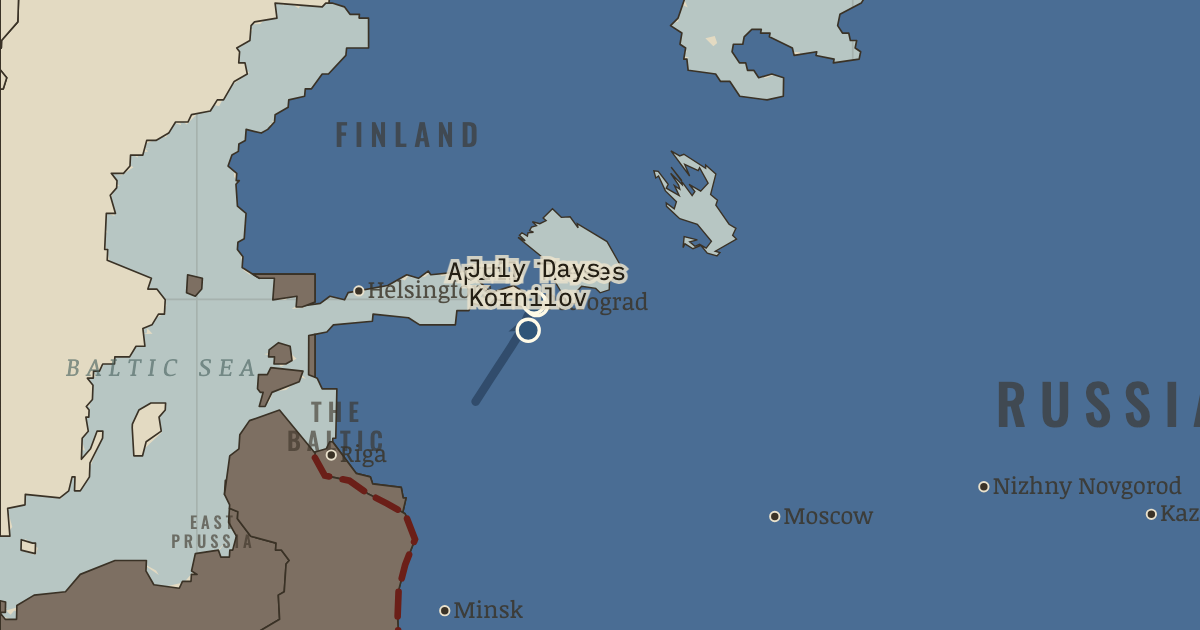
Who could govern Russia after the Tsar fell? The Provisional Government occupied the ministries, claimed legal authority and had the recognition of Russia’s allies. But orders needed people willing to carry them out, and soldiers and workers looked to the Petrograd Soviet. The Soviet had loyalty without formal power; the government had authority without dependable force. This was dual power, and neither side could simply dispense with the other.
The short answer
- Two powers, opposite aims. The government sought to honor its Allied commitments and defer decisions on land, the constitution and the war to an elected assembly. The Soviet answered to soldiers who wanted peace and peasants who wanted land now. An appeal to a future assembly could not satisfy demands that people were already acting upon.
- The fatal decision to continue the war. War kept soldiers in the field and contributed to shortages of bread in the cities. It also held at the front men who would farm redistributed land. When the June Offensive failed, it destroyed the government’s last credit. Lenin could offer “Peace, Land, Bread,” the three things the government had not delivered.
- Lenin’s clarity in a fog. Where other leaders sought coalitions or delay, Lenin refused compromise and demanded soviet power. His party was small, but a disciplined organization with a shared objective had an advantage over larger, decent opponents divided about what to do.
- The Kornilov affair arms the left. Kerensky armed the Bolsheviks because he feared Kornilov more. The decision rescued a party nearly destroyed in July and enabled it to claim that it had defended the revolution. Guns supplied to the Red Guard would be used against the Winter Palace ten weeks later.
THE TURNING POINT
The Kornilov affair, late August 1917. After the July Days Kerensky jailed radicals. When Kornilov’s troops approached Petrograd in late August, he feared a seizure of power and armed those same forces to stop them. Kornilov’s intentions remain disputed, but the advance failed on the railways. The Bolsheviks kept the weapons and gained credit for saving the capital. Kerensky’s defense against one threat had strengthened a party that would soon replace his government.
What it changed
The soviets go Bolshevik. The Bolsheviks won majorities in the Petrograd and Moscow soviets during September. Their demand for “All power to the soviets” now promised power to their own party in practice. From hiding, Lenin urged its cautious leaders by letter to stage an insurrection before the Constituent Assembly met and made a coup look illegitimate.
Kerensky discredited from both sides. Kerensky’s stand against Kornilov cost him support on both sides. Conservatives blamed him for breaking the army’s last defender; the left regarded him as a would-be dictator. Having armed the Bolsheviks against the general, he could trust neither camp to sustain him.
The countryside takes the land itself. Across the summer and autumn peasants took gentry estates while politicians debated in Petrograd. This was the greatest transfer of land in European history, carried out from below. A successor government would have to fight the seizures or accept them. The Bolsheviks would accept them, then try to take the grain.
The full answer, argued
The choice to fight had a strong diplomatic case. Treaties and loans bound Russia to the Allies; liberal ministers feared that a separate peace would betray the democratic cause and allow Germany to win. A unilateral armistice also risked German occupation on far worse terms, as Brest-Litovsk would soon show. Yet the war undermined the government with every month it continued. A government that had made peace and land its first acts might have deprived the Bolsheviks of their program. Continuing the war was rational for the elite and suicidal for the state: the commitments ministers felt bound to honor threatened the government’s survival.
An interesting fact
The famous “sealed train” that brought Lenin home was sealed mostly by chalk. A line across the corridor separated the Russian exiles from their two German escort officers, and the parties agreed not to cross it. Lenin sent smokers to the lavatory, then issued paper permits when smokers and non-smokers quarreled over the queue. Churchill later described Germany as having transported Lenin into Russia “like a plague bacillus.”
This is the study layer of Dual power in Russia (1917), chapter 5 of The Russian Revolution, 1855–1924; the full index of the atlas is here.
Related questions
THE FREE PRINTABLE STUDY GUIDE
Get the printable study guide for The Russian Revolution free. I’ll send you a few short letters, then one when a new atlas opens. That’s all. — Paul
NO TRACKING · YOUR ADDRESS IS USED FOR THE DISPATCH AND NOTHING ELSE · UNSUBSCRIBE ANYTIME