5 ATLASES
History of Guinea-Bissau in maps
Guinea-Bissau as it appears in 5 interactive history atlases, from 1890 to 2015: Guinea-Bissau. Each era below lists who ruled the land and when control changed, linked to the dated map that shows it.
WW2 is free in full, and chapter 1 of every atlas is free. A free account opens 3 more chapters a day. Starter, at $9 a month, opens all 21 with no daily limit — see the plans.
Free printable Feminism and the Tunisian Revolution study guide, sent by email ↓
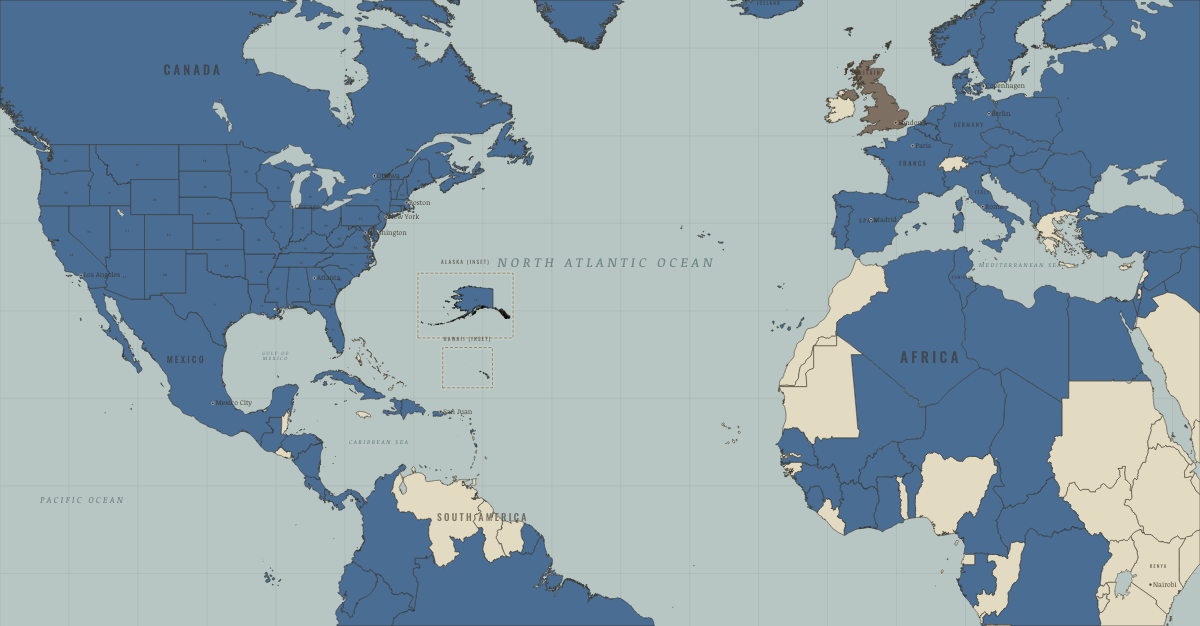
What was Guinea-Bissau before it was Guinea-Bissau? The sections below follow this land through every era covered by the Maps of History atlases: who ruled it, what it was called, and when control changed. Each line links to the dated map. Modern borders serve as an approximation, as each atlas says on the map itself.
Guinea-Bissau · Industrial Revolution
| Colony or dependency — the opening position | |
| Colony or dependency |
INDUSTRIAL REVOLUTION: EVERY CHAPTER AND MAP →
Guinea-Bissau · WWI
| Entente-aligned & imperial territories — the opening position | |
| Entente-aligned & imperial territories |
Guinea-Bissau · Cold War
| NATO & core Western allies — the opening position | |
| Non-aligned & neutral |
COLD WAR: EVERY CHAPTER AND MAP →
Guinea-Bissau · Decolonization of Africa
Portuguese Guinea produced the liberation struggle historians most admire. In territory it liberated, Amílcar Cabral’s PAIGC built schools, clinics and people’s courts; by 1973 it held most of the countryside. It declared independence from inside the country that September and gained recognition from much of the UN before Lisbon conceded. Cabral had been assassinated in Conakry in January 1973, months short of victory. The unwinnable war he designed did as much as any to push the Portuguese army into the Carnation Revolution. Recognition followed in September 1974: the first Portuguese colony was freed, opening a way toward freeing the rest.
| Portuguese, Belgian, Spanish & Italian-ruled — the opening position | |
| Independent Africa |
DECOLONIZATION OF AFRICA: EVERY CHAPTER AND MAP →
Guinea-Bissau · Feminism and the Tunisian Revolution
| Authoritarian, one-party or colonial rule — the opening position | |
| No reform yet / outside this story | |
| Right won in law |
FEMINISM AND THE TUNISIAN REVOLUTION: EVERY CHAPTER AND MAP →
Related
THE FREE PRINTABLE STUDY GUIDE
Get a printable atlas study guide of your choice free. I’ll send you a few short letters, then one when a new atlas opens. That’s all. — Paul
NO TRACKING · YOUR ADDRESS IS USED FOR THE DISPATCH AND NOTHING ELSE · UNSUBSCRIBE ANYTIME