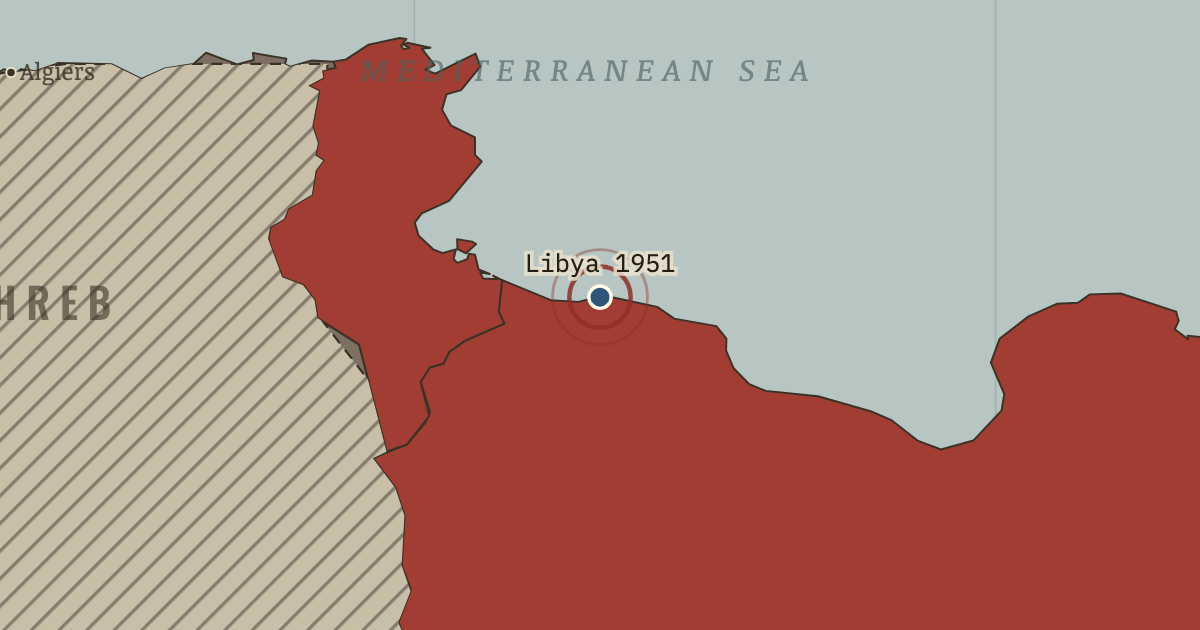
24 Dec 1951 — The young United Nations has been asked to decide the fate of the former Italian colony. Libya now becomes independent, the first African state to do so through an international vote rather than revolt.
WW2 is free in full, and chapter 1 of every atlas is free. A free account opens 3 more chapters a day. Starter, at $9 a month, opens all 21 with no daily limit — see the plans.
24 DECEMBER 1951 · THE DECOLONIZATION OF AFRICA, 1945–1994
The moment in context
The dispute over Suez began with a project upstream. After Washington withdrew its loan for the Aswan Dam, Nasser nationalized the canal in July 1956 so that its revenues could help pay for it. The decision also asserted Egyptian control over Egyptian territory. Britain and France saw a threat to their route to Asia, oil and remaining possessions, and to their standing as great powers.
Why it happened — The canal and Egyptian authority. Washington’s withdrawal of its Aswan Dam loan left Nasser seeking another source of money. Nationalizing the canal offered revenue for the project…
The turn — Suez, November 1956. In November 1956 the invaders’ military plan worked flawlessly, but the political result was disastrous for them. Within a week their senior partner…
What it changed — A lesson for London. Harold Macmillan had been Chancellor during Suez. As prime minister three years later, he told South Africa’s parliament that “the wind of change is…
Then ask the room: Suez was a clear military victory for Britain and France. In what sense was it one of the most important defeats in the history of empire? The argued answer is on the chapter page →
Get the printable study guide for The Decolonization of Africa free. I’ll send you a few short letters, then one when a new atlas opens. That’s all. — Paul
NO TRACKING · YOUR ADDRESS IS USED FOR THE DISPATCH AND NOTHING ELSE ·
UNSUBSCRIBE ANYTIME