ON THIS DAY ·
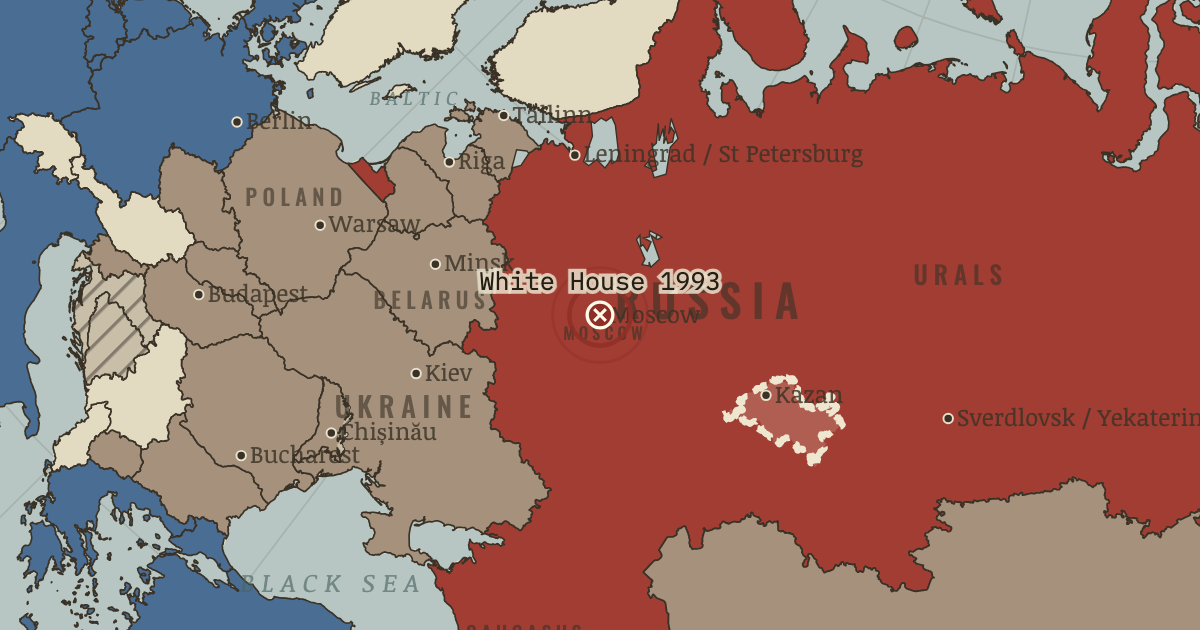
Russian constitutional crisis
3–4 Oct 1993 — Yeltsin dissolved parliament, and its supporters stormed the mayor’s office and attacked the Ostankino television center. The next morning army tanks shelled the parliament building, and the deputies surrendered. Official counts put the dead at between about 150 and 190.
WW2 is free in full, and chapter 1 of every atlas is free. A free account opens 3 more chapters a day. Starter, at $9 a month, opens all 21 with no daily limit — see the plans.
Free printable Meiji Japan and post-Soviet Russia study guide, sent by email ↓
The moment in context
The reformers inherited an economy in which a price on a shop shelf told only part of the story. By late 1991 prices were fixed, but shops were nearly empty and people held far more money than there were goods to buy. Gold and foreign currency reserves had been spent. Keeping controls meant queues; freeing prices would mean an immediate rise. Yegor Gaidar, aged 35, Anatoly Chubais and their colleagues, advised by Western economists including Jeffrey Sachs, chose rapid change. They expected free prices to bring goods back and feared that delay would give the old bureaucracy time to regroup. Shock therapy promised one sharp operation rather than a series of smaller ones.
From Shock therapy in Russia, chapter 10 of Remaking the State: Meiji Japan 1600–1912 and Post-Soviet Russia 1964–2000 (1993).
The place: Russian constitutional crisis — map and full story →
Teach this in 5 minutes
- Why it happened — The Soviet economy left too much money and too few goods. Perestroika left people holding savings for which state shops had little to offer, while the government financed its budget by printing money. Price…
- The turn — Prices freed, 2 January 1992. The decision on 2 January 1992 put prices in place of officials as the means of rationing goods, ending the planned economy in a single day. Empty…
- What it changed — A new owning class took shape. Millions received nominal shares through privatization, while managers, bankers and traders gained effective control over much of the property.…
Then ask the room: Did shock therapy cause Russia’s economic collapse in the 1990s, or was it a response to a collapse that had already begun? The argued answer is on the chapter page →
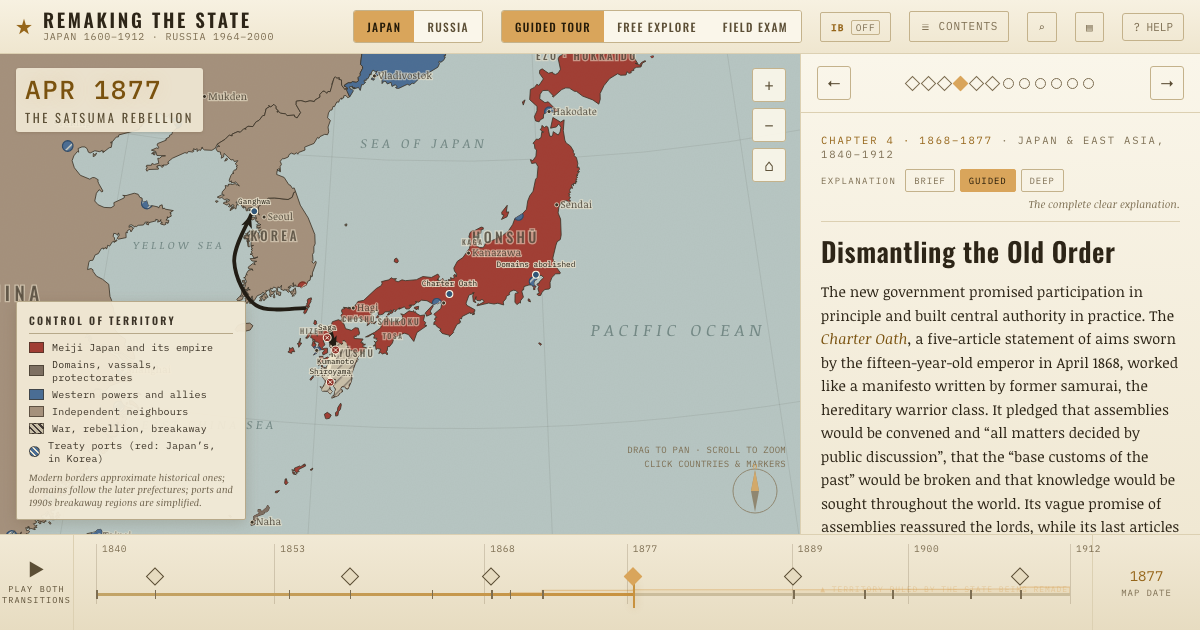
The atlas that shows it
THE FREE PRINTABLE STUDY GUIDE
Get the printable study guide for Remaking the State free. I’ll send you a few short letters, then one when a new atlas opens. That’s all. — Paul
NO TRACKING · YOUR ADDRESS IS USED FOR THE DISPATCH AND NOTHING ELSE · UNSUBSCRIBE ANYTIME