ON THIS DAY ·
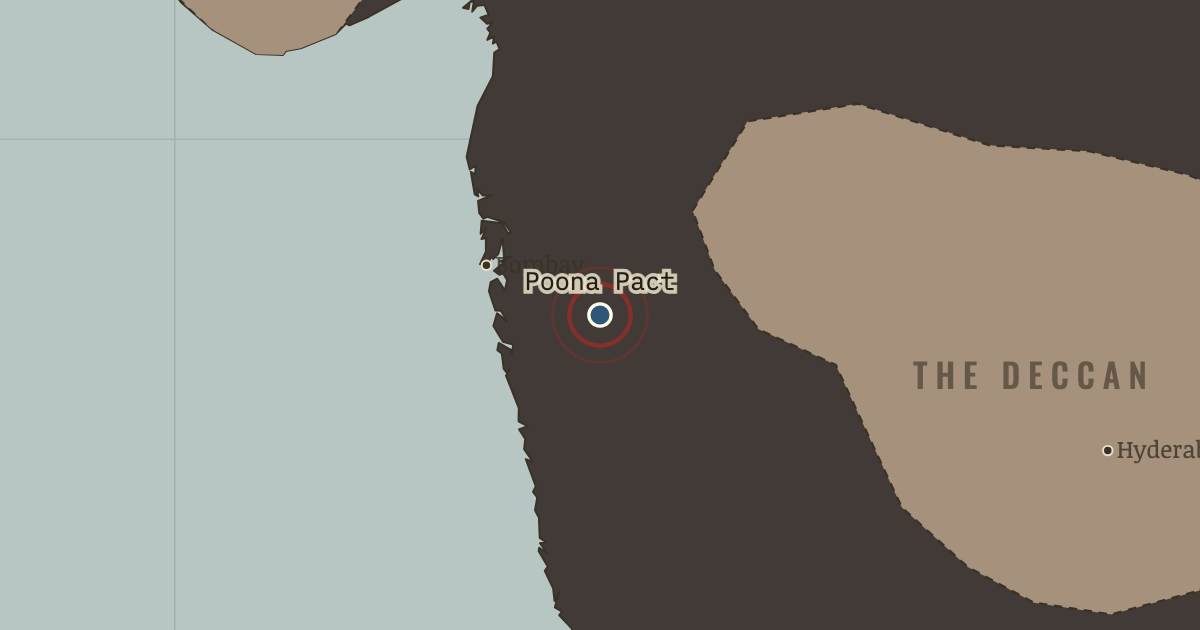
Poona Pact
24 Sep 1932 — Gandhi fasted in Yerwada jail against separate Dalit electorates, forcing a settlement with Dr B. R. Ambedkar. The pact provided reserved seats within joint electorates. Ambedkar signed under duress he never forgave. The Dalit question had entered the national movement, but the settlement left it unresolved.
WW2 is free in full, and chapter 1 of every atlas is free. A free account opens 3 more chapters a day. Starter, at $9 a month, opens all 21 with no daily limit — see the plans.
Free printable Indian independence study guide, sent by email ↓
The moment in context
On 26 January 1930 Congress declared purna swaraj, complete independence. The republic still keeps that date. A declaration alone could not bring independence, however, and Gandhi needed a form of action in which large numbers of Indians could take part. He chose civil disobedience: breaking a particular law openly and without violence to challenge the authority behind it.
From Salt March and civil disobedience, chapter 8 of Indian Independence & Partition, 1857–1964 (APR 1930).
The place: Poona Pact — map and full story →
Teach this in 5 minutes
- Why it happened — Why salt was the perfect target. The salt tax was small, but its reach made it a powerful target. Everyone needed salt and the poor bore the heaviest burden; the sea supplied it,…
- The turn — Dandi, 6 April 1930. Gandhi was sixty-one when he picked up salt at Dandi on 6 April 1930. The statute book treated the act as petty larceny; its political consequences…
- What it changed — Negotiation as recognition. The Gandhi–Irwin Pact released prisoners and preserved only part of the march’s gains. Its terms settled little, but the meeting itself had…
Then ask the room: Civil disobedience never militarily threatened the Raj, and the Round Table Conference failed. In what sense did the salt campaign succeed? The argued answer is on the chapter page →
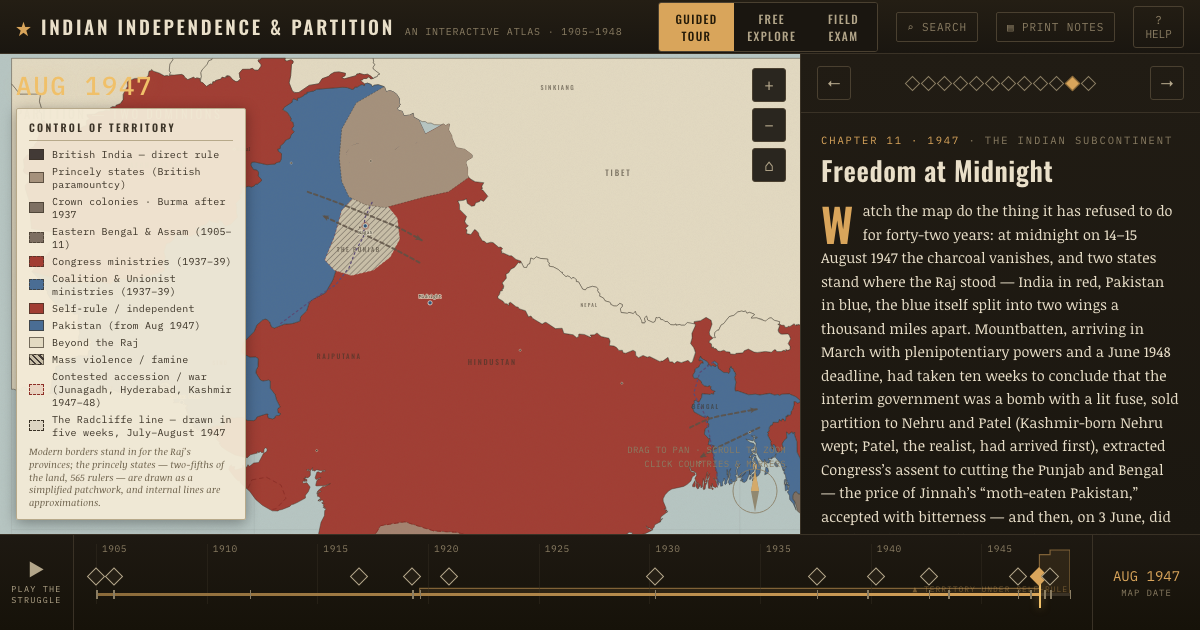
The atlas that shows it
THE FREE PRINTABLE STUDY GUIDE
Get the printable study guide for Indian Independence & Partition free. I’ll send you a few short letters, then one when a new atlas opens. That’s all. — Paul
NO TRACKING · YOUR ADDRESS IS USED FOR THE DISPATCH AND NOTHING ELSE · UNSUBSCRIBE ANYTIME