ON THIS DAY ·
US oil embargo on Japan
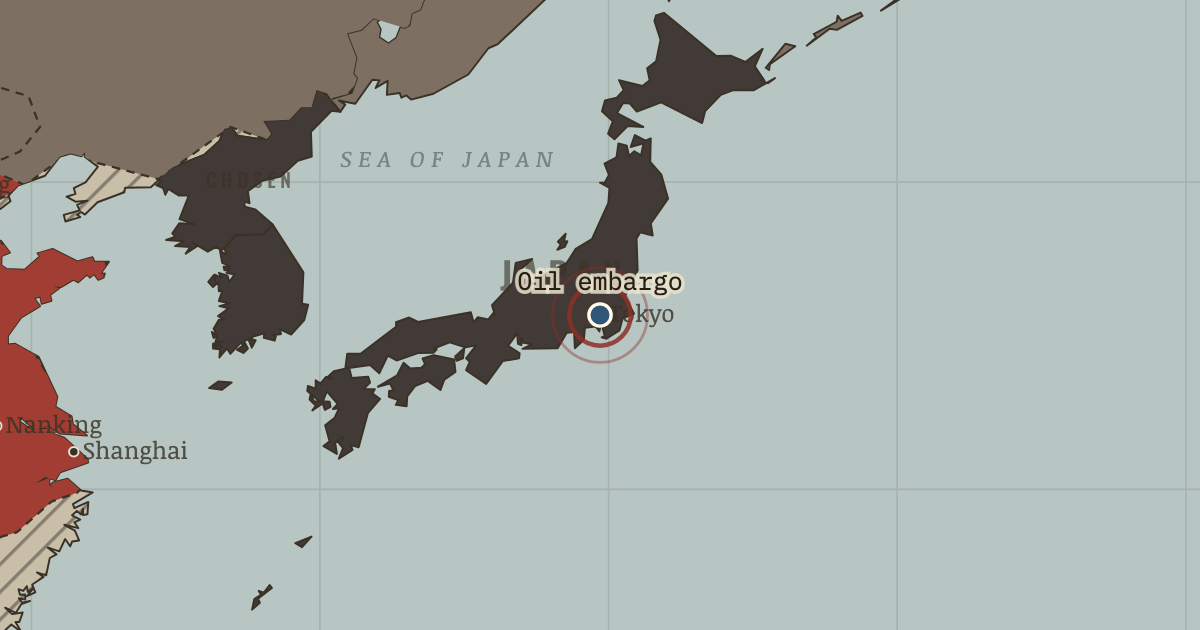
26 Jul–1 Aug 1941 — After Japan seizes southern Indochina, Washington freezes its assets and cuts off its oil. Japan’s fleet must now draw on its reserves, leaving a matter of months on the clock to war.
WW2 is free in full, and chapter 1 of every atlas is free. A free account opens 3 more chapters a day. Starter, at $9 a month, opens all 21 with no daily limit — see the plans.
The moment in context
In 1939 a border battle on the Manchukuo–Mongolia frontier changed the choices before Japan. The Kwantung Army fought Soviet forces under Zhukov at Khalkhin Gol and lost. Advocates of a northern advance against the Soviet Union now had to reckon with a demonstrated defeat. Japan’s other war offered no easy answer either: China had not surrendered, and the fighting continued to consume men and materials.
From Japan’s road to Pearl Harbor, chapter 10 of The Road to War, 1931–1941 (1940).
The place: US oil embargo on Japan — map and full story →
Teach this in 5 minutes
- Why it happened — The defeat at Khalkhin Gol. Some Japanese officers expected Soviet forces in the Far East to be brittle after the purges. At Khalkhin Gol they encountered artillery, massed…
- The turn — The freeze, 26 July – 1 August 1941. The asset freeze left a channel through which Japan could apply for funds to buy oil, but licenses were not released, producing an effective cutoff.…
- What it changed — Planning a southern war. Oil in the Dutch East Indies was the objective, but Japanese planners believed the route also required security on its flanks. British Malaya and…
Then ask the room: Did American economic pressure cause war, determine its timing, or fail to prevent it? The argued answer is on the chapter page →
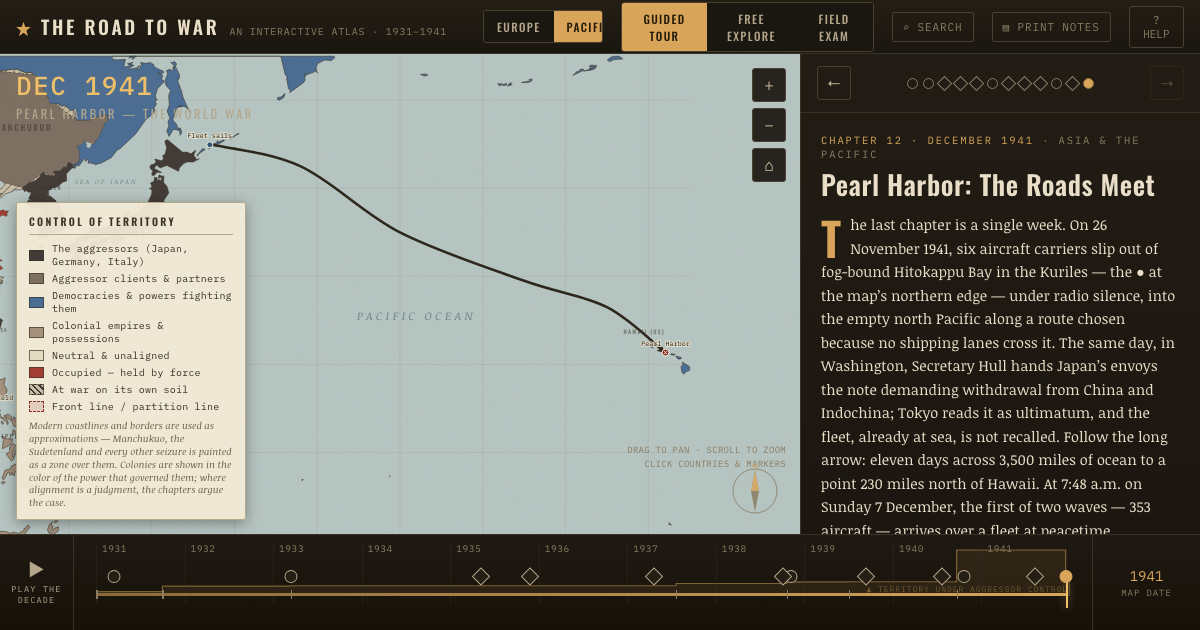
The atlas that shows it
THE FREE PRINTABLE STUDY GUIDE
Get the printable study guide for The Road to War free. I’ll send you a few short letters, then one when a new atlas opens. That’s all. — Paul
NO TRACKING · YOUR ADDRESS IS USED FOR THE DISPATCH AND NOTHING ELSE · UNSUBSCRIBE ANYTIME