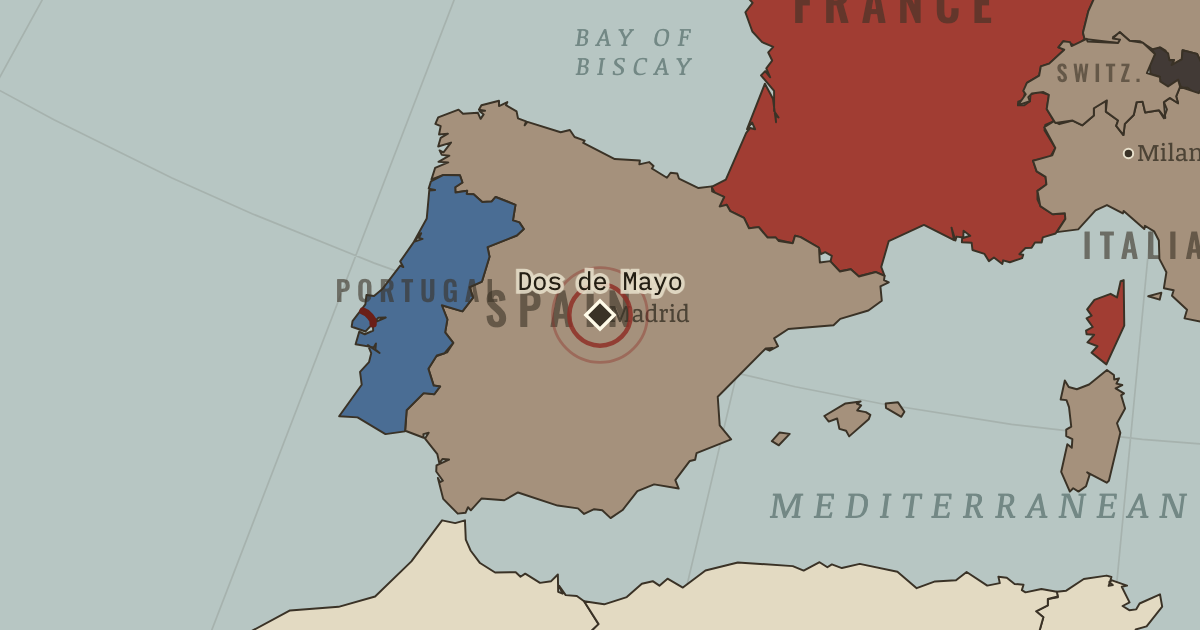
2–3 May 1808 — Madrid rose against the French occupation. The reprisals were severe: hundreds were executed. Goya later painted the firing squads, showing war stripped of its glory.
WW2 is free in full, and chapter 1 of every atlas is free. A free account opens 3 more chapters a day. Starter, at $9 a month, opens all 21 with no daily limit — see the plans.
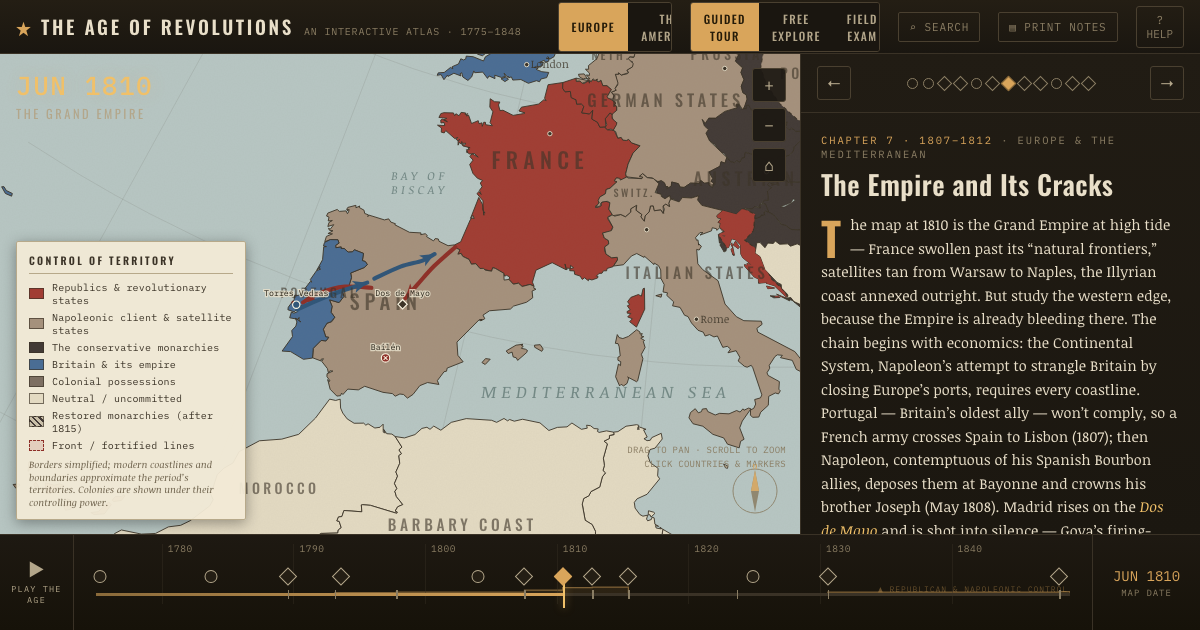
Napoleon could not carry an army across the sea to Britain after Trafalgar. He could, however, try to deny Britain its European markets. The Continental System depended on governments closing their ports to British goods, and Portugal refused. In 1807 French troops crossed Spain on their way to enforce the blockade. Napoleon then went beyond the immediate problem of Portugal: he forced the Spanish royal family to abdicate and put his brother Joseph on the throne. Madrid rose on 2 May 1808; severe French reprisals followed. Across Spain, local juntas, or emergency councils, claimed authority in the name of the absent king.
From Peninsular War, chapter 7 of The Age of Revolutions, 1775–1848 (JUN 1810).
Why it happened — Economic war without an exit. The blockade damaged Britain: exports slumped, and 1808 and 1811–12 were years of crisis. It also deprived continental producers of markets and…
The turn — Bailén, 19 July 1808. At Bailén on 19 July 1808, about 18,000 imperial troops surrendered to Spanish regulars and levies in the Andalusian heat. Many were second-line…
What it changed — The veteran drain. The war in Iberia became a lasting second front. Men and horses committed or lost there could not serve elsewhere, reducing the resources available…