ON THIS DAY ·
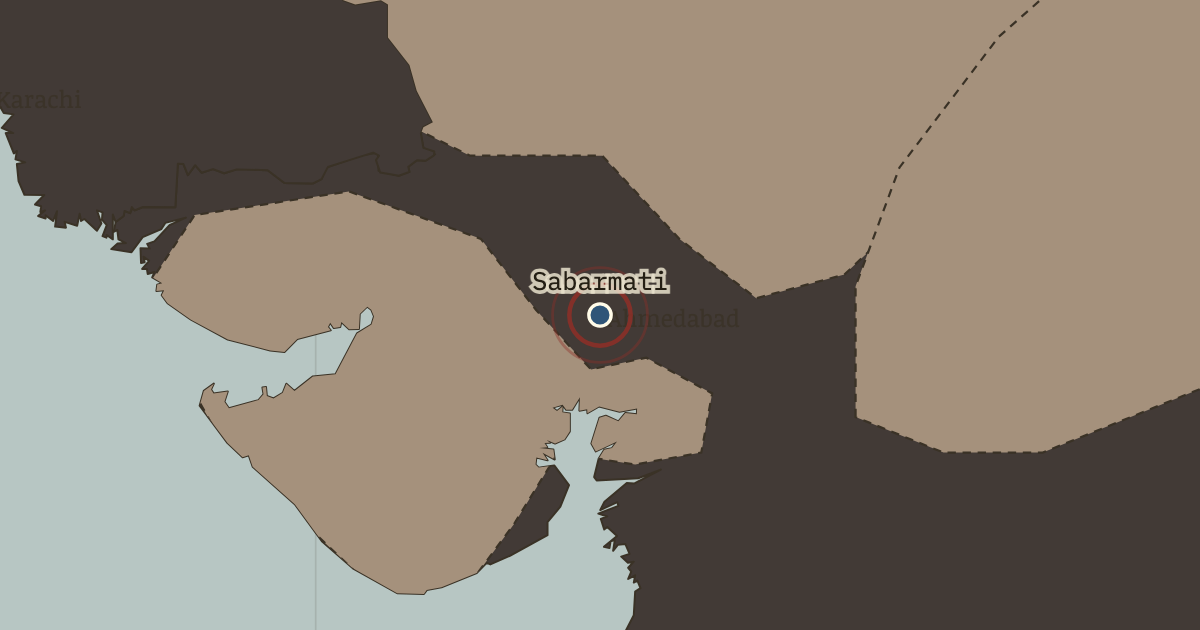
Sabarmati ashram
12 Mar 1930 — Gandhi set out on foot from his ashram with 78 marchers. He had already told the Viceroy in writing where he was going and why: he would walk to the sea and break the salt law. “I want world sympathy in this battle of Right against Might.”
WW2 is free in full, and chapter 1 of every atlas is free. A free account opens 3 more chapters a day. Starter, at $9 a month, opens all 21 with no daily limit — see the plans.
Free printable Indian independence study guide, sent by email ↓
The moment in context
On 26 January 1930 Congress declared purna swaraj, complete independence. The republic still keeps that date. A declaration alone could not bring independence, however, and Gandhi needed a form of action in which large numbers of Indians could take part. He chose civil disobedience: breaking a particular law openly and without violence to challenge the authority behind it.
From Salt March and civil disobedience, chapter 8 of Indian Independence & Partition, 1857–1964 (APR 1930).
The place: Sabarmati ashram — map and full story →
Teach this in 5 minutes
- Why it happened — Why salt was the perfect target. The salt tax was small, but its reach made it a powerful target. Everyone needed salt and the poor bore the heaviest burden; the sea supplied it,…
- The turn — Dandi, 6 April 1930. Gandhi was sixty-one when he picked up salt at Dandi on 6 April 1930. The statute book treated the act as petty larceny; its political consequences…
- What it changed — Negotiation as recognition. The Gandhi–Irwin Pact released prisoners and preserved only part of the march’s gains. Its terms settled little, but the meeting itself had…
Then ask the room: Civil disobedience never militarily threatened the Raj, and the Round Table Conference failed. In what sense did the salt campaign succeed? The argued answer is on the chapter page →
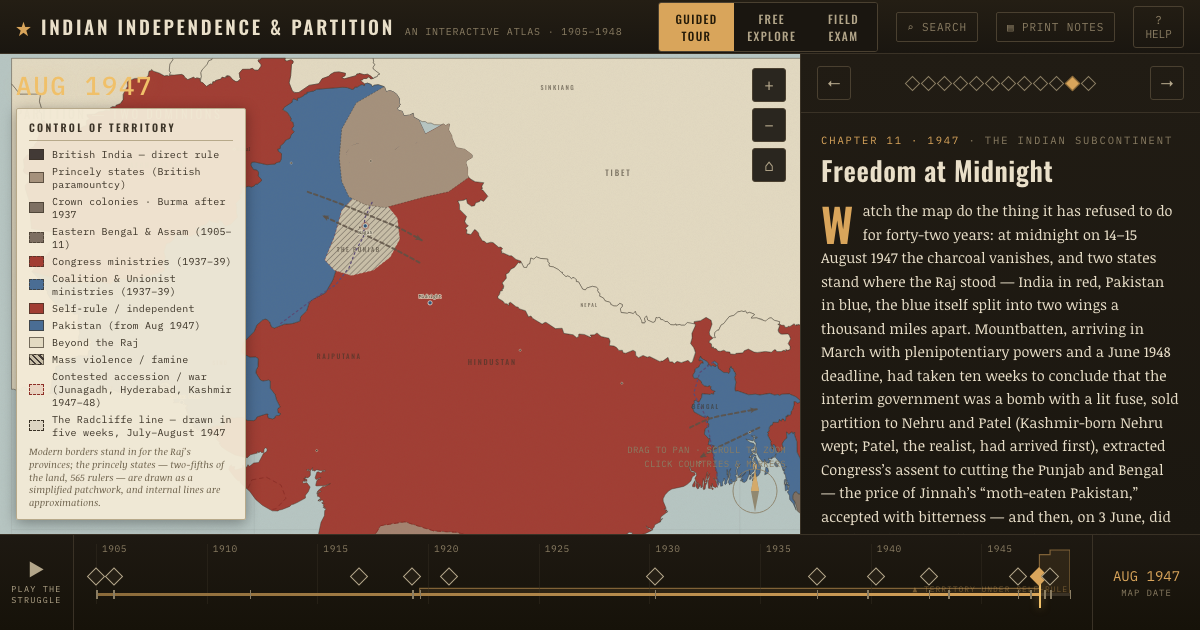
The atlas that shows it
THE FREE PRINTABLE STUDY GUIDE
Get the printable study guide for Indian Independence & Partition free. I’ll send you a few short letters, then one when a new atlas opens. That’s all. — Paul
NO TRACKING · YOUR ADDRESS IS USED FOR THE DISPATCH AND NOTHING ELSE · UNSUBSCRIBE ANYTIME