ON THIS DAY ·
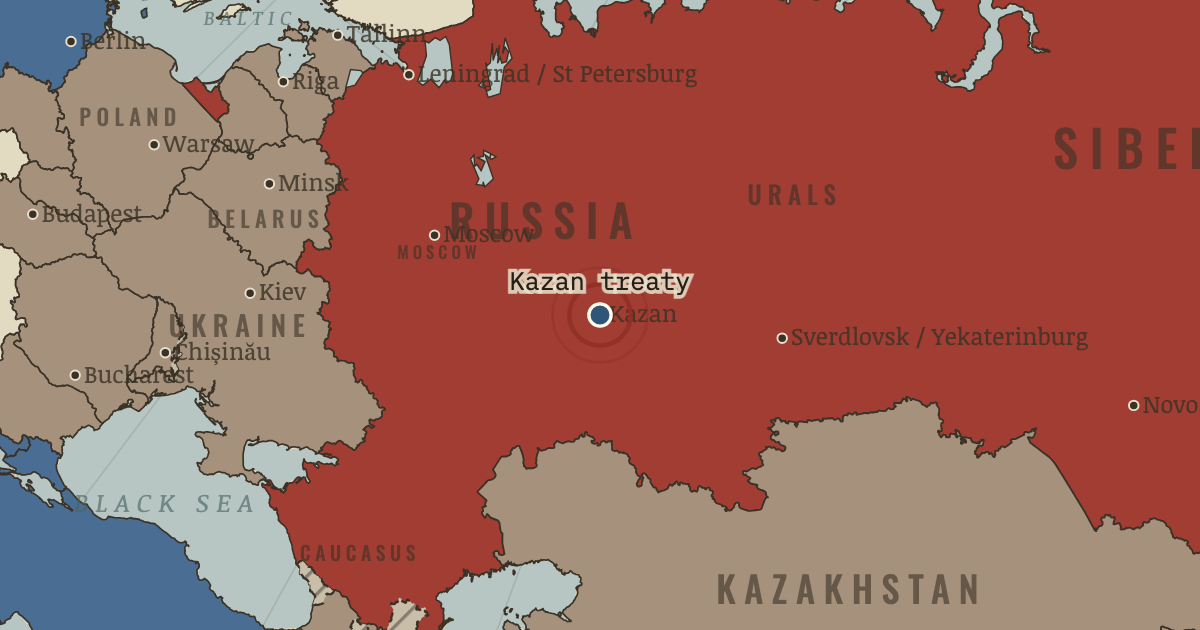
Tatarstan–Russia power-sharing treaty
15 Feb 1994 — Two years earlier, about 61% had backed a “sovereign state” in a Tatarstan referendum. Instead of seceding, Tatarstan signed a treaty with Moscow and kept wide control over its oil, taxes and laws. Ten months later Moscow sent tanks into Chechnya.
WW2 is free in full, and chapter 1 of every atlas is free. A free account opens 3 more chapters a day. Starter, at $9 a month, opens all 21 with no daily limit — see the plans.
Free printable Meiji Japan and post-Soviet Russia study guide, sent by email ↓
The moment in context
Before the Soviet Union fell, Yeltsin had a reason to encourage the republics inside Russia to resist Moscow. In his struggle with Gorbachev, he told them to “take as much sovereignty as you can swallow”. Tatarstan, Sakha and others declared sovereignty in 1990, claiming that their laws took precedence over Moscow’s. The dashed outlines on the maps of 1990–94 mark those claims. Regional leaders retained tax revenue, controlled local police and courts, and bargained with the center.
From Oligarchs and the First Chechen War, chapter 11 of Remaking the State: Meiji Japan 1600–1912 and Post-Soviet Russia 1964–2000 (1996).
The place: Tatarstan–Russia power-sharing treaty — map and full story →
Teach this in 5 minutes
- Why it happened — The state could not collect its own taxes. The government depended on revenue from large firms after privatization and inflation, but those firms often paid late, in goods or not at all.…
- The turn — Loans-for-shares, November–December 1995. The auctions of November–December 1995 joined the government’s need for money to Yeltsin’s need for political support. Banks organized the sales and…
- What it changed — Oligarchs became a power in politics. Ownership gave oligarchs tools with which to shape politics after 1996. Boris Berezovsky and Vladimir Gusinsky used banks and television channels to…
Then ask the room: Were Russia’s oligarchs a product of weak state institutions, or the cause of their weakness? The argued answer is on the chapter page →
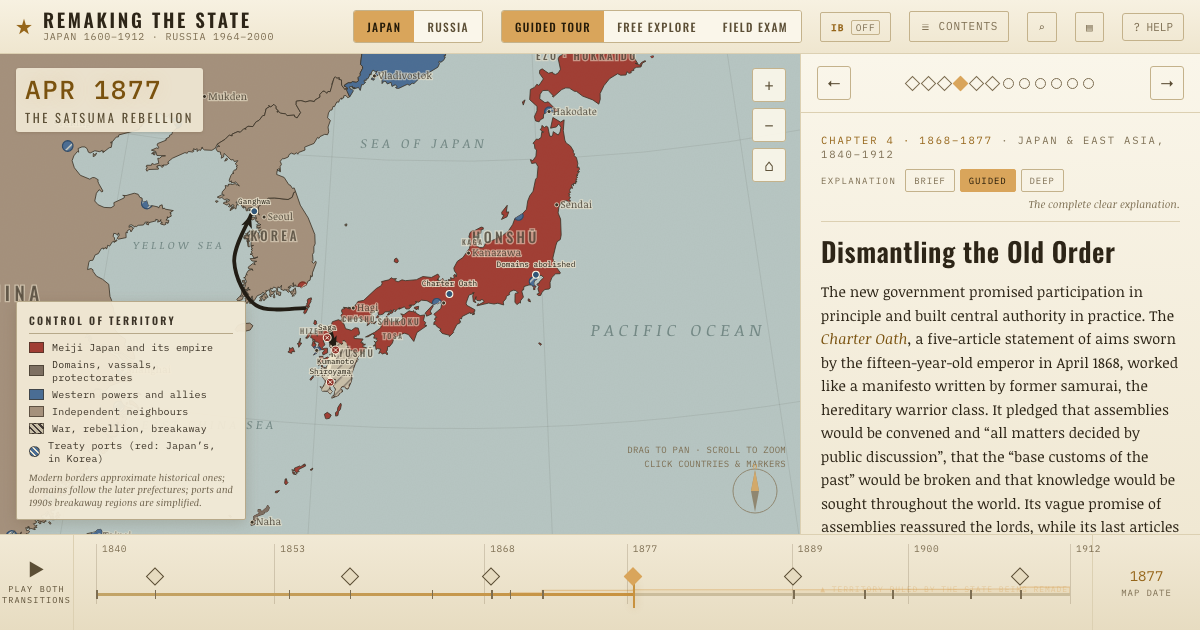
The atlas that shows it
THE FREE PRINTABLE STUDY GUIDE
Get the printable study guide for Remaking the State free. I’ll send you a few short letters, then one when a new atlas opens. That’s all. — Paul
NO TRACKING · YOUR ADDRESS IS USED FOR THE DISPATCH AND NOTHING ELSE · UNSUBSCRIBE ANYTIME