ON THIS DAY ·
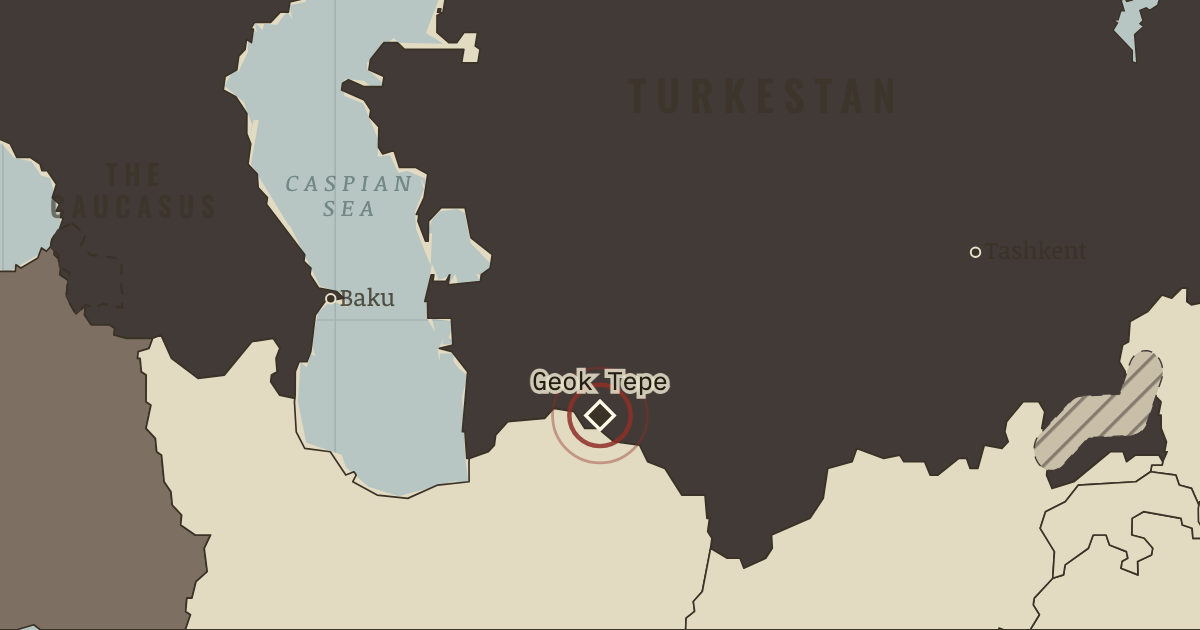
Siege of Geok Tepe
12/24 Jan 1881 — General Skobelev storms Dengil-Tepe, the Turkmen fortress at Geok Tepe, after a siege of three weeks. His report counts 6,500 dead inside the fortress and another 8,000 killed during the pursuit, among them fleeing civilians. There is no independent count. Turkmen remember the assault as a national tragedy; this memorial marks the dead.
WW2 is free in full, and chapter 1 of every atlas is free. A free account opens 3 more chapters a day. Starter, at $9 a month, opens all 21 with no daily limit — see the plans.
Free printable Russian Revolution study guide, sent by email ↓
The moment in context
The murder of Alexander II gave his successor a reason to distrust concessions. If reforms had failed to protect the reforming Tsar, Alexander III believed, demands for further change had to be resisted. Pobedonostsev drafted the April 1881 manifesto proclaiming unlimited autocracy, and reforming ministers resigned. The August emergency statute let governors ban meetings, close newspapers and exile suspects without trial. It was renewed until 1917. Suspicion reached beyond the assassins. University self-government ended in 1884; in 1887 schools were urged to turn away cooks’ children. In 1889 noble land captains were appointed to administer and judge peasants, much like colonial district officers. Each measure placed a larger group under control because the government feared what some of its members might do.
From Counter-reforms of Alexander III, chapter 2 of The Russian Revolution, 1855–1924 (MAY 1891).
The place: Siege of Geok Tepe — map and full story →
Teach this in 5 minutes
- Why it happened — The assassination of 1881. The People’s Will pursued Alexander II for two years. Its Winter Palace bomb killed eleven guards in February 1880, and in March 1881 it killed the…
- The turn — The Catherine Canal, 1/13 March 1881. On the morning of 1/13 March 1881 Alexander II approved Loris-Melikov’s plan to bring elected zemstvo and city delegates into the drafting of laws.…
- What it changed — A state of permanent emergency. The 1881 emergency statute became an ordinary instrument of government, placing a large share of the empire under emergency rule for a generation.…
Then ask the room: Did Alexander III’s policies strengthen the autocracy or prepare its collapse? The argued answer is on the chapter page →
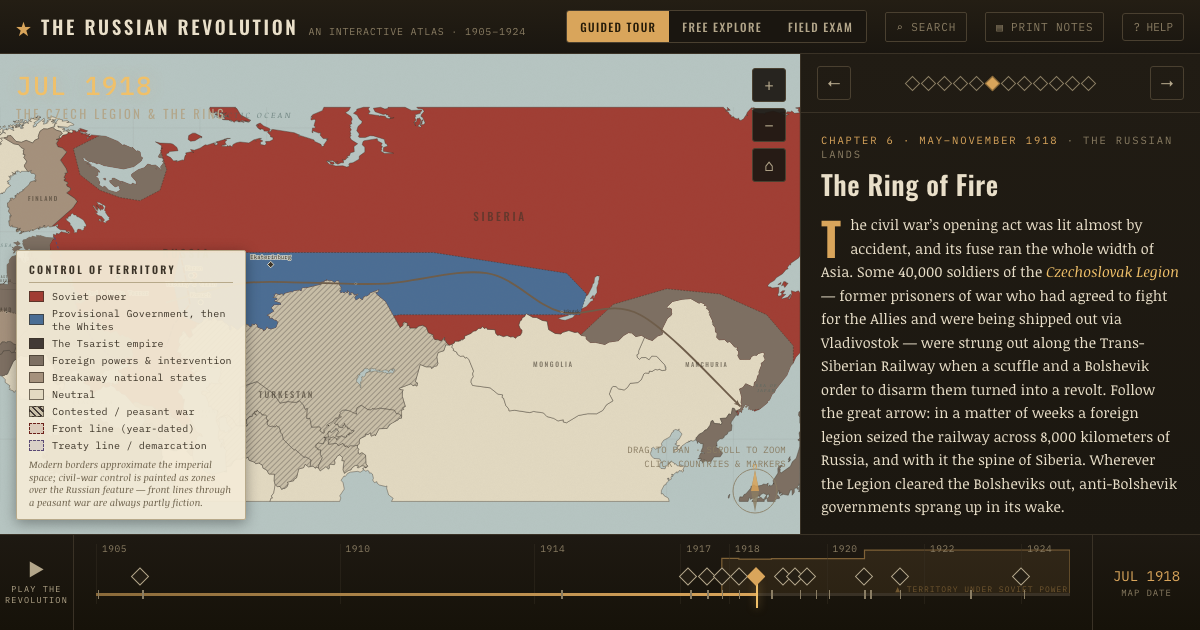
The atlas that shows it
THE FREE PRINTABLE STUDY GUIDE
Get the printable study guide for The Russian Revolution free. I’ll send you a few short letters, then one when a new atlas opens. That’s all. — Paul
NO TRACKING · YOUR ADDRESS IS USED FOR THE DISPATCH AND NOTHING ELSE · UNSUBSCRIBE ANYTIME