ON THIS DAY ·
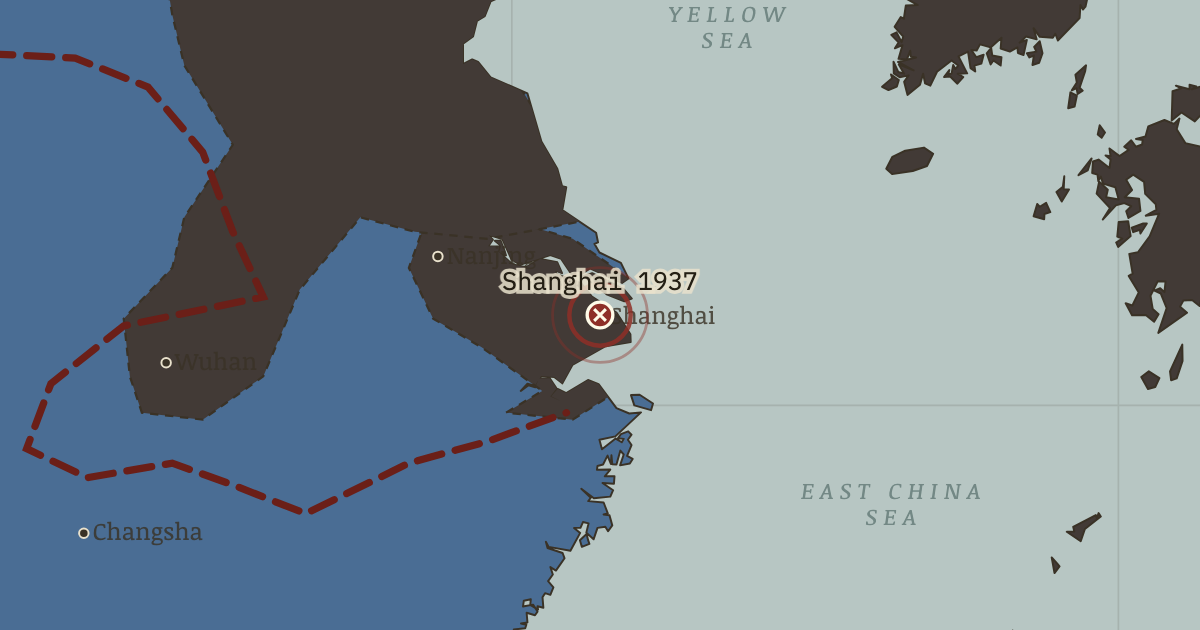
Battle of Shanghai
13 Aug–26 Nov 1937 — Chiang committed some 700,000 men, including his best German-trained troops, to three months of house-by-house fighting under naval guns. He wanted to show that China would fight and draw the war onto the Yangtze axis. Casualties approached 250,000, among them officers the army could not replace. From the Settlement’s rooftops, the world watched.
WW2 is free in full, and chapter 1 of every atlas is free. A free account opens 3 more chapters a day. Starter, at $9 a month, opens all 21 with no daily limit — see the plans.
Free printable Chinese Revolution study guide, sent by email ↓
The moment in context
The clash that opened full-scale war began during a Japanese night exercise on 7 July 1937. A soldier was missing at roll call, and shots were exchanged near Marco Polo Bridge southwest of Peking (the ✕). Local commanders nearly settled the incident, as they had others since 1931. This time Tokyo reinforced its troops. Chiang stood firm too: currency reform and German-trained divisions had improved his position, while the Xi’an settlement had tied his political standing to resistance. What might have remained a local clash became a test neither government would step back from.
From Second Sino-Japanese War (1937–38), chapter 8 of China in Revolution, 1911–1949 (1938).
The place: Battle of Shanghai — map and full story →
Teach this in 5 minutes
- Why it happened — Escalation in Tokyo. Tokyo entered the crisis without a settled plan to conquer all China, but its government struggled to restrain field armies that created facts on…
- The turn — Marco Polo Bridge, 7 July 1937. Since 1931 earlier local incidents had been contained. At Marco Polo Bridge, Tokyo reinforced its troops, while Chiang stood firm under the pressure…
- What it changed — Government in the interior. The move to Chungking kept a government in the war, but left much of the Yangtze delta’s industry, customs revenue and tax base behind. Poorer,…
Then ask the room: Was Chiang right to fight in 1937, six years after Manchuria and before China was fully prepared? The argued answer is on the chapter page →
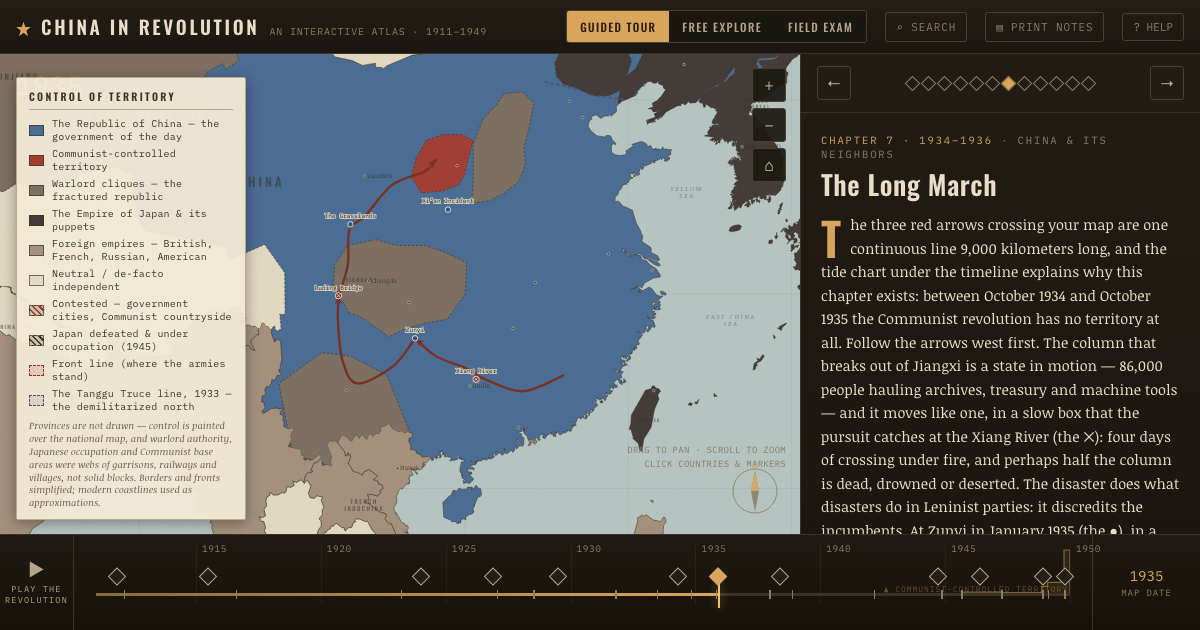
The atlas that shows it
THE FREE PRINTABLE STUDY GUIDE
Get the printable study guide for China in Revolution free. I’ll send you a few short letters, then one when a new atlas opens. That’s all. — Paul
NO TRACKING · YOUR ADDRESS IS USED FOR THE DISPATCH AND NOTHING ELSE · UNSUBSCRIBE ANYTIME