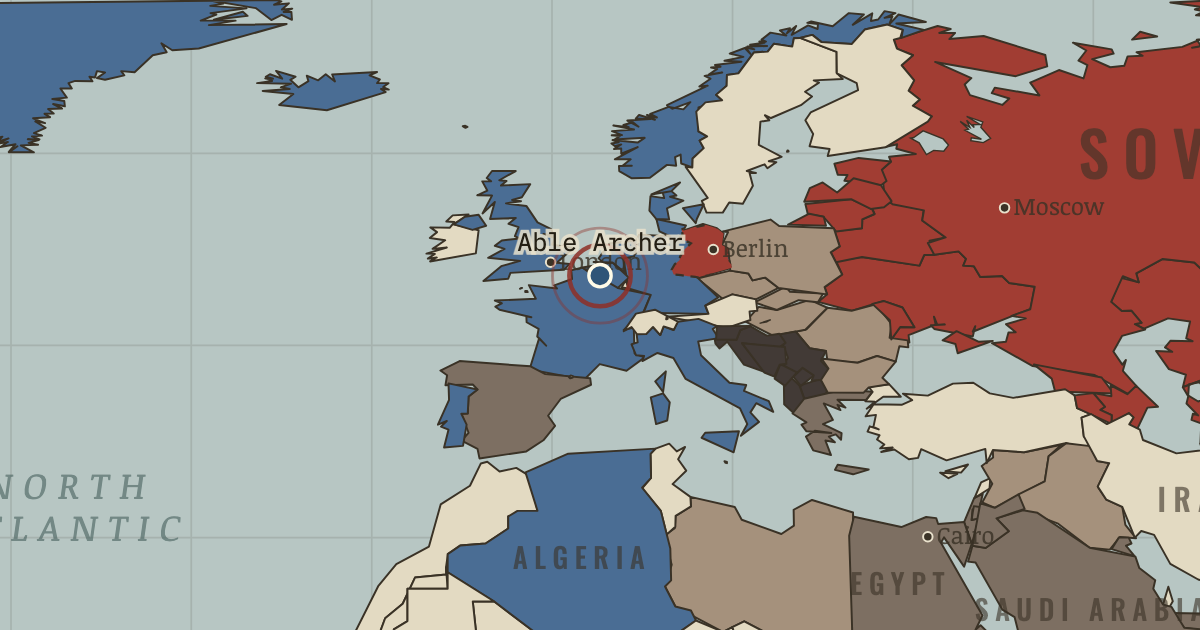
2–11 Nov 1983 — NATO conducts a nuclear command exercise so realistic that Soviet intelligence, already primed to expect a first strike, puts forces on alert. Only when the archives open do the two sides grasp how close this was.
WW2 is free in full, and chapter 1 of every atlas is free. A free account opens 3 more chapters a day. Starter, at $9 a month, opens all 21 with no daily limit — see the plans.
Afghanistan’s communist party took power in 1978 without a Soviet invasion. Its leaders imposed land and literacy programs on a rural, religious society through coercion and executions, helping provoke a revolt that threatened their government. They asked Moscow for troops. Soviet leaders refused repeatedly: Kosygin warned that “we would be fighting the people.” Yet the prospect of losing the client, and concern after Iran’s revolution about Islamist influence reaching Soviet Central Asia, eventually outweighed those objections. In December 1979 Soviet troops entered Afghanistan.
Why it happened — Afghanistan: the trap of the client state. Kabul’s communists seized power in 1978 on their own, then imposed land and literacy reforms by force. Their policies helped ignite resistance in a…
The turn — Able Archer 83, 2–11 November 1983. From 2–11 November 1983, NATO practiced escalation in Able Archer 83, using procedures that included new codes and radio silence. Soviet…
What it changed — Afghanistan bleeds the metropole. Afghanistan consumed Soviet lives and resources. The official military death toll was about 15,000; some post-Soviet researchers suggest it may…