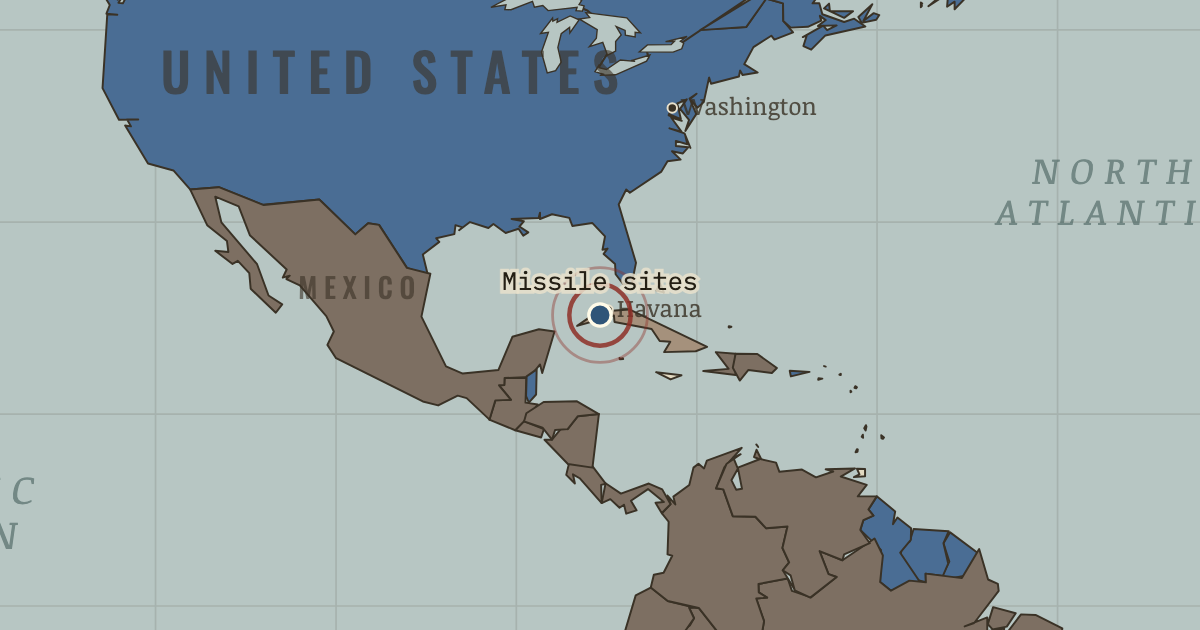
14 Oct 1962 — A U-2 photographs Soviet medium-range missiles at San Cristóbal. Their launchers could reach Washington in minutes. The thirteen days begin.
WW2 is free in full, and chapter 1 of every atlas is free. A free account opens 3 more chapters a day. Starter, at $9 a month, opens all 21 with no daily limit — see the plans.
Cuba offered Khrushchev an answer to two problems. After the revolution, American hostility and the failed Bay of Pigs landing in 1961 had pushed Castro toward Moscow, yet another invasion seemed possible. Soviet missiles could help protect the island. They could also change the strategic balance: the USSR had many medium-range missiles, and from Cuba, ninety miles from Florida, those weapons could reach the United States.
Why it happened — Why Khrushchev sent the missiles. Moscow faced a strategic imbalance: it had 26 reliable ICBMs against hundreds of American bombers and missiles, including weapons stationed from…
The turn — 27 October, aboard B-59. For days B-59 had been out of radio contact. Its batteries were failing, the temperature reached 45°C, and crew members fainted. American practice…
What it changed — A link and a limit on tests. After the crisis, both governments sought ways to handle future confrontations. The direct teletype link agreed in June 1963 made faster…
Then ask the room: Kennedy’s advisers split between airstrike and blockade. The airstrike faction lost — and later evidence suggests the airstrike would likely have triggered nuclear use. Was the outcome good judgment or good luck? The argued answer is on the chapter page →