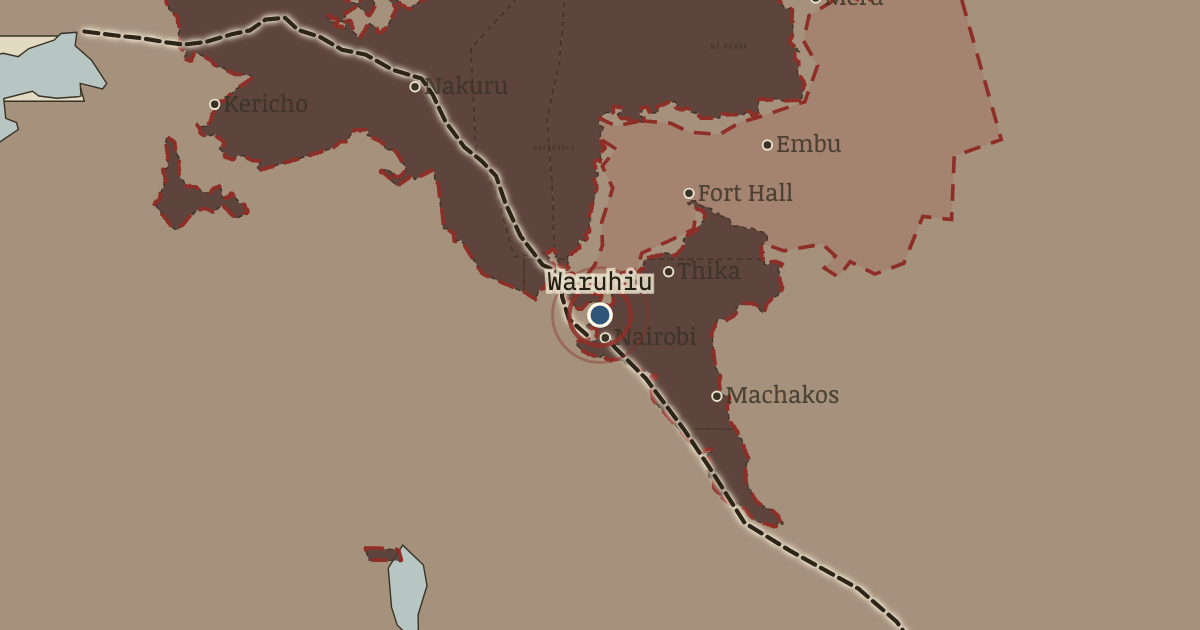
7 Oct 1952 — Senior Chief Waruhiu, the government’s leading Kikuyu chief, is shot dead in his car on the Kiambu road. Thirteen days after the killing, the governor declares a State of Emergency.
WW2 is free in full, and chapter 1 of every atlas is free. A free account opens 3 more chapters a day. Starter, at $9 a month, opens all 21 with no daily limit — see the plans.
7 OCTOBER 1952 · TWO ROADS TO INDEPENDENCE: HAITI 1789–1838 AND KENYA 1895–1978
The moment in context
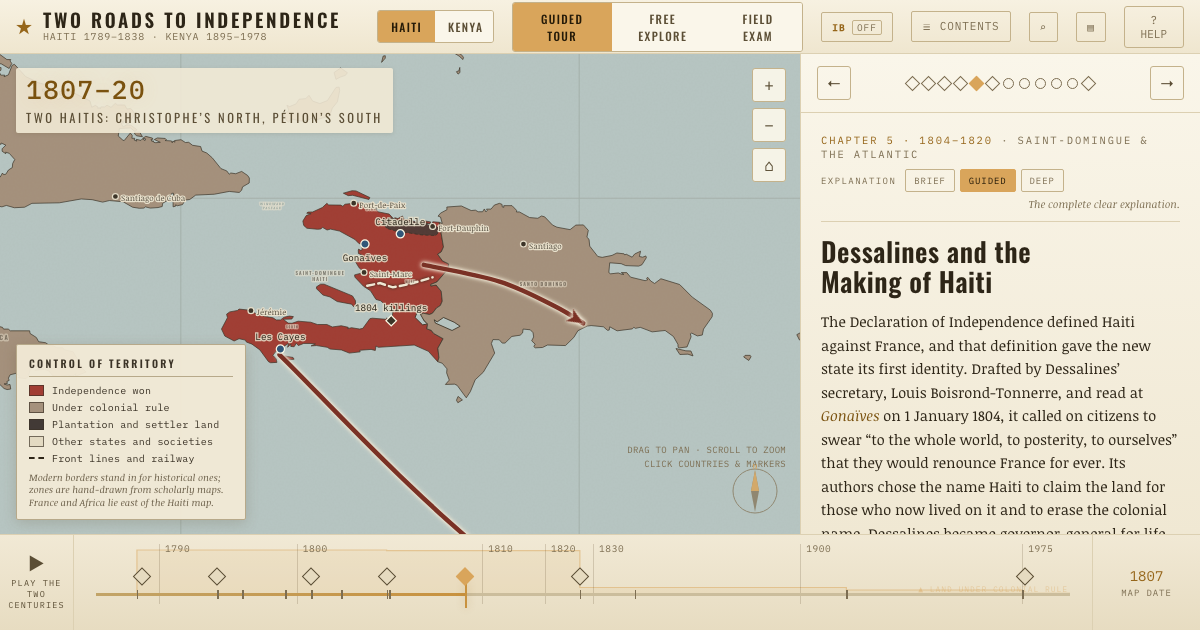
The Second World War took Kenyan soldiers far beyond the colony. About 98,000 Kenyan Africans enlisted, most in the King’s African Rifles, Britain’s East African regiment. The 11th (East Africa) Division fought into Burma in 1944–45, following the route shown by the arrow leaving Mombasa, Kenya’s main port. Waruhiu Itote, later the forest commander known as “General China”, fought beside British soldiers. Veterans had seen their colonizers frightened and beaten; the claim that Europeans were naturally invincible had become harder to sustain.
Why it happened — Petitions that won nothing. KAU asked for elected African seats and the return of alienated land—the colonial term for African land taken for European settlement. Its ability…
The turn — The Kiambu road, 7 October 1952. On 7 October 1952 Senior Chief Waruhiu was killed in his car near Gachie, seven miles from Nairobi. He was the government’s most prominent Kikuyu…
What it changed — The Emergency begins. The Emergency of 20 October 1952 gave the government powers resembling martial law: it could detain people without trial, ban meetings and, later,…
Get the printable study guide for Two Roads to Independence free. I’ll send you a few short letters, then one when a new atlas opens. That’s all. — Paul
NO TRACKING · YOUR ADDRESS IS USED FOR THE DISPATCH AND NOTHING ELSE ·
UNSUBSCRIBE ANYTIME