ON THIS DAY ·
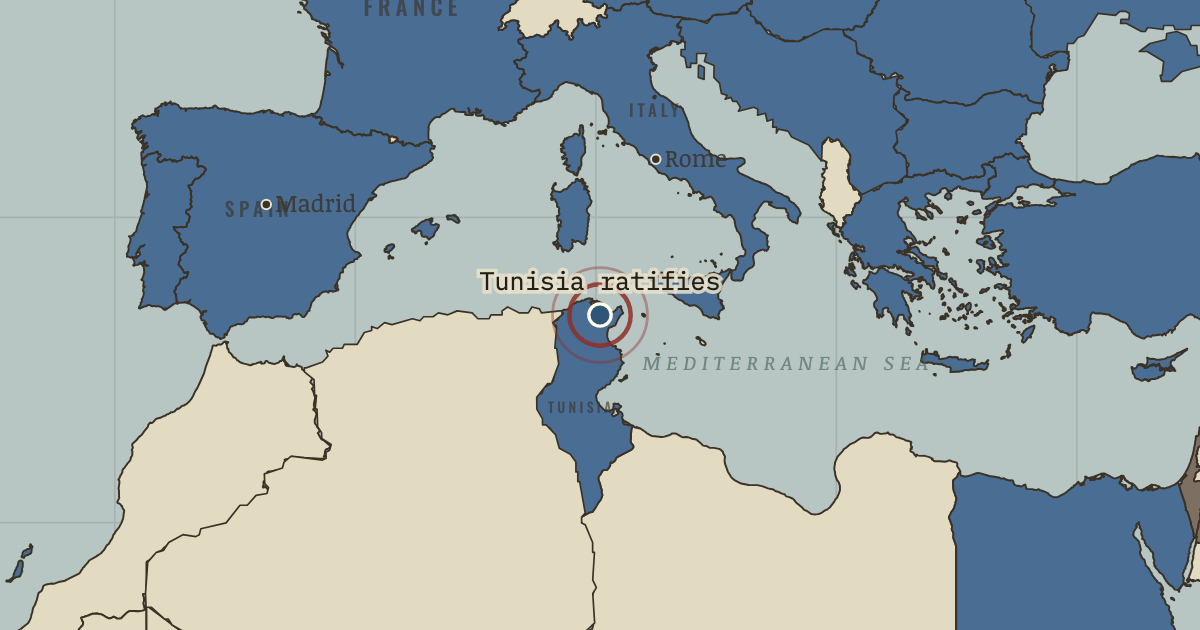
Tunisia ratifies CEDAW
20 Sep 1985 — Tunisia ratifies CEDAW while reserving its position on family law and nationality. It lifts those reservations only after the 2011 revolution. The second half of this atlas follows Tunisia.
WW2 is free in full, and chapter 1 of every atlas is free. A free account opens 3 more chapters a day. Starter, at $9 a month, opens all 21 with no daily limit — see the plans.
Free printable Feminism and the Tunisian Revolution study guide, sent by email ↓
The moment in context
Women’s movements had a reason to look to the United Nations: it could bring governments together, collect information and set standards against which they could be judged. Its Commission on the Status of Women, a committee of government delegates, had monitored women’s rights since 1946. In 1972 the Soviet-bloc-aligned Women’s International Democratic Federation proposed an International Women’s Year. Rivalry between Cold War powers helped put the proposal on the agenda, as each had reason to appear progressive.
From UN Decade for Women and CEDAW, chapter 6 of Protest and Change: Second-Wave Feminism and Tunisia, 1945–2015 (1985).
The place: Tunisia ratifies CEDAW — map and full story →
Teach this in 5 minutes
- Why it happened — The UN as an amplifier. The UN had machinery that a movement could use: the Commission on the Status of Women, established in 1946, and authority to declare years, call…
- The turn — CEDAW adopted, 18 December 1979. Declarations could express an ambition without creating a body to hear how governments acted. The 1967 Declaration on discrimination against women…
- What it changed — A standard for movements everywhere. The CEDAW Committee of independent experts first met in October 1982 and reviewed its first national reports in 1983. Campaigners gained an…
Then ask the room: Did the UN Decade for Women unite women across the world, or reveal how divided they were? The argued answer is on the chapter page →
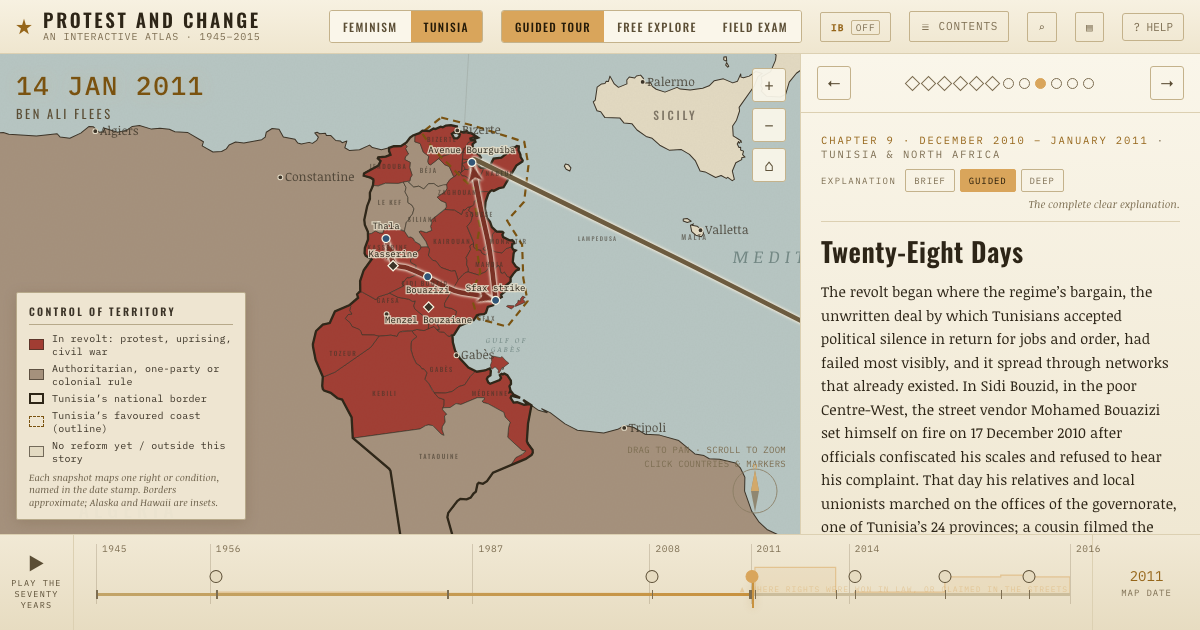
The atlas that shows it
THE FREE PRINTABLE STUDY GUIDE
Get the printable study guide for Protest and Change free. I’ll send you a few short letters, then one when a new atlas opens. That’s all. — Paul
NO TRACKING · YOUR ADDRESS IS USED FOR THE DISPATCH AND NOTHING ELSE · UNSUBSCRIBE ANYTIME