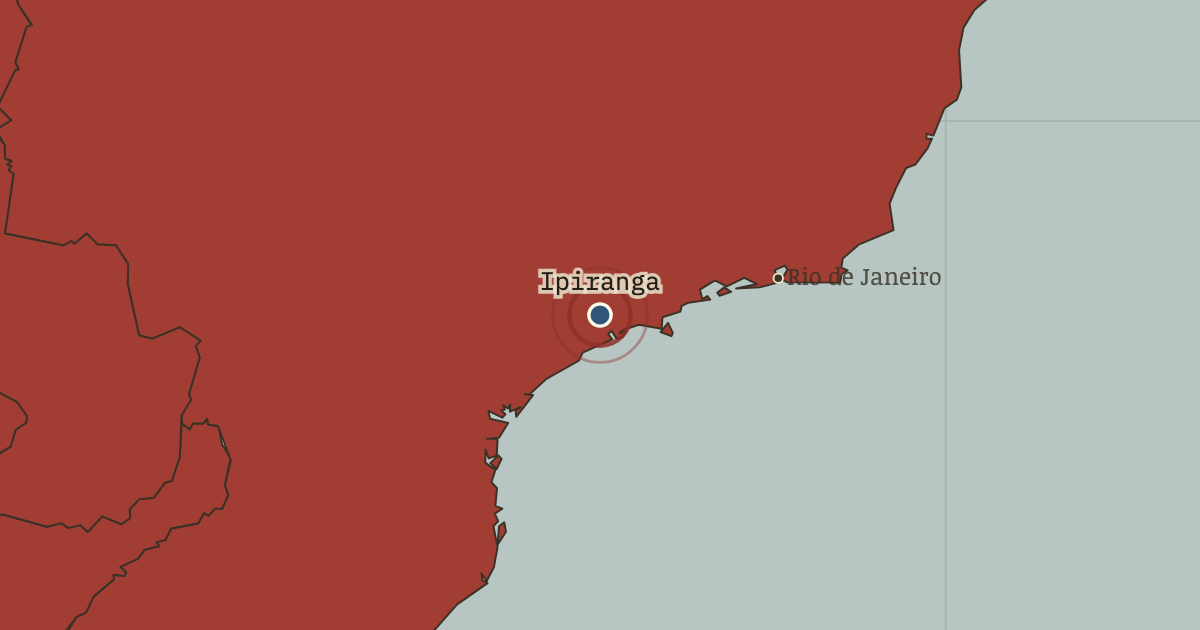
7 Sep 1822 — Prince Pedro had been ordered home to Lisbon. He chose Brazil instead, declaring: “Independence or death!” The new country became an empire rather than a republic, and slavery remained.
WW2 is free in full, and chapter 1 of every atlas is free. A free account opens 3 more chapters a day. Starter, at $9 a month, opens all 21 with no daily limit — see the plans.
7 SEPTEMBER 1822 · THE AGE OF REVOLUTIONS, 1775–1848
The moment in context
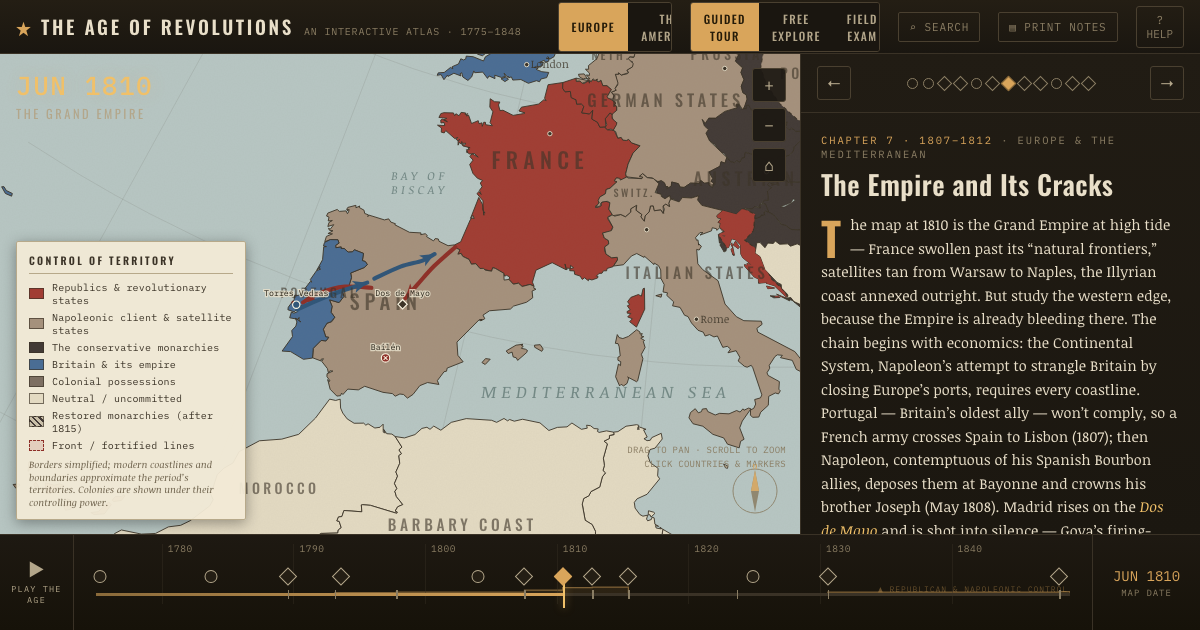
Napoleon’s removal of Spain’s royal family in 1808 raised a problem across the empire. If the legitimate king could not rule, who could govern in his name? Spanish American juntas formed in 1810 and often professed loyalty to Ferdinand VII. In practice they took authority locally, leaving open how that authority would be shared if the king returned.
Why it happened — A crisis at the imperial center. The first crisis was in Spain itself: the king was captive and the country a battlefield. Juntas claimed to be “conserving sovereignty for…
The turn — Ayacucho, 9 December 1824. On the high Andean plateau of Ayacucho on 9 December 1824, Sucre, aged 29, commanded an army commonly estimated at 5,800 against about 9,300…
What it changed — Republics and regional commanders. By 1830 Gran Colombia had broken into Venezuela, New Granada and Ecuador. Near the end of his life that year, Bolívar wrote, “I have ploughed the…
Then ask the room: Same age, same Enlightenment, similar wars — why did British America produce one durable federation and Spanish America a dozen fragile republics? The argued answer is on the chapter page →