ON THIS DAY ·
Linlithgow declares war for India
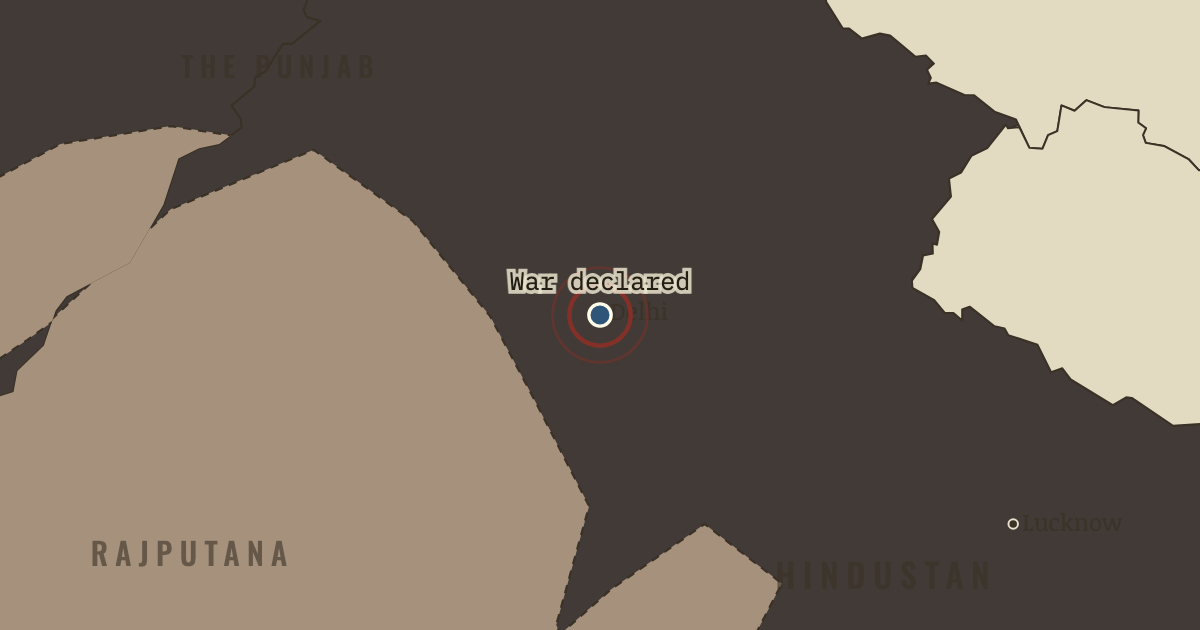
3 Sep 1939 — Viceroy Linlithgow declared war on behalf of 400 million Indians without consulting a single elected Indian. The declaration was constitutionally correct, but its political consequences were fatal: Congress ministries resigned within weeks, and the League occupied the ground they left.
WW2 is free in full, and chapter 1 of every atlas is free. A free account opens 3 more chapters a day. Starter, at $9 a month, opens all 21 with no daily limit — see the plans.
Free printable Indian independence study guide, sent by email ↓
The moment in context
Britain entered the war against Germany on 3 September 1939. On the same day Viceroy Linlithgow declared India at war too, without consulting an Indian. He needed no one’s agreement under the constitution. The contrast was hard to miss: Britain was invoking freedom while the people of India had no say in a decision that committed them to war.
From Lahore Resolution and World War II, chapter 10 of Indian Independence & Partition, 1857–1964 (MAR 1940).
The place: Linlithgow declares war for India — map and full story →
Teach this in 5 minutes
- Why it happened — One signature, four hundred million people. Linlithgow’s signature placed four hundred million people at war. He had the legal authority to act, but the elected provincial governments had no…
- The turn — Lahore, 23 March 1940. Lahore made a new question unavoidable without making Partition certain. Jalal’s interpretation of the demand as a bargaining counter remains…
- What it changed — The map of the demand precedes the map of the state. The 1937 snapshot already shows much of the geography named at Lahore: blue coalition provinces in Punjab, Bengal and Sind, together with the red…
Then ask the room: The Lahore Resolution never mentions “Pakistan” and calls for “independent states,” plural, of ambiguous sovereignty. Does the ambiguity support the view that Partition was a bargaining position rather than a goal? The argued answer is on the chapter page →
The atlas that shows it
THE FREE PRINTABLE STUDY GUIDE
Get the printable study guide for Indian Independence & Partition free. I’ll send you a few short letters, then one when a new atlas opens. That’s all. — Paul
NO TRACKING · YOUR ADDRESS IS USED FOR THE DISPATCH AND NOTHING ELSE · UNSUBSCRIBE ANYTIME