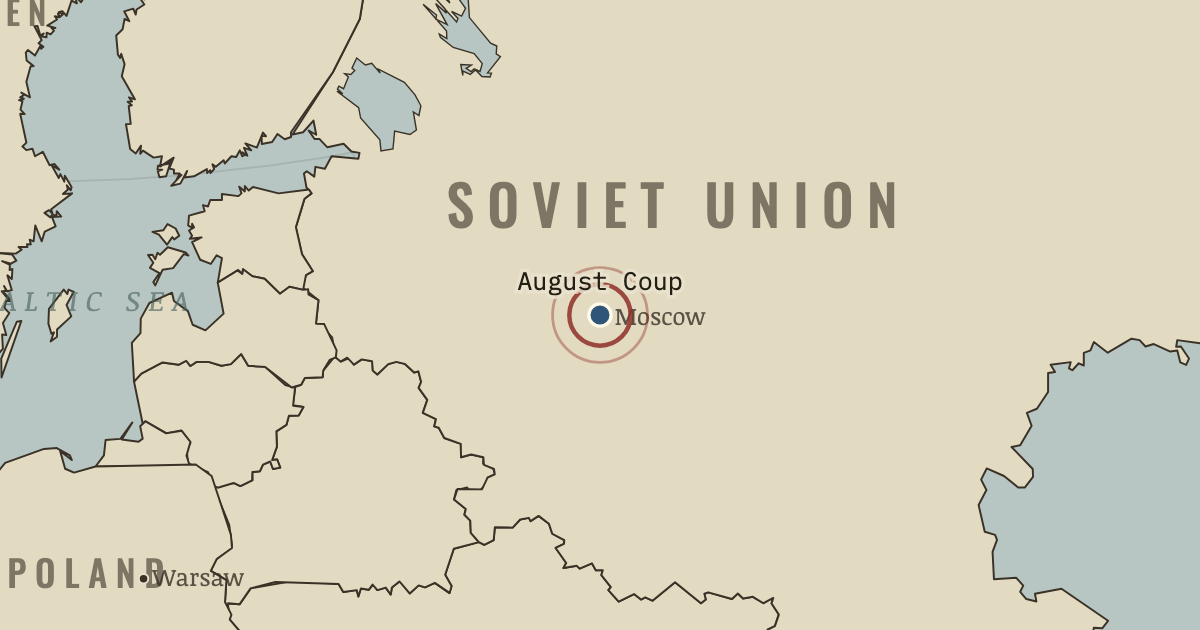
19–21 Aug 1991 — Hardliners seize Gorbachev and send tanks into Moscow. Outside parliament, Yeltsin climbs onto one of them. The army refuses to fire, and the coup dissolves in 60 hours, taking the union with it.
WW2 is free in full, and chapter 1 of every atlas is free. A free account opens 3 more chapters a day. Starter, at $9 a month, opens all 21 with no daily limit — see the plans.
The Soviet Union consented to German reunification in October 1990. Gorbachev, attracted by a “common European home” and increasingly dependent on Western credits, accepted a united Germany in NATO—an outcome his predecessors had armed to prevent. At home, however, the settlement he needed was slipping away. Reformers around Boris Yeltsin, elected president of Russia, wanted faster sovereignty; hardliners wanted central authority restored.
Why it happened — The August coup: the ratchet that broke. The August plotters occupied the state’s highest offices: the KGB chief, defense minister and prime minister were among them. They could send out…
The turn — Belovezha, 8 December 1991. On 8 December 1991 the leaders of Russia, Ukraine and Belarus met in a forest lodge at Belovezha. Their agreement announced that the USSR “as a…
What it changed — Who ended it? The four-way argument. Why did it end? American military competition and the Strategic Defense Initiative increased the strain and encouraged reformers. Stagnation,…
Then ask the room: “The Cold War ended without a war.” Defend and challenge this statement using three markers and two snapshots from the atlas. The argued answer is on the chapter page →