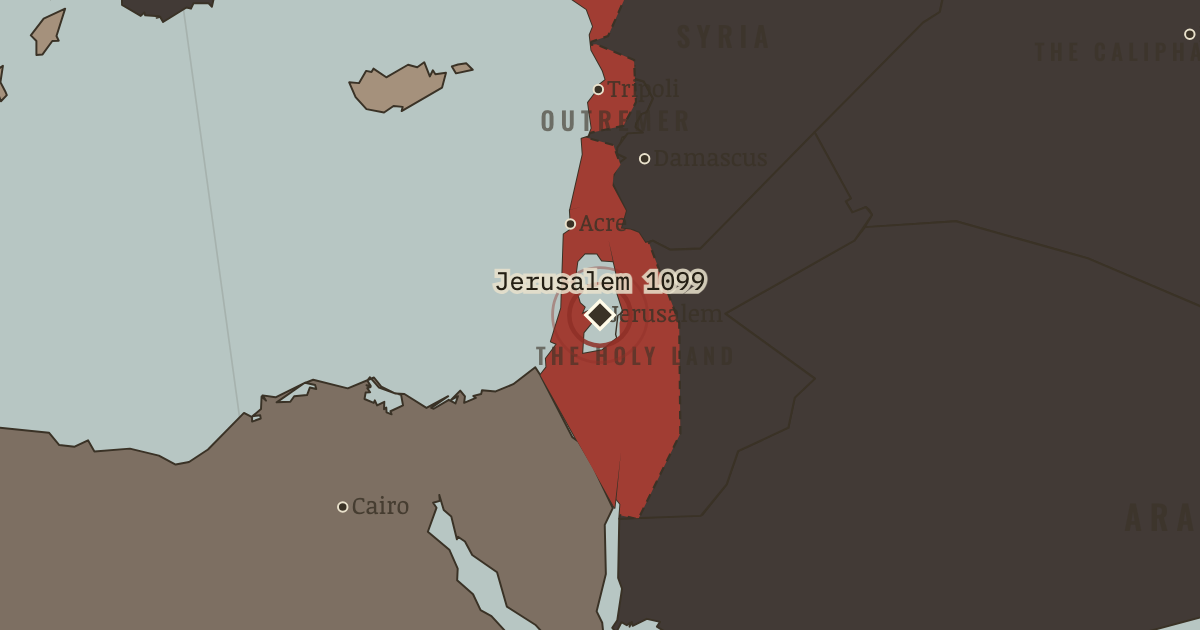
15 Jul 1099 — the crusaders take Jerusalem and slaughter its Muslim and Jewish inhabitants. Chroniclers boast that blood reached “to the horses’ bridles”; that is an exaggeration, but the massacre was real. This is a site of memory, not triumph.
WW2 is free in full, and chapter 1 of every atlas is free. A free account opens 3 more chapters a day. Starter, at $9 a month, opens all 21 with no daily limit — see the plans.
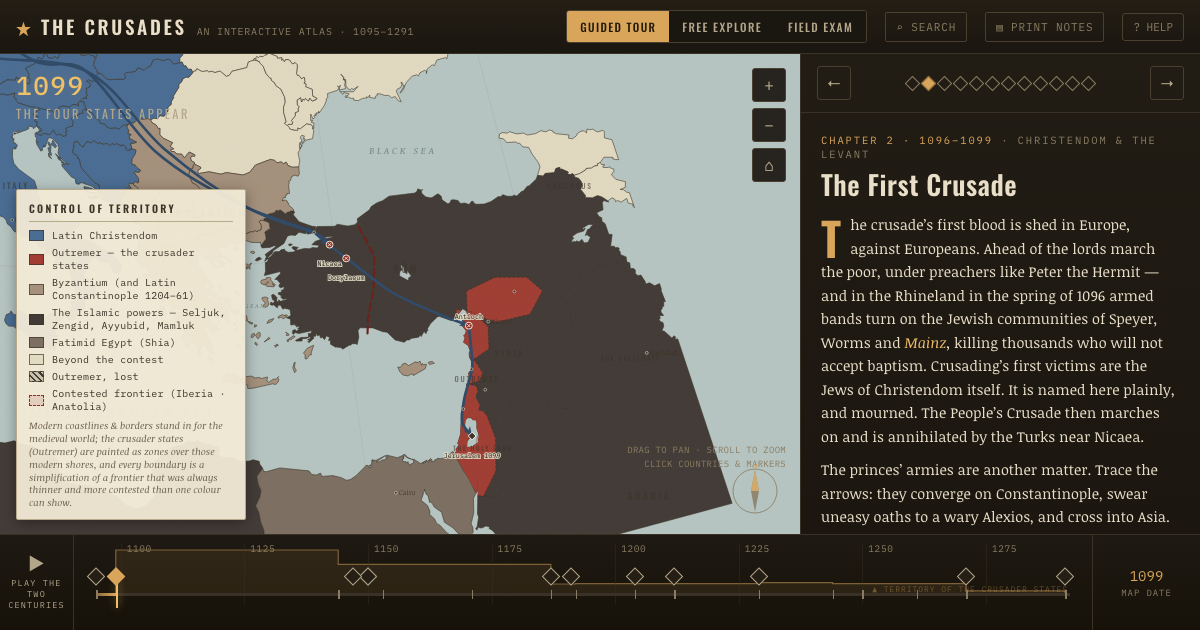
The call to fight enemies of Christ in the East gave some listeners a reason to attack Jews much closer to home. In spring 1096 armed bands descended on the communities of Speyer, Worms and Mainz, demanding conversion and killing thousands. Local bishops sometimes attempted to shelter Jewish residents, but their protection often failed. The victims were defenseless neighbors, not combatants. Understanding how the language of holy war was turned against them does nothing to justify the killings. The People’s Crusade continued east ahead of the princes and was destroyed by Turkish forces near Nicaea.
From First Crusade, chapter 2 of The Crusades, 1095–1291 (1099).
Why it happened — Muslim disunity, above all. The crusaders entered a region where potential opponents had their own conflicts. Seljuk heirs fought each other, Syrian emirs competed, and Fatimid…
The turn — Antioch, June 1098 — the siege within a siege. The capture of Antioch in June 1098 reversed the siege without ending it. After eight months outside the city, the crusaders were themselves trapped…
What it changed — Four states are born. The four Latin states emerged at different times: Edessa and Antioch in 1098, Jerusalem in 1099, and Tripoli consolidated by 1109. Together they…