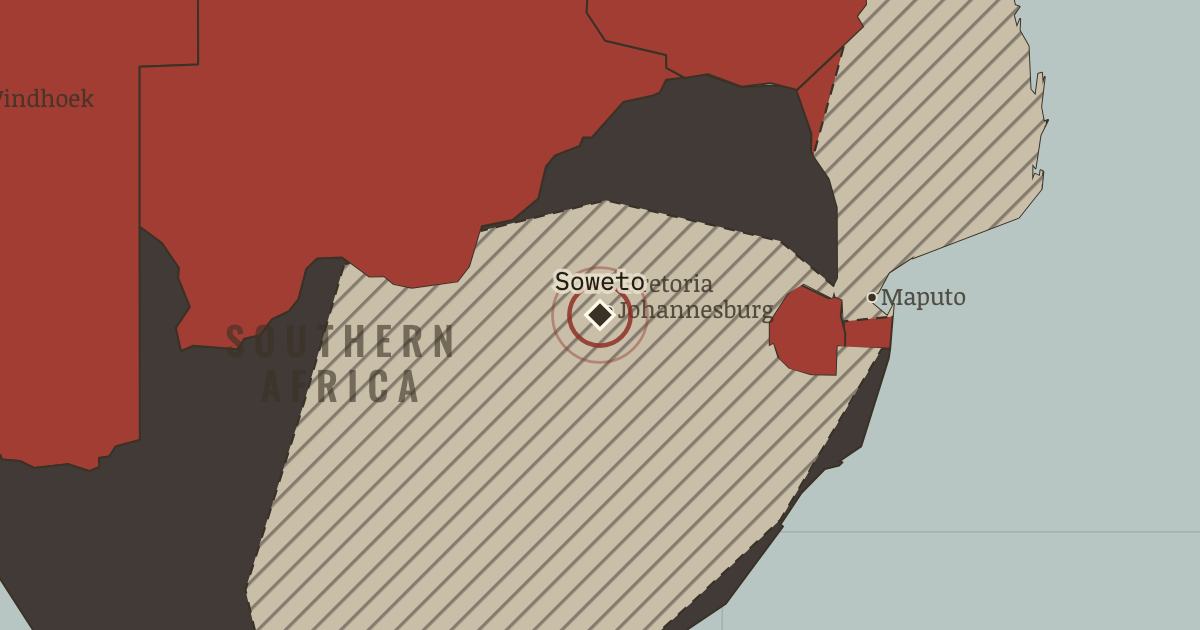
16 Jun 1976 — Schoolchildren protest compulsory Afrikaans, and police respond with bullets. The image of the dying Hector Pieterson travels around the globe. As the revolt spreads, hundreds die and a generation is radicalized. Remember them.
WW2 is free in full, and chapter 1 of every atlas is free. A free account opens 3 more chapters a day. Starter, at $9 a month, opens all 21 with no daily limit — see the plans.
16 JUNE 1976 · THE DECOLONIZATION OF AFRICA, 1945–1994
The moment in context
From 1948 the National Party made racial separation a system of government. Classification affected where a person could live, work, study, and marry. Pass laws controlled movement, and land policy reserved most of the country for whites. The homeland policy assigned Black South Africans to fragmented territories, allowing the state to deny them national political rights while continuing to rely on their labor. These measures worked together: the government sought both political exclusion and a controlled workforce.
Why it happened — The architecture of apartheid. The National Party built on earlier segregation after 1948, using racial classification to organize rights and restrictions throughout society.…
The turn — Mandela walks free, 11 February 1990. Nelson Mandela walked out of prison on 11 February 1990, after twenty-seven years. The government had unbanned the ANC and was prepared to bargain…
What it changed — From resistance to negotiation. A banned movement and the government that had imprisoned its leader now entered negotiations. The government controlled the state, while the…
Then ask the room: After decades of protest, sanctions and armed resistance, why did the apartheid government begin to negotiate around 1990? The argued answer is on the chapter page →
Get the printable study guide for The Decolonization of Africa free. I’ll send you a few short letters, then one when a new atlas opens. That’s all. — Paul
NO TRACKING · YOUR ADDRESS IS USED FOR THE DISPATCH AND NOTHING ELSE ·
UNSUBSCRIBE ANYTIME