ON THIS DAY ·
Yellow River flood
9 Jun 1938 — Nationalist engineers breached the Yellow River dikes at Huayuankou to slow the Japanese drive on Wuhan. The villages downstream received no warning. The river swept south across three provinces; hundreds of thousands drowned or starved, with estimates of 500,000–900,000 dead, and millions fled. Japan was delayed by months. Whether anything could justify the decision is a question this map leaves open. Remember Huayuankou.
WW2 is free in full, and chapter 1 of every atlas is free. A free account opens 3 more chapters a day. Starter, at $9 a month, opens all 21 with no daily limit — see the plans.
Free printable Chinese Revolution study guide, sent by email ↓
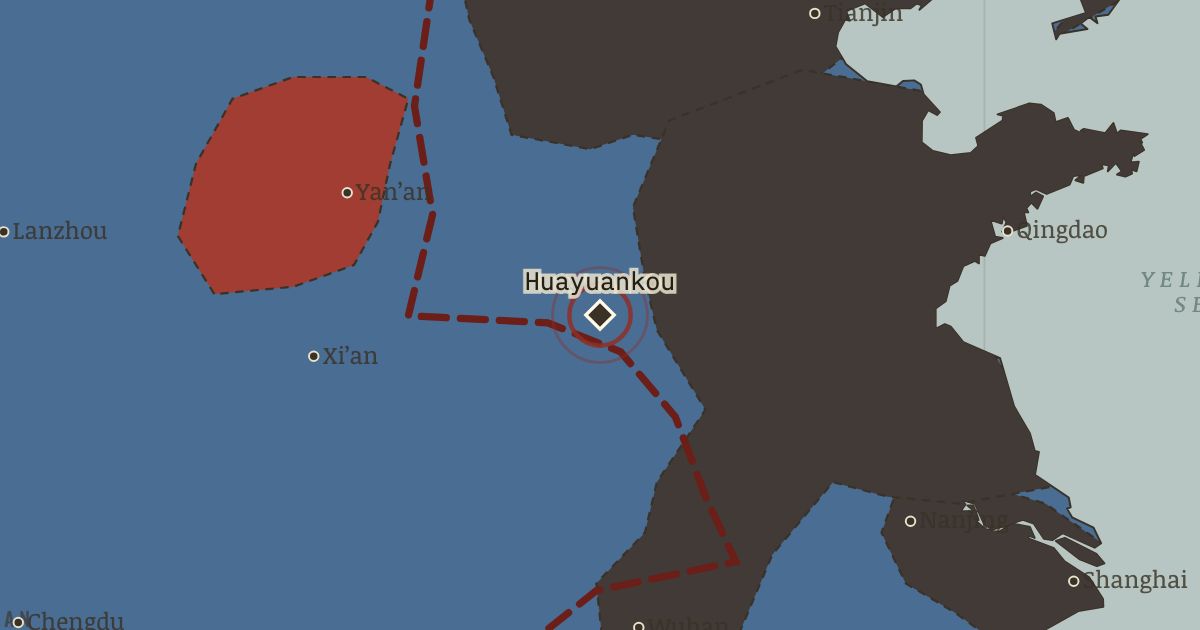
The moment in context
The clash that opened full-scale war began during a Japanese night exercise on 7 July 1937. A soldier was missing at roll call, and shots were exchanged near Marco Polo Bridge southwest of Peking (the ✕). Local commanders nearly settled the incident, as they had others since 1931. This time Tokyo reinforced its troops. Chiang stood firm too: currency reform and German-trained divisions had improved his position, while the Xi’an settlement had tied his political standing to resistance. What might have remained a local clash became a test neither government would step back from.
From Second Sino-Japanese War (1937–38), chapter 8 of China in Revolution, 1911–1949 (1938).
The place: Yellow River flood — map and full story →
Teach this in 5 minutes
- Why it happened — Escalation in Tokyo. Tokyo entered the crisis without a settled plan to conquer all China, but its government struggled to restrain field armies that created facts on…
- The turn — Marco Polo Bridge, 7 July 1937. Since 1931 earlier local incidents had been contained. At Marco Polo Bridge, Tokyo reinforced its troops, while Chiang stood firm under the pressure…
- What it changed — Government in the interior. The move to Chungking kept a government in the war, but left much of the Yangtze delta’s industry, customs revenue and tax base behind. Poorer,…
Then ask the room: Was Chiang right to fight in 1937, six years after Manchuria and before China was fully prepared? The argued answer is on the chapter page →
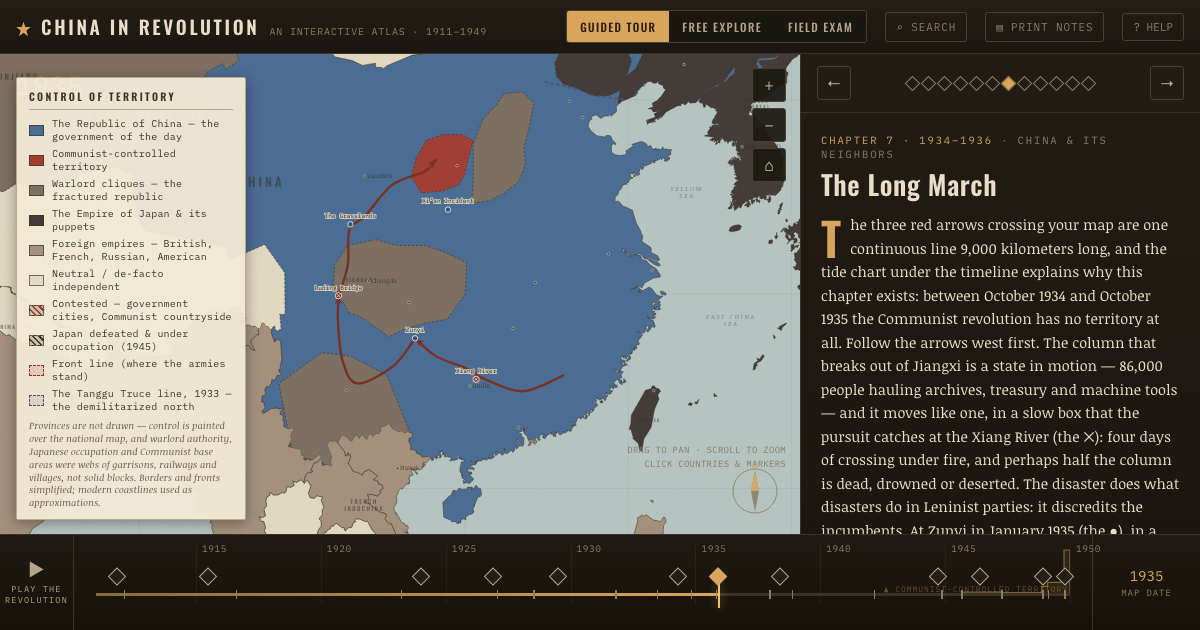
The atlas that shows it
THE FREE PRINTABLE STUDY GUIDE
Get the printable study guide for China in Revolution free. I’ll send you a few short letters, then one when a new atlas opens. That’s all. — Paul
NO TRACKING · YOUR ADDRESS IS USED FOR THE DISPATCH AND NOTHING ELSE · UNSUBSCRIBE ANYTIME