WW2 is free in full, and chapter 1 of every atlas is free. A free account opens 3 more chapters a day. Starter, at $9 a month, opens all 21 with no daily limit — see the plans.
8 JUNE 793 · CLIMATE AND INNOVATION: THE NORSE AND THE AZTECS, C. 790–1521
The moment in context
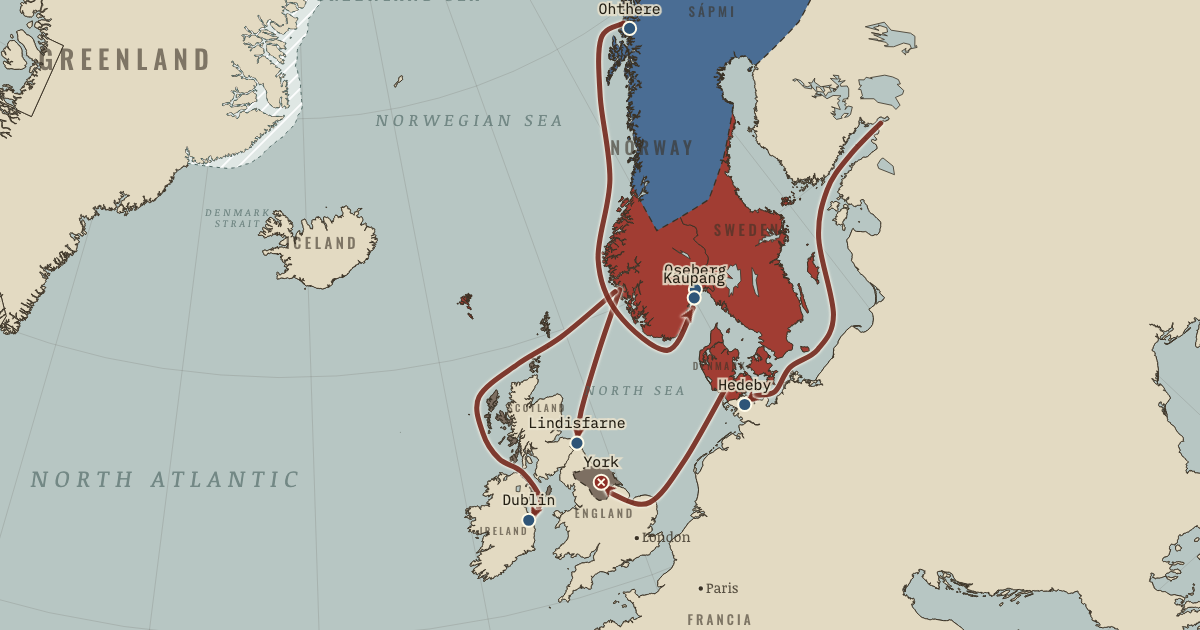
A ship able to cross open water and land without a deep harbor gave its crew choices that defenders could not easily anticipate. Scandinavian ships had a keel to help hold course under sail, and overlapping planks that flexed with the waves. Their shallow draft—the depth of hull below the waterline—let them approach shore. A fleet could choose a landing place and arrive before a defending army had gathered.
Why it happened — A scarcity of farmland at home. Norway's mountains, forests and rock left only about 3 percent of its land available for cultivation. Good farms along the fjords were limited and…
The turn — Lindisfarne, 793. The 793 raid on the monastery at Lindisfarne, off Northumbria, conventionally begins the Viking Age. Scandinavians had probably traded with Britain…
What it changed — Settlement follows the raiders west. Routes first used by raiders could also bring families looking for farms. Norse settlers took the Northern Isles, Hebrides and Faroe Islands in the…