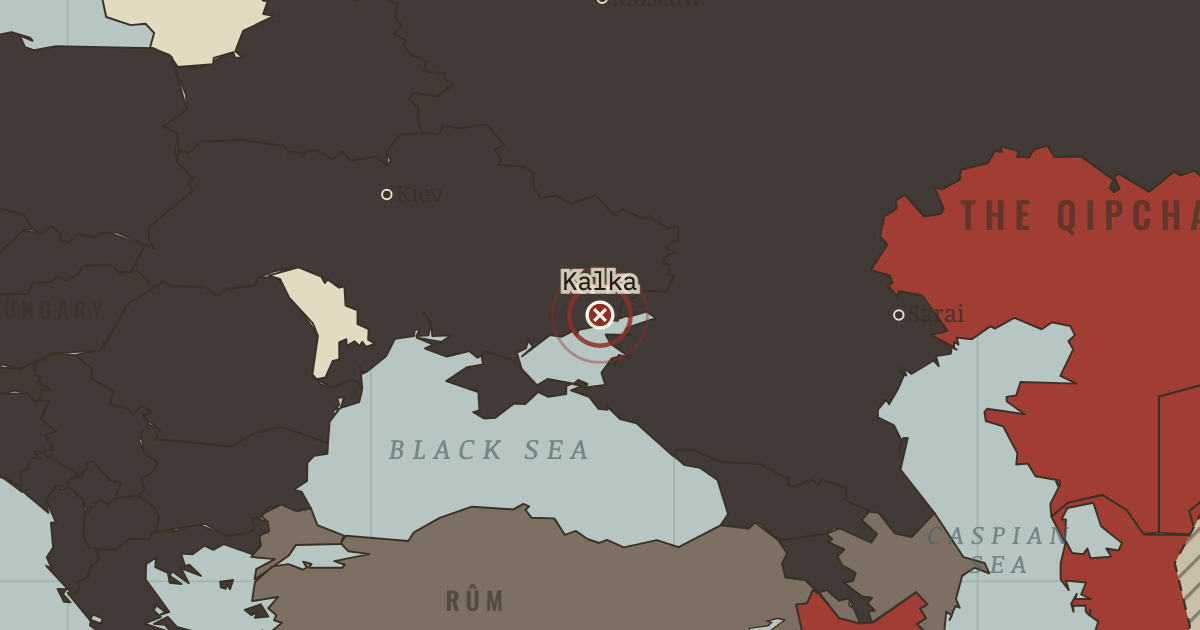
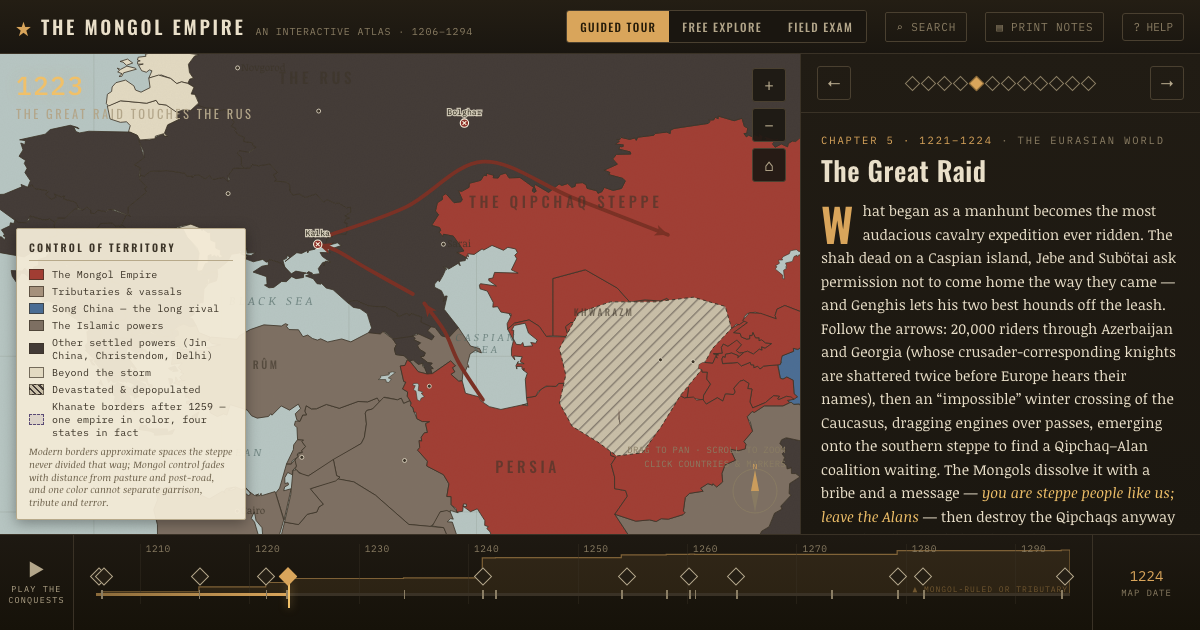
31 May 1223 — Three Rus princes and their Cuman allies chase what appears to be a retreat for nine days. At the Kalka the Mongols turn on them and annihilate them. The captured princes are suffocated beneath the victory platform. The raiders leave, and the Rus treat the attack as a passing horror, changing nothing.
WW2 is free in full, and chapter 1 of every atlas is free. A free account opens 3 more chapters a day. Starter, at $9 a month, opens all 21 with no daily limit — see the plans.
Jebe and Subötai’s expedition began with a fugitive. They had been sent after Shah Muhammad of Khwarazm, but his death did not bring them home. They continued around the Caspian, crossed the Caucasus and defeated Georgian forces before meeting an Alan–Qipchaq alliance on the steppe. The Mongols persuaded the Qipchaqs to abandon their allies. Once the Alans had been isolated and destroyed, the Mongols turned on the Qipchaqs. Their diplomacy had given them two separate enemies to fight where there might have been one coalition.
Why it happened — Reconnaissance with an army. Reconnaissance in force means gathering information with troops strong enough to fight. The pursuit of the shah became an expedition of this kind,…
The turn — The Kalka and the years that followed. The defeat of 31 May 1223 revealed that a dangerous army could reach the Rus from the steppe. The years that followed offered an opportunity to…
What it changed — Experience carried into another campaign. Subötai brought his experience of routes, conditions and opponents back with him in 1236. The Rus princes had established no common frontier defense…