ON THIS DAY ·
La Conferencia de Mujeres por la Raza
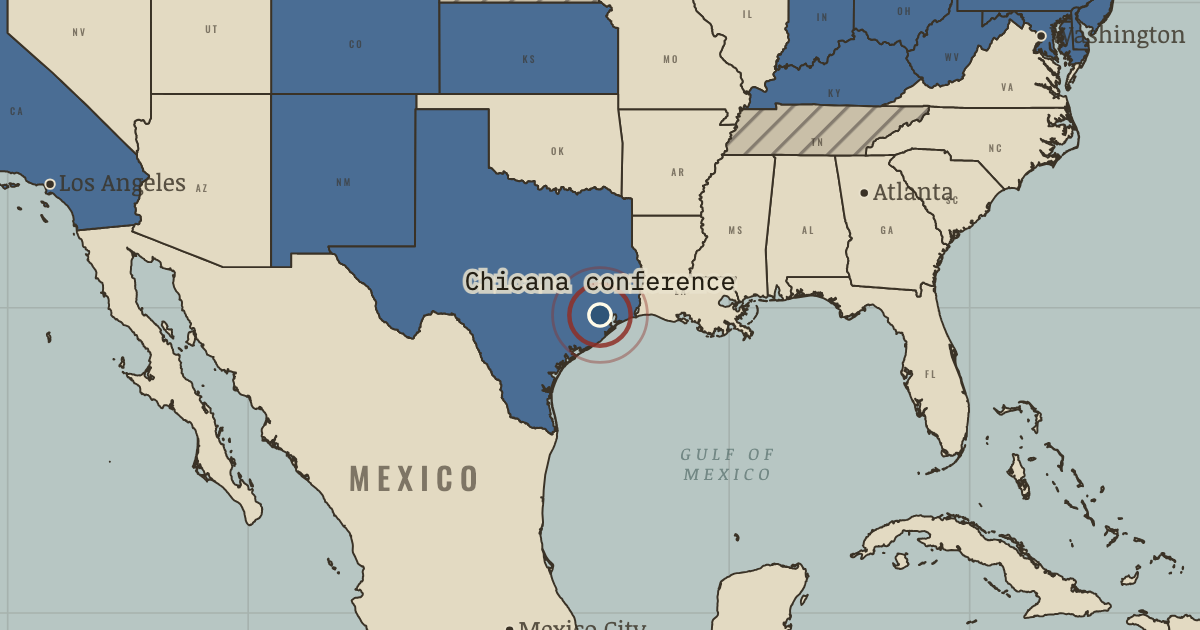
28–30 May 1971 — More than 600 Chicanas gather at the Magnolia Park YWCA in Houston for the first national Chicana conference. Its resolutions call for free abortion and 24-hour childcare. The meeting divides over whether feminism weakens the Chicano movement.
WW2 is free in full, and chapter 1 of every atlas is free. A free account opens 3 more chapters a day. Starter, at $9 a month, opens all 21 with no daily limit — see the plans.
Free printable Feminism and the Tunisian Revolution study guide, sent by email ↓
The moment in context
Frances Beal asked feminists to look at the lives behind their general claims about women. A veteran of the student civil-rights group SNCC, she argued in her 1969 essay “Double Jeopardy” that Black women faced racism and sexism together. Housework might be described as a prison for women confined to their own homes. That description left out Black women who had long cleaned other people's houses for wages.
From Black and Chicana feminism, chapter 4 of Protest and Change: Second-Wave Feminism and Tunisia, 1945–2015 (1977).
The place: La Conferencia de Mujeres por la Raza — map and full story →
Teach this in 5 minutes
- Why it happened — A movement built in the image of its founders. The second wave's early texts and organizations grew from the experience of educated white women: suburban isolation, exclusion from professions and…
- The turn — The Combahee River Collective Statement, April 1977. In April 1977 Barbara Smith, Beverly Smith and Demita Frazier gave the Combahee River Collective's grievances a lasting formulation. Race, sex,…
- What it changed — From reproductive rights to reproductive justice. The Committee to End Sterilization Abuse and other groups pressed for safeguards against coercion. Federal rules in 1978 required a 30-day waiting…
Then ask the room: Were Black, Chicana and working-class women “left out” of second-wave feminism, or did they build a different feminism of their own? The argued answer is on the chapter page →
The atlas that shows it
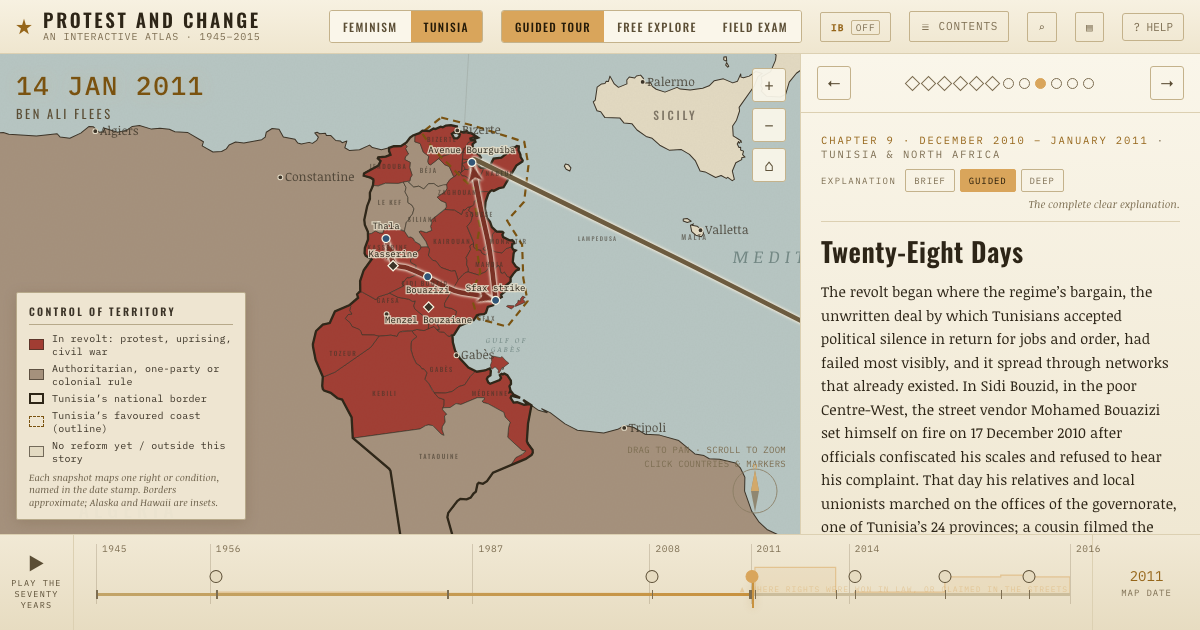
THE FREE PRINTABLE STUDY GUIDE
Get the printable study guide for Protest and Change free. I’ll send you a few short letters, then one when a new atlas opens. That’s all. — Paul
NO TRACKING · YOUR ADDRESS IS USED FOR THE DISPATCH AND NOTHING ELSE · UNSUBSCRIBE ANYTIME