ON THIS DAY ·
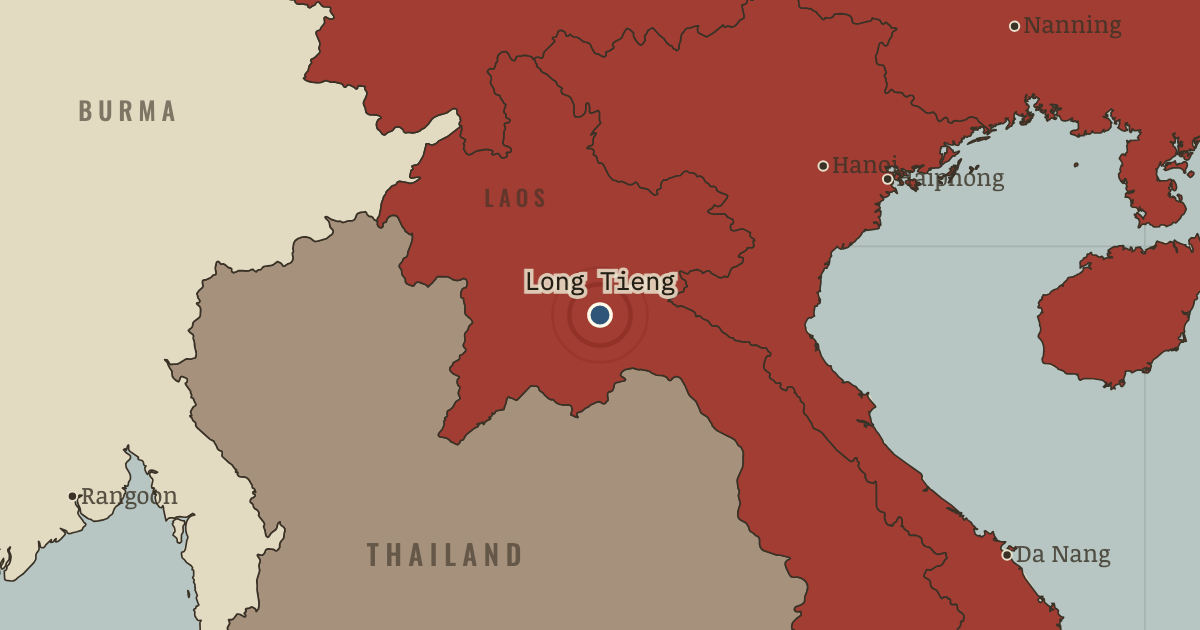
Evacuation of Long Tieng
14 May 1975 — Aircraft evacuate General Vang Pao and a few thousand Hmong from the CIA-backed base at Long Tieng. Tens of thousands of others are left behind and set out on foot toward the Mekong and Thailand. Hmong flight continues for more than a decade.
WW2 is free in full, and chapter 1 of every atlas is free. A free account opens 3 more chapters a day. Starter, at $9 a month, opens all 21 with no daily limit — see the plans.
The moment in context
The evacuation from Vietnam began with a problem of time. The Republic of Vietnam, the American-backed South, collapsed within eight weeks of the North's March 1975 offensive. Officials, officers and employees associated with the Americans had reason to fear the victors, but preparations for their departure had to be improvised as the government fell.
From Fall of Saigon and the 1975 exodus, chapter 7 of Uprooted: Refugees in Europe 1945–1960 and Indochina 1975–1990 (1975).
The place: Evacuation of Long Tieng — map and full story →
Teach this in 5 minutes
- Why it happened — Thirty years of war. The victors inherited countries already uprooted by almost continuous war since 1945. Fighting against French rule gave way to a conflict between…
- The turn — Saigon, 29–30 April 1975. On 29 and 30 April helicopters took about 7,000 people from Saigon to the fleet. About 130,000 left in the wider evacuation that spring. These…
- What it changed — Those left behind. Defeat did not end the danger for people who stayed. Hundreds of thousands of former officers and officials entered re-education camps, and city…
Then ask the room: Why did the communist victories of 1975 produce such different kinds of displacement in Vietnam, Cambodia and Laos? The argued answer is on the chapter page →
The atlas that shows it
THE FREE PRINTABLE STUDY GUIDE
Get the printable study guide for Uprooted free. I’ll send you a few short letters, then one when a new atlas opens. That’s all. — Paul
NO TRACKING · YOUR ADDRESS IS USED FOR THE DISPATCH AND NOTHING ELSE · UNSUBSCRIBE ANYTIME