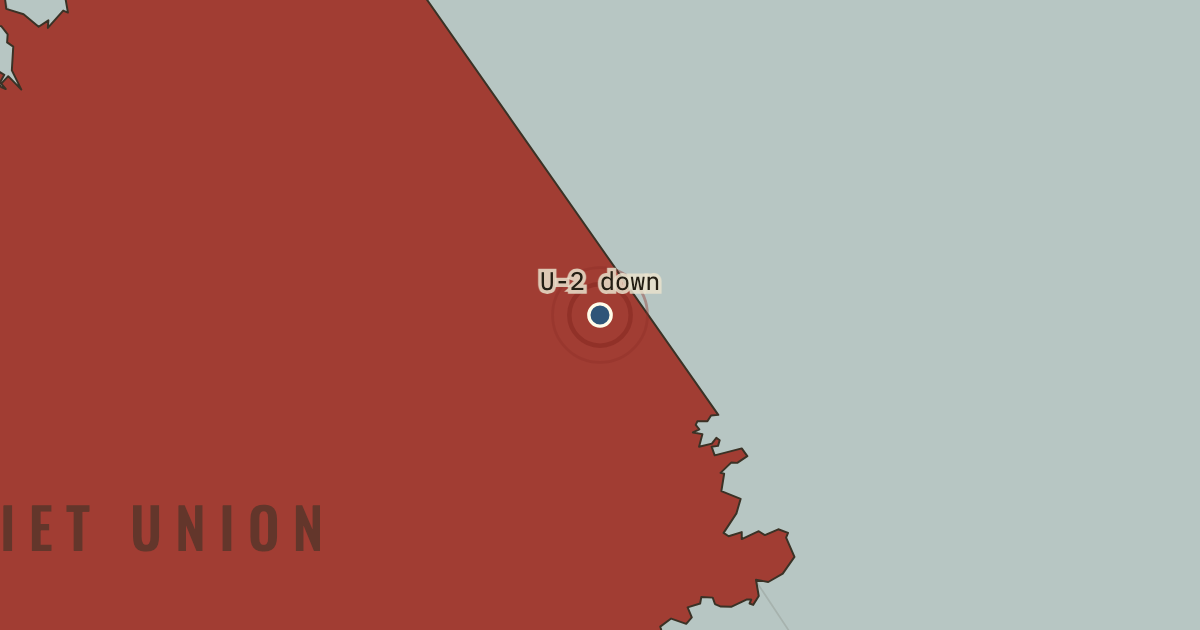
1 May 1960 — A missile reaches the supposedly “untouchable” spy plane over Sverdlovsk, and pilot Francis Gary Powers is paraded before cameras. Two weeks later, the Paris summit collapses on its opening morning when Khrushchev demands an apology that Eisenhower refuses to give.
WW2 is free in full, and chapter 1 of every atlas is free. A free account opens 3 more chapters a day. Starter, at $9 a month, opens all 21 with no daily limit — see the plans.
Khrushchev wanted to renew Soviet socialism, not surrender leadership of the bloc. His Secret Speech in 1956 condemned Stalin’s crimes, yet that condemnation gave others an argument for change. If the party itself called the terror criminal, loyal socialists could question the controls left in its place. In Poland, Gomułka secured a less rigid communist government that autumn while remaining in the Soviet alliance. Hungary demanded more: neutrality and departure from the Warsaw Pact. Soviet armor returned to Budapest, killing roughly 2,700 people and driving 200,000 into exile.
Why it happened — De-Stalinization and the demand for reform. Khrushchev’s attack on Stalin served his own position and promised to revive a system damaged by terror. It also changed the grounds on which…
The turn — Berlin, 13 August 1961 — the crossing closes. East Germany sealed the crossing overnight on 13 August. Wire came first, then concrete and a fortified death strip where perhaps 140 people died…
What it changed — Britain and France after Suez. The Suez failure exposed Britain and France’s dependence on American power. Eden resigned within months, and decolonization accelerated. France…