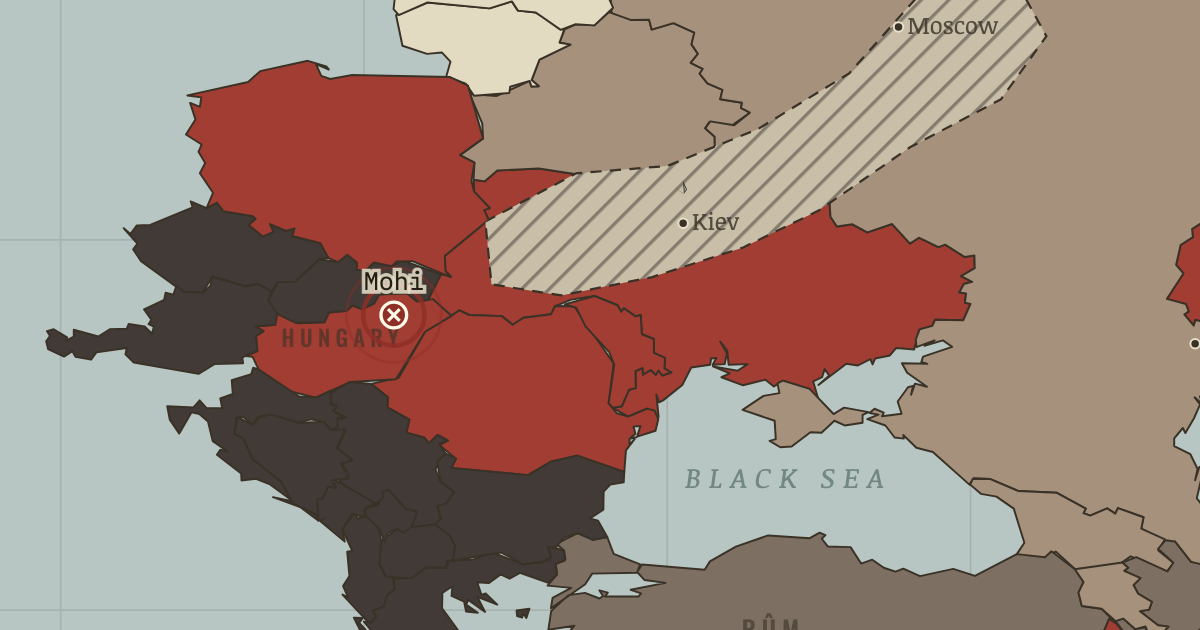
11 Apr 1241 — Two days after Legnica, and six hundred kilometers away, the main Mongol army destroys King Béla IV’s host at the Sajó bridge. Stone-throwers and fire-arrows cover a river crossing at night. The two victories come in one week, coordinated across a continent, beyond the capacity of any European staff.
WW2 is free in full, and chapter 1 of every atlas is free. A free account opens 3 more chapters a day. Starter, at $9 a month, opens all 21 with no daily limit — see the plans.
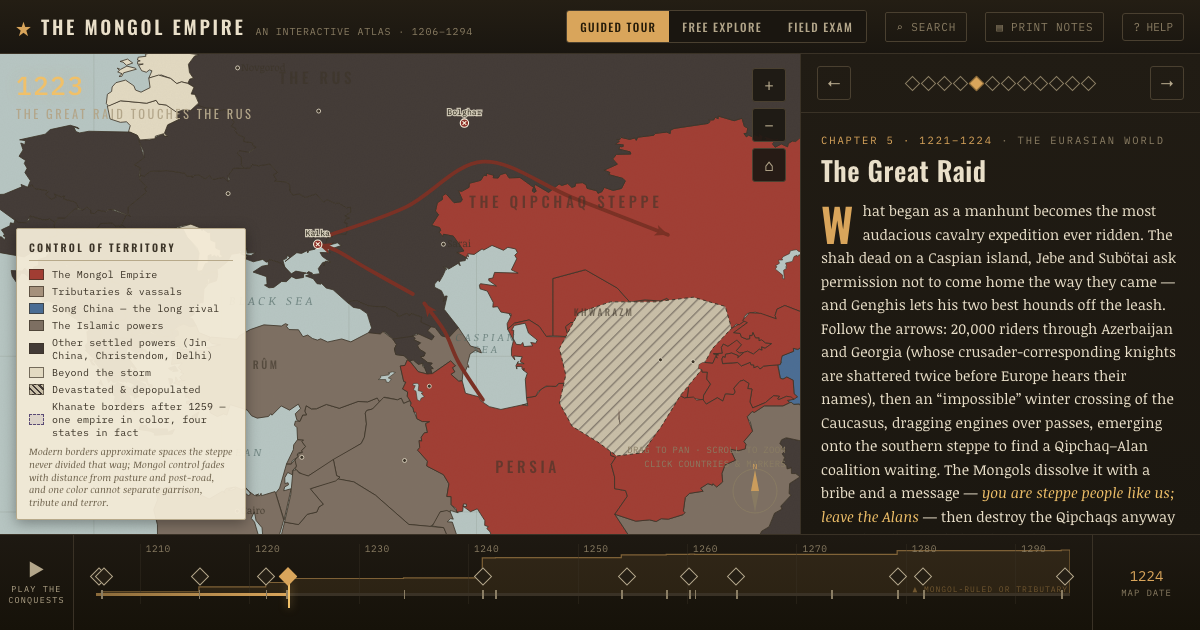
The force that struck Volga Bulgaria in 1236 was sent to conquer, with resources far greater than those of the earlier raid. From Bulgaria the Mongol armies entered the Rus lands. Their rulers faced the invasion as separate principalities, and the season did not give them the protection they might have expected. Frozen rivers offered routes toward settlements, although uncertain ice, snow and the need to feed horses made winter a burden as well.
Why it happened — The resources of a dynasty. The expedition that reached the Kalka in 1223 had roughly 20,000 riders. In 1236 Batu led a campaign backed by a kurultai decision and princes from…
The turn — Legnica and Mohi, 9–11 April 1241. Legnica and Mohi fell two days apart, on 9 and 11 April 1241. Separate Mongol forces had won battles hundreds of kilometers apart while their…
What it changed — Rus under the Horde. The Rus principalities retained their princes and faiths, but the Horde required tribute, censuses and the khan’s approval for rule. This…