ON THIS DAY ·
Congress of People’s Deputies election
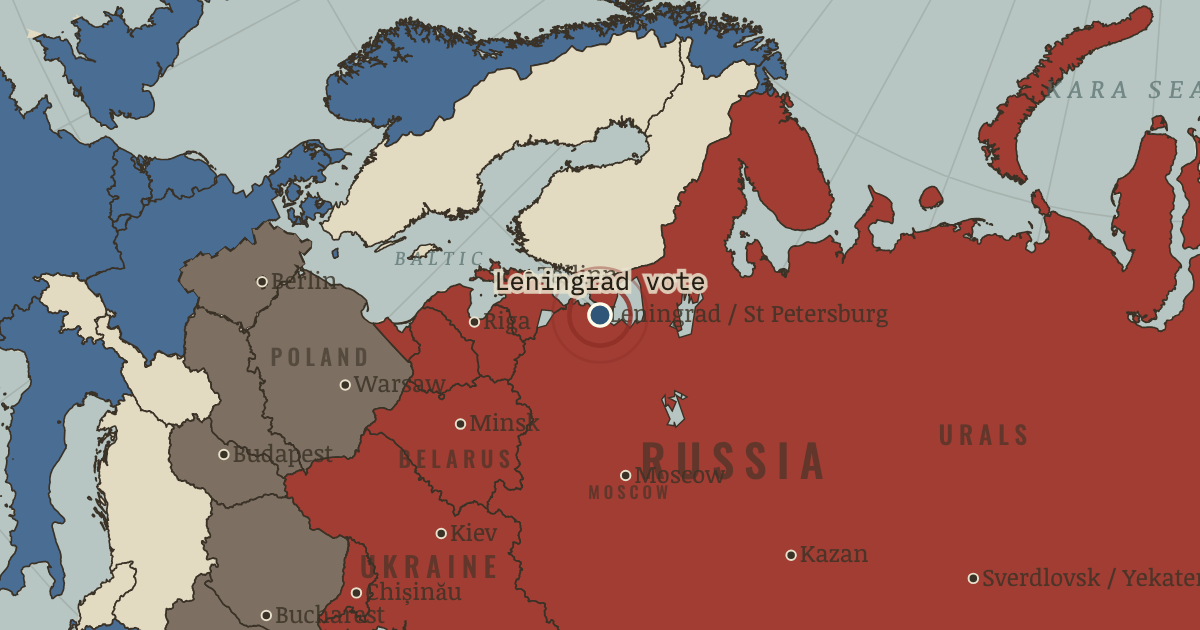
26 Mar 1989 — The first contested national elections since 1917 gave voters a chance to reject senior party officials, and dozens lost. In Leningrad, even the unopposed regional party chief failed to win: most voters crossed out his name. The new Congress opened in May, with proceedings televised live.
WW2 is free in full, and chapter 1 of every atlas is free. A free account opens 3 more chapters a day. Starter, at $9 a month, opens all 21 with no daily limit — see the plans.
Free printable Meiji Japan and post-Soviet Russia study guide, sent by email ↓
The moment in context
Gorbachev’s first attempt at reform did not abandon the Soviet system. It asked the system to work harder. As general secretary, and thus the country’s leader, he sought “acceleration” through investment in machine-building and tighter discipline. His campaign against drinking, launched in May 1985, reduced vodka production and raised its price. It also removed tens of billions of roubles from the budget over three years, because alcohol taxes were one of the state’s largest sources of income. Many drinkers turned to moonshine in place of state vodka.
From Perestroika and glasnost, chapter 8 of Remaking the State: Meiji Japan 1600–1912 and Post-Soviet Russia 1964–2000 (1988).
The place: Congress of People’s Deputies election — map and full story →
Teach this in 5 minutes
- Why it happened — A generational change at the top. Three general secretaries died in office between November 1982 and March 1985. Their deaths opened the leadership to a younger man whose career had…
- The turn — The elections of 26 March 1989. The elections of 26 March 1989 gave most voters a choice of candidates for the first time since 1917. In Leningrad and other cities they rejected…
- What it changed — An elected opposition gained a national stage. The new Congress gave opponents a national platform. Yeltsin, Sakharov and several hundred allies formed the Inter-Regional Group of deputies, the…
Then ask the room: Should Gorbachev be judged a failure for losing the system he set out to save, or credited for ending it without a major war? The argued answer is on the chapter page →
The atlas that shows it
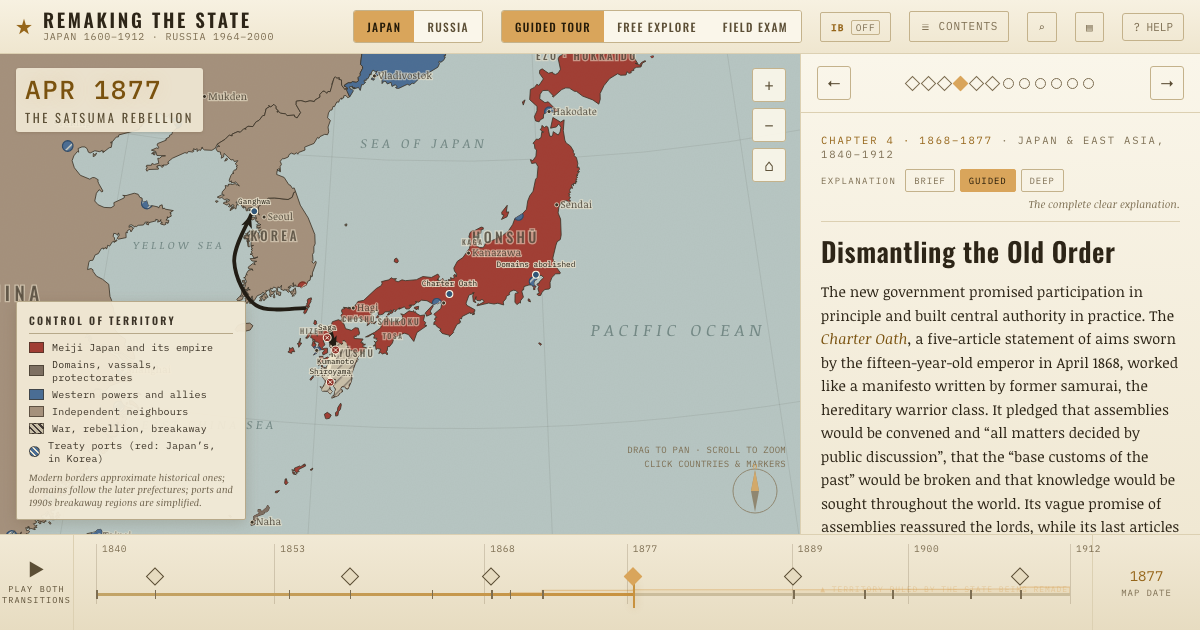
THE FREE PRINTABLE STUDY GUIDE
Get the printable study guide for Remaking the State free. I’ll send you a few short letters, then one when a new atlas opens. That’s all. — Paul
NO TRACKING · YOUR ADDRESS IS USED FOR THE DISPATCH AND NOTHING ELSE · UNSUBSCRIBE ANYTIME