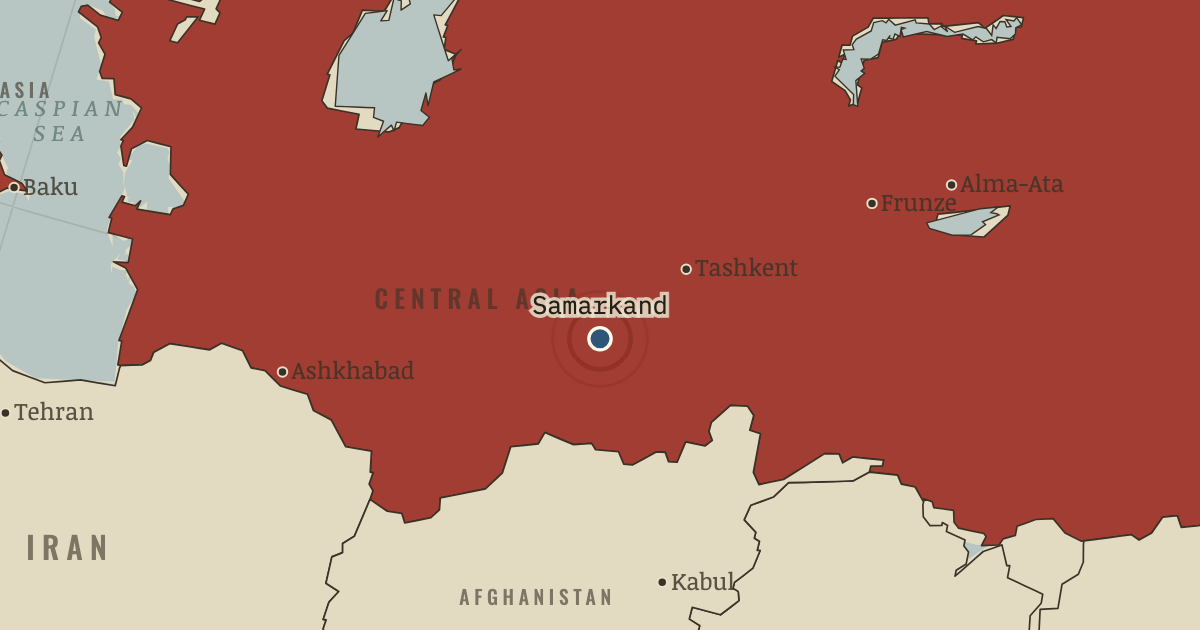
8 Mar 1927 — On International Women’s Day, thousands of women in Samarkand, then the Uzbek capital, and other cities cast off and burned their paranji veils. They did so during a party campaign called the hujum (“assault”). A violent backlash followed, and hundreds of unveiled women were murdered.
WW2 is free in full, and chapter 1 of every atlas is free. A free account opens 3 more chapters a day. Starter, at $9 a month, opens all 21 with no daily limit — see the plans.
8 MARCH 1927 · THE SOVIET UNION UNDER STALIN, 1924–1953
The moment in context
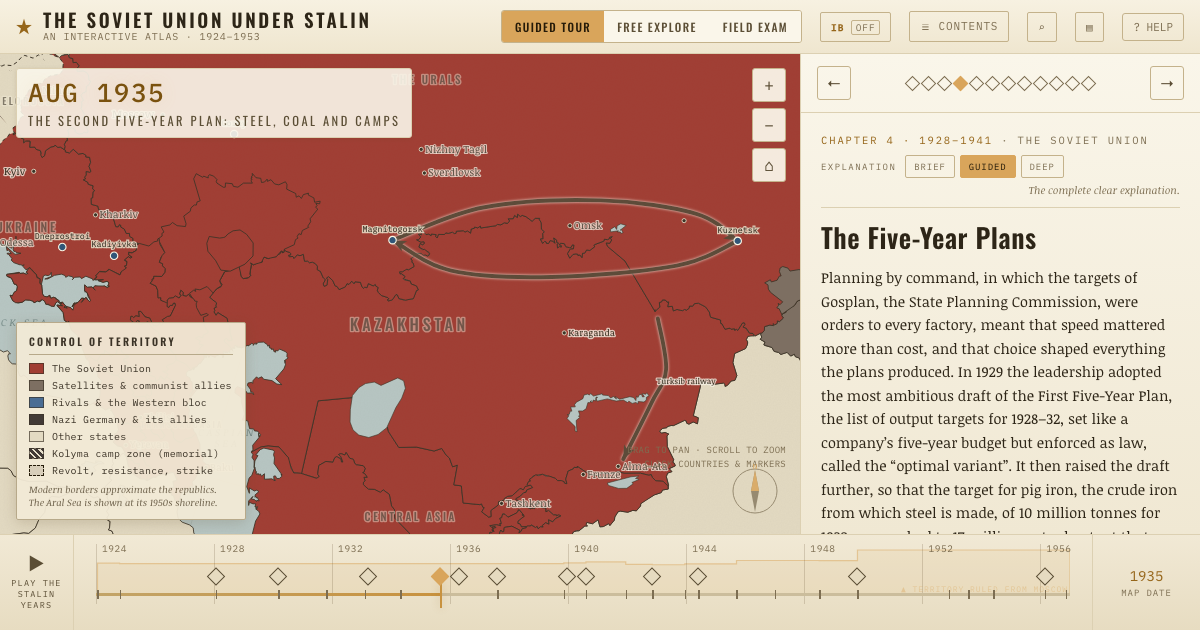
The new industrial towns needed workers, and the countryside supplied them. Some peasants fled collectivisation—the forced merger of farms into state-run collectives—and famine; factories recruited others. The arrows on the map trace routes to Moscow, the Donbas mines, Magnitogorsk and other industrial centres. In little more than a decade the movement changed the make-up of Soviet society.
Why it happened — Industrialisation needed millions of new workers. The industrial workforce more than doubled between 1928 and 1932 as the Five-Year Plans created jobs. Collectivisation and famine simultaneously…
The turn — Ivanovo and the law of June 1936. The decree of 27 June 1936 changed family life by banning abortion, legal since 1920, making divorce expensive and rewarding motherhood as a duty.…
What it changed — A society of new cities and new classes. The urban share of the population rose from one in five in 1926 to one in three by 1939. Workers’ and peasants’ families also supplied an educated…
Get the printable study guide for The Soviet Union under Stalin free. I’ll send you a few short letters, then one when a new atlas opens. That’s all. — Paul
NO TRACKING · YOUR ADDRESS IS USED FOR THE DISPATCH AND NOTHING ELSE ·
UNSUBSCRIBE ANYTIME