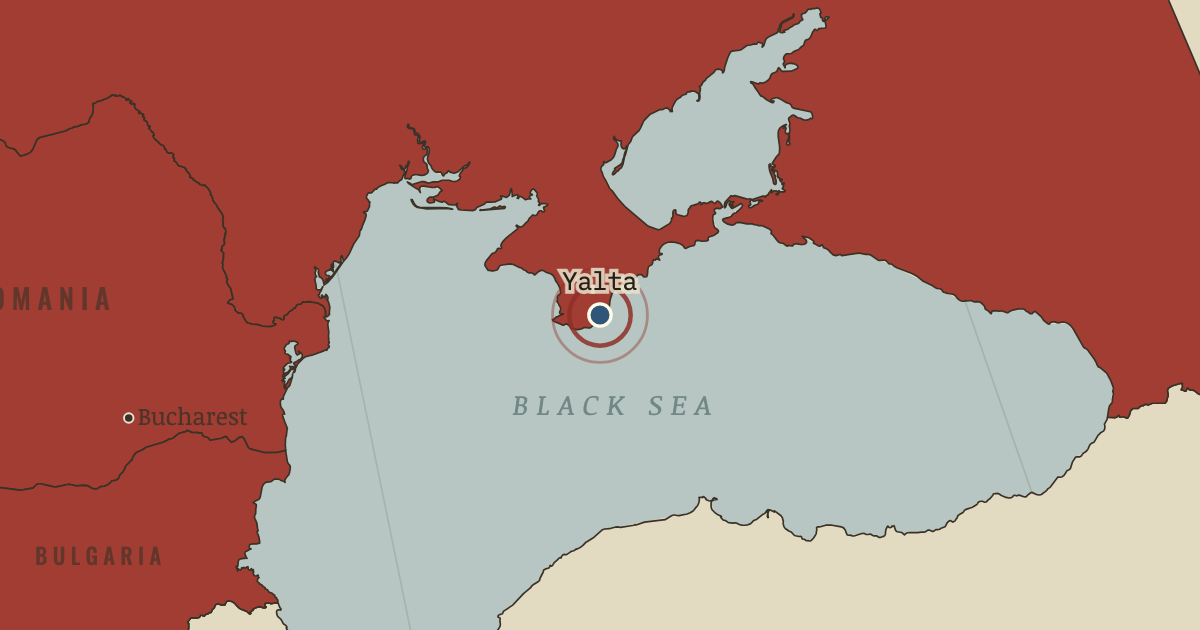
4–11 Feb 1945 — Roosevelt, Churchill and Stalin agree that Poland’s eastern border will run roughly along the Curzon Line, with compensation in the west. They also sign agreements to return one another’s liberated citizens. The border decision and the repatriation agreements would uproot millions after the fighting stopped.
WW2 is free in full, and chapter 1 of every atlas is free. A free account opens 3 more chapters a day. Starter, at $9 a month, opens all 21 with no daily limit — see the plans.
11 FEBRUARY 1945 · UPROOTED: REFUGEES IN EUROPE 1945–1960 AND INDOCHINA 1975–1990
The moment in context
The Allies found millions of foreign workers in Germany because the Nazi economy had brought them there. In August 1944 the labor offices of the Reich, as Nazi Germany called itself, counted about 7.6 million foreign civilian workers and prisoners of war, over a quarter of the German workforce. Some 2.8 million came from the Soviet Union. Many had been seized in occupied Poland, Ukraine and Belarus and sent to farms, mines and arms factories, including those of the Ruhr. When Allied armies arrived, liberation ended their forced work, but it did not feed them or bring them home. Officers grouped civilians stranded outside their countries by the war as ‘displaced persons’, or DPs. The category made it possible to organize relief and return for a vast population whose members had suffered different crimes.
Why it happened — An economy run on foreign labour. The German war economy depended on people brought from occupied countries. By August 1944 the Reich employed about 7.6 million foreign civilians and…
The turn — Berlin-Karlshorst, 8 May 1945. In a requisitioned officers’ mess at Berlin-Karlshorst, Germany signed its surrender. The end of fighting left millions needing food, shelter and a…
What it changed — Germans next in line. Surrender brought no security of residence for Germans still in the eastern territories or for German minorities in Czechoslovakia and Hungary.…