ON THIS DAY ·
Chauri Chaura incident
4 Feb 1922 — After police fired, a crowd burned the station with 22 constables inside. Gandhi responded by halting the entire national movement, despite furious objections. He argued that a people not yet disciplined in non-violence could not be trusted with the movement. The decision remains contested today.
WW2 is free in full, and chapter 1 of every atlas is free. A free account opens 3 more chapters a day. Starter, at $9 a month, opens all 21 with no daily limit — see the plans.
Free printable Indian independence study guide, sent by email ↓
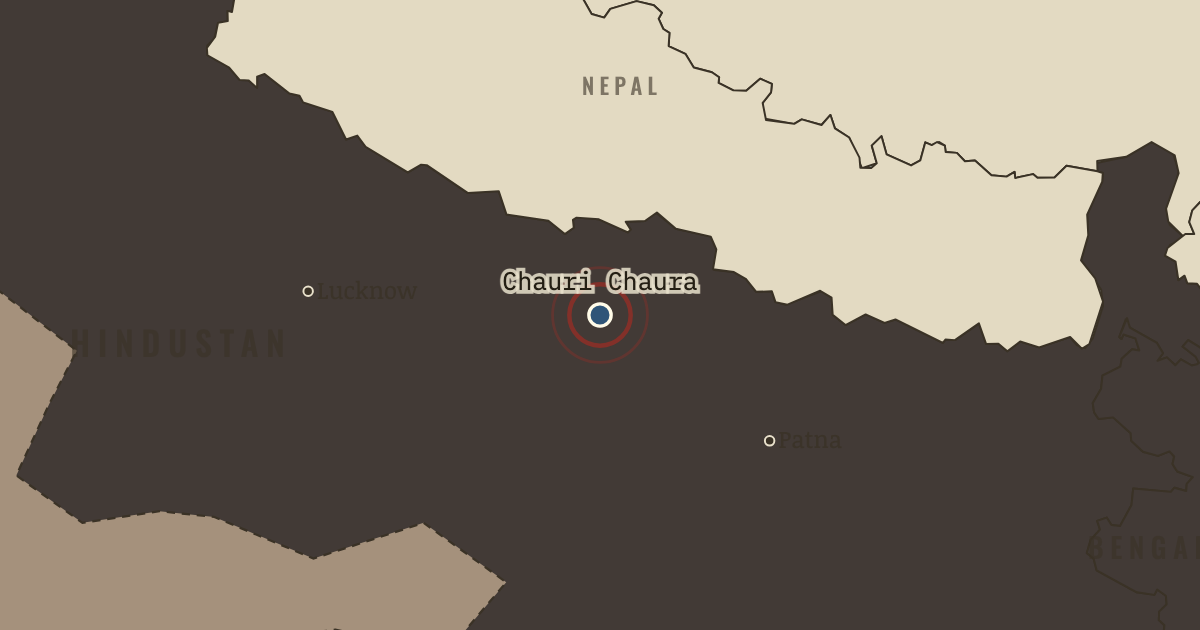
The moment in context
At Nagpur in December 1920, Congress reorganized itself for a struggle in which ordinary participation would become a source of power. Its goal was swaraj, self-rule; its method was non-violent non-cooperation. Membership cost four annas, within a peasant’s reach, and Congress would work in each province’s own language. Gandhi promised swaraj within a year if the program held. The reasoning was straightforward: a government needs people to use its institutions and buy its goods. If enough people refused, its machinery would be much harder to operate.
From Non-cooperation movement, chapter 7 of Indian Independence & Partition, 1857–1964 (DEC 1920).
The place: Chauri Chaura incident — map and full story →
Teach this in 5 minutes
- Why it happened — Amritsar plus Khilafat: two griefs, one front. Amritsar’s wound in Punjab and Muslim anger over the Caliphate were different grievances, but Gandhi brought their supporters into one campaign. A…
- The turn — Chauri Chaura, 4 February 1922. The killing of twenty-two policemen at Chauri Chaura brought Gandhi to a decision almost every Congress leader protested in writing: he stopped the…
- What it changed — The ebb turns communal. The campaign had given Hindus and Muslims a common purpose; it had not removed the divisions between them. As the struggle ebbed, the mid-1920s…
Then ask the room: Was Gandhi right to halt Non-Cooperation after Chauri Chaura? The argued answer is on the chapter page →
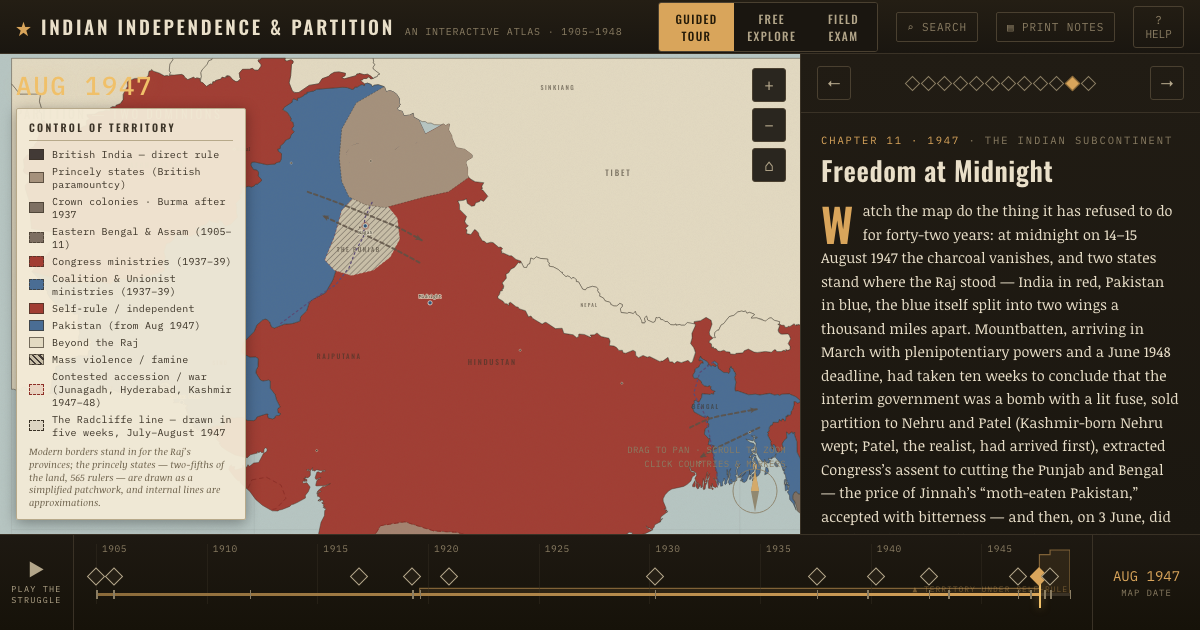
The atlas that shows it
THE FREE PRINTABLE STUDY GUIDE
Get the printable study guide for Indian Independence & Partition free. I’ll send you a few short letters, then one when a new atlas opens. That’s all. — Paul
NO TRACKING · YOUR ADDRESS IS USED FOR THE DISPATCH AND NOTHING ELSE · UNSUBSCRIBE ANYTIME