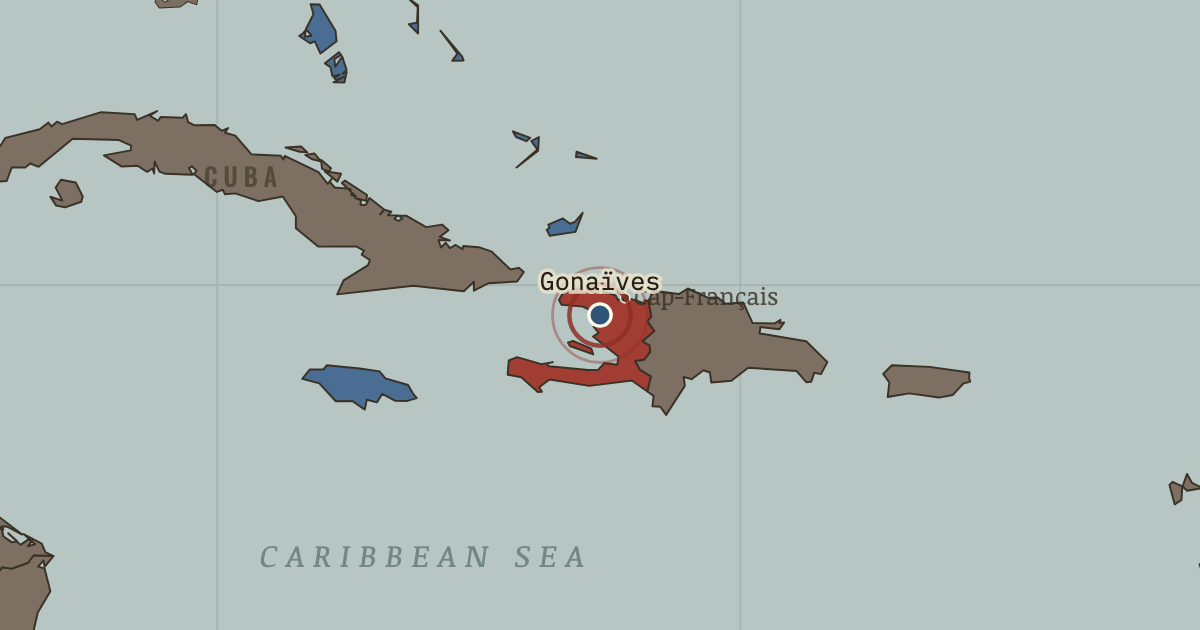
1 Jan 1804 — Dessalines proclaimed the free state of Haiti in the square of Gonaïves. The choice of the Taíno name was deliberate. The age’s only revolution of the enslaved was complete.
WW2 is free in full, and chapter 1 of every atlas is free. A free account opens 3 more chapters a day. Starter, at $9 a month, opens all 21 with no daily limit — see the plans.
1 JANUARY 1804 · THE AGE OF REVOLUTIONS, 1775–1848
The moment in context
The wealth of Saint-Domingue depended on sugar and coffee grown by enslaved people whose mortality was extraordinarily high. When revolution in France raised questions about citizenship, the colony's planters, poorer whites and free people of color fought over who should exercise authority. Their quarrel opened a different question: whether plantation slavery itself would survive. Enslaved organizers rose in August 1791, and the revolt spread across the northern plain. Restoring the old order would now require a major war.
From Haitian Revolution, chapter 5 of The Age of Revolutions, 1775–1848 (JAN 1804).
Why it happened — A plantation society in revolt. About ten enslaved people lived in Saint-Domingue for every free person, and many had been born in Africa. The plantation system produced immense…
The turn — Vertières, 18 November 1803. On 18 November 1803, at Vertières, former enslaved people fought the army of a power that had abolished slavery and restored it elsewhere.…
What it changed — The price of independence. Independence brought costly pressure from abroad. The United States embargoed trade in 1806. In 1825 French warships accompanied a demand for 150…