ON THIS DAY ·
Delhi Durbar
1 Jan 1903 — At Curzon’s Coronation Durbar, 173 princes rode past according to their rank in a hierarchy of gun-salutes, from 21 guns down to 9. The pageant gave the Raj an appearance of permanence. It had forty-four years left.
WW2 is free in full, and chapter 1 of every atlas is free. A free account opens 3 more chapters a day. Starter, at $9 a month, opens all 21 with no daily limit — see the plans.
Free printable Indian independence study guide, sent by email ↓
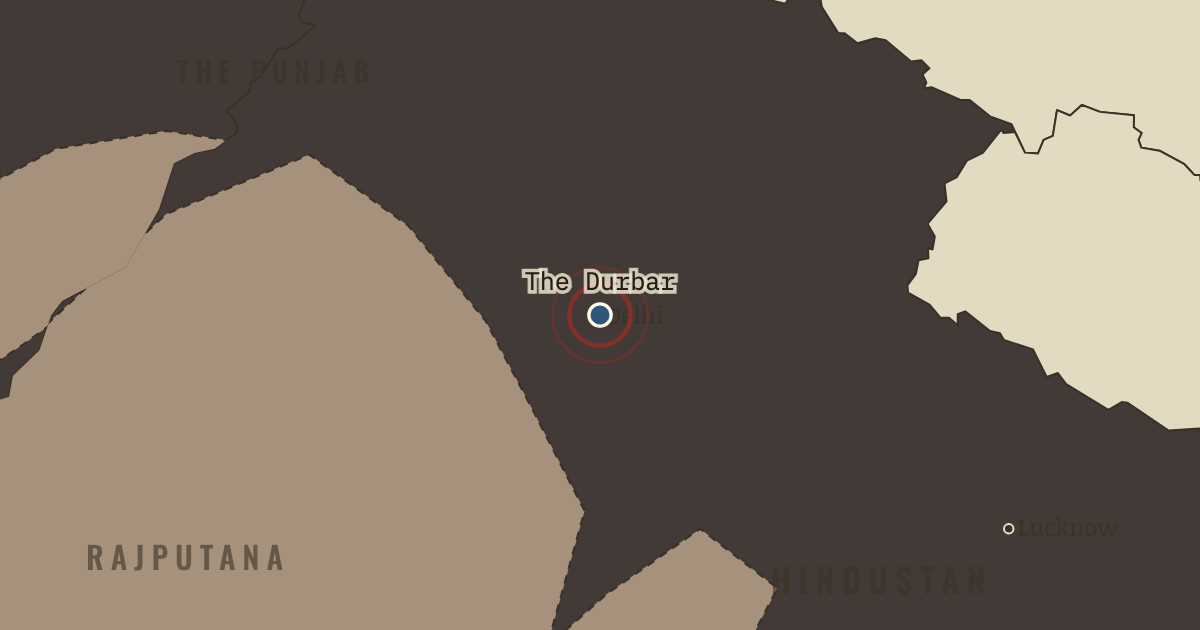
The moment in context
At the Delhi durbar of 1903, Lord Curzon presented an image of imperial permanence. The viceroy, regarded as the ablest and most self-assured of his officeholders, arranged a Mughal-style pageant in which 173 princes rode past in the order of their gun-salutes. Behind the spectacle stood an extraordinary administrative arithmetic: one viceroy answerable to London governed some 300 million people with about 1,100 covenanted civil servants and an army largely paid for by Indians.
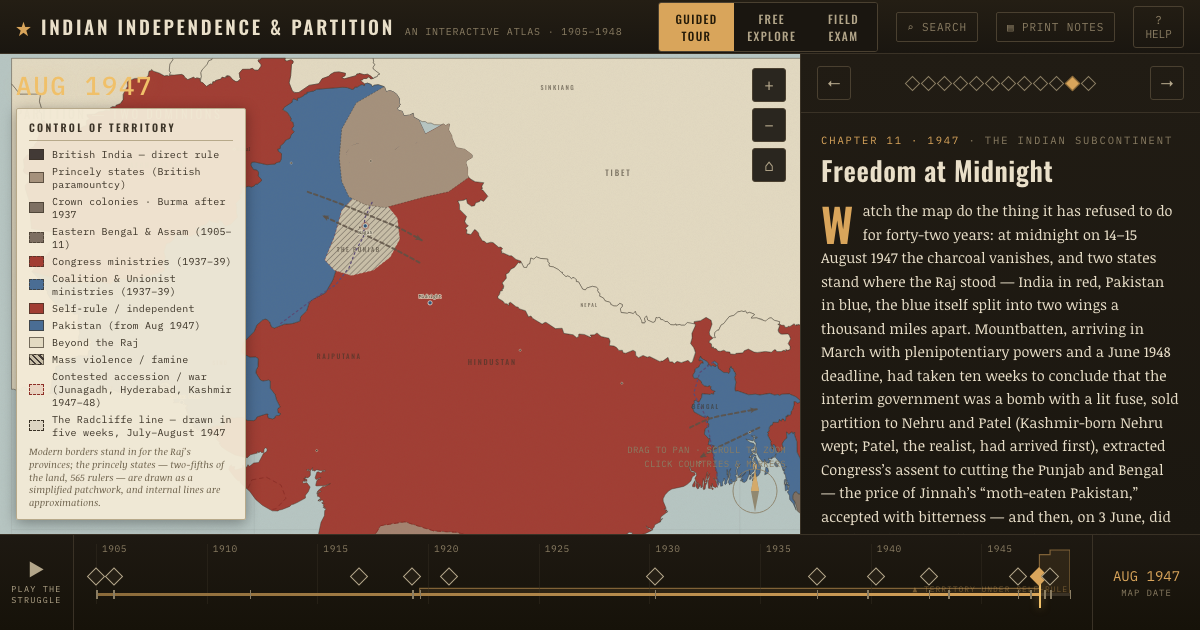
From British Raj at its height, chapter 3 of Indian Independence & Partition, 1857–1964 (JAN 1905).
The place: Delhi Durbar — map and full story →
Teach this in 5 minutes
- Why it happened — Conquest completed, confidence at its peak. By 1905 British officials could look back on half a century in which the conquest appeared settled. The Mutiny of 1857 had been crushed, Crown rule…
- The turn — The Delhi durbar, 1 January 1903. On 1 January 1903 Curzon placed the princes in order of gun-salute before an audience of Indian masses. The Mughal ceremony proclaimed an empire at…
- What it changed — Curzon overreaches within the year. Curzon's confidence carried into his partition of Bengal in 1905. He considered the administrative measure so rational that serious resistance…
Then ask the room: The Raj governed 300 million people with a few thousand British officials. Was that a sign of strength or of fragility? The argued answer is on the chapter page →
The atlas that shows it
THE FREE PRINTABLE STUDY GUIDE
Get the printable study guide for Indian Independence & Partition free. I’ll send you a few short letters, then one when a new atlas opens. That’s all. — Paul
NO TRACKING · YOUR ADDRESS IS USED FOR THE DISPATCH AND NOTHING ELSE · UNSUBSCRIBE ANYTIME