ON THIS DAY ·
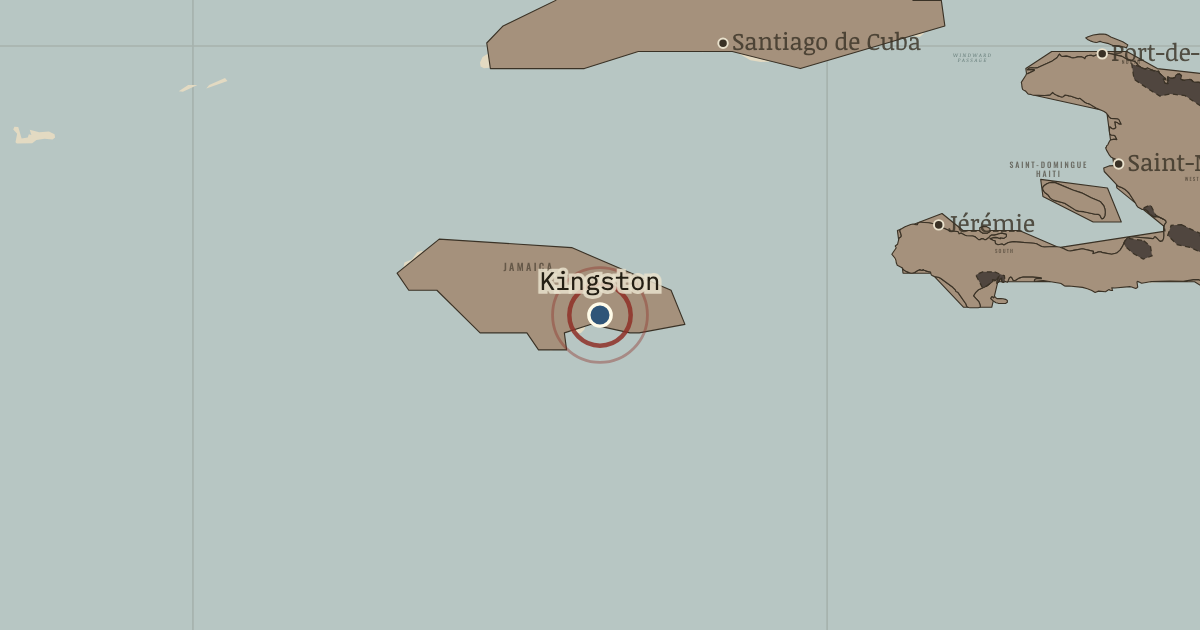
Kingston, Jamaica
1789–1962 — Jamaica, Britain’s richest sugar island, rivaled Saint-Domingue and held a quarter of a million enslaved people. Britain launched its 1793 invasion of Saint-Domingue from here. Slavery ended in 1834–38, and Jamaica gained independence on 6 August 1962.
WW2 is free in full, and chapter 1 of every atlas is free. A free account opens 3 more chapters a day. Starter, at $9 a month, opens all 21 with no daily limit — see the plans.
Free printable Haiti and Kenya independence study guide, sent by email ↓
The moment in context
The sugar on European tables passed through a system that joined French ports, African coasts and Caribbean plantations. Ships left Nantes, Bordeaux and Le Havre carrying French goods, bought captives in Africa and landed nearly 30,000 people a year in Saint-Domingue in the late 1780s. Most came from West Central Africa, the region of the Kongo kingdom, and the Bight of Benin, on the coast of present-day Togo, Benin and southwestern Nigeria. From roughly 800 sugar estates and more than 3,000 coffee farms, produce went back to France for refining and re-export across Europe. The arrows trace this traffic. Cap-Français, the main port, known to everyone as Le Cap, had a theater, newspapers and a scientific society. Its prosperity was inseparable from the violence that supplied its labor.
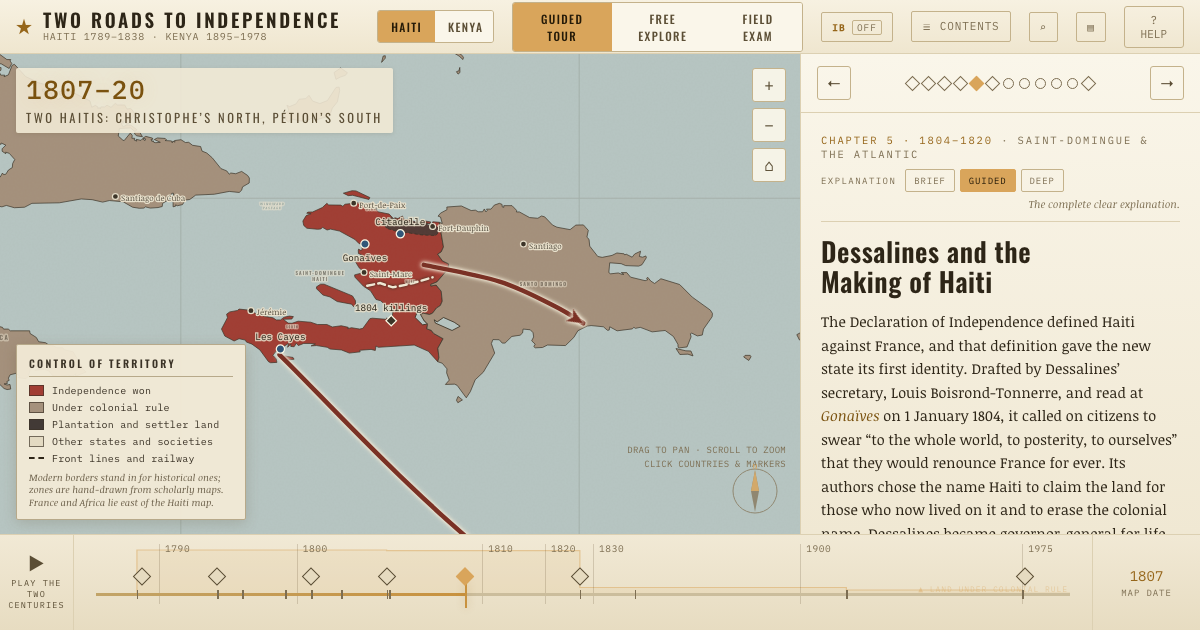
From Slavery in colonial Saint-Domingue, chapter 1 of Two Roads to Independence: Haiti 1789–1838 and Kenya 1895–1978 (1789).
The place: Kingston, Jamaica — map and full story →
Teach this in 5 minutes
- Why it happened — Sugar demanded an unending supply of labour. Cane had to be cut and milled within hours before it spoiled. That made sugar, the eighteenth century's most profitable crop, exceptionally…
- The turn — Cap-Français, autumn 1789. News from France reached Le Cap in autumn 1789 with several groups ready to draw different lessons from it. The Estates-General, the king's…
- What it changed — The colonists demand power. The planters created colonial assemblies to pursue autonomy against the royal governor. At Saint-Marc in 1790, the most radical assembly insisted…
Then ask the room: Was Saint-Domingue’s wealth the main reason it erupted into revolution? The argued answer is on the chapter page →
The atlas that shows it
THE FREE PRINTABLE STUDY GUIDE
Get the printable study guide for Two Roads to Independence free. I’ll send you a few short letters, then one when a new atlas opens. That’s all. — Paul
NO TRACKING · YOUR ADDRESS IS USED FOR THE DISPATCH AND NOTHING ELSE · UNSUBSCRIBE ANYTIME