ON THIS DAY ·
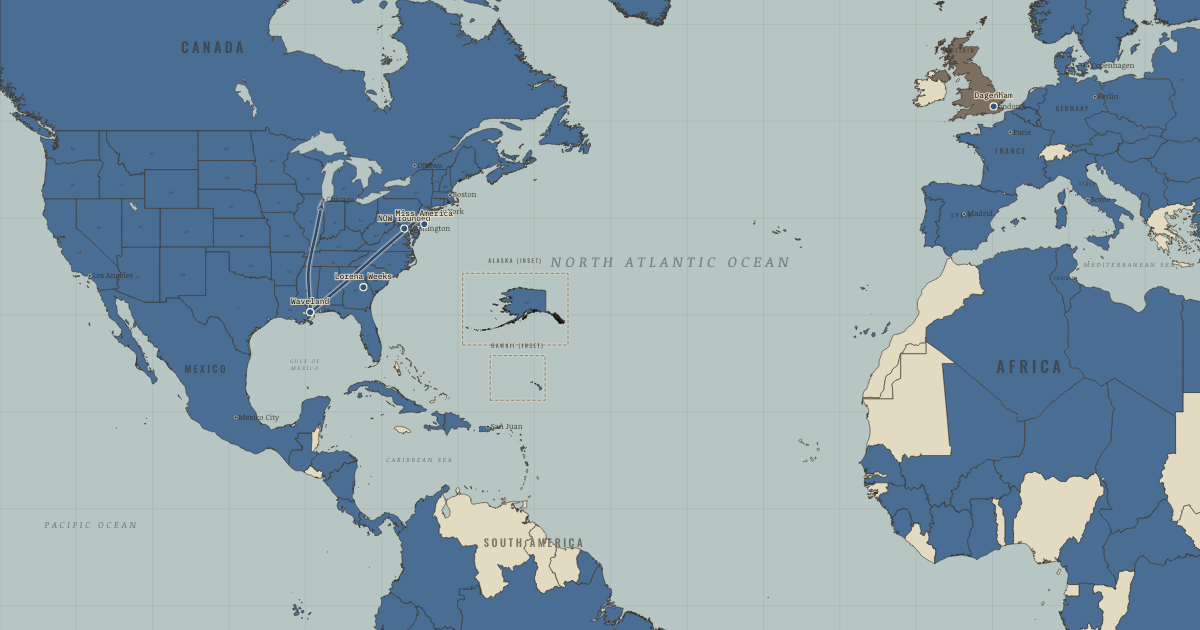
Ford Dagenham sewing machinists’ strike
187 sewing machinists walk out at Ford’s Dagenham plant over a regrading that called their work less skilled. Their three-week strike helps win Britain’s Equal Pay Act two years later.
WW2 is free in full, and chapter 1 of every atlas is free. A free account opens 3 more chapters a day. Starter, at $9 a month, opens all 21 with no daily limit — see the plans.
Free printable Feminism and the Tunisian Revolution study guide, sent by email ↓
The moment in context
Title VII’s prohibition of sex discrimination began with a contested political maneuver. On 8 February 1964 Howard Smith, a Virginia congressman opposed to the civil-rights bill, proposed adding “sex” to its forbidden grounds of employment discrimination. Smith had long supported the Equal Rights Amendment (ERA), a proposed constitutional guarantee of equal rights regardless of sex, and historians still debate his motives. Martha Griffiths and other congresswomen seized the opportunity, and the amendment passed.
From Title VII and the founding of NOW, chapter 2 of Protest and Change: Second-Wave Feminism and Tunisia, 1945–2015 (1970).
Teach this in 5 minutes
- Why it happened — A civil-rights law with a sex clause. Once Title VII prohibited sex discrimination, a job advertisement marked “male” or a lower pay scale could be presented as evidence that the law was…
- The turn — The founding of NOW, 30 June 1966. Books and commissions had supplied ideas and contacts. NOW, founded on 30 June 1966, added a permanent national organization with a program,…
- What it changed — The EEOC is forced to act. NOW’s pressure and thousands of complaints helped push the EEOC to rule in 1968 that sex-segregated job advertisements were illegal. From 1969…
Then ask the room: Which did more to create change for American women in the 1960s: the law, or the movement that formed to enforce it? The argued answer is on the chapter page →
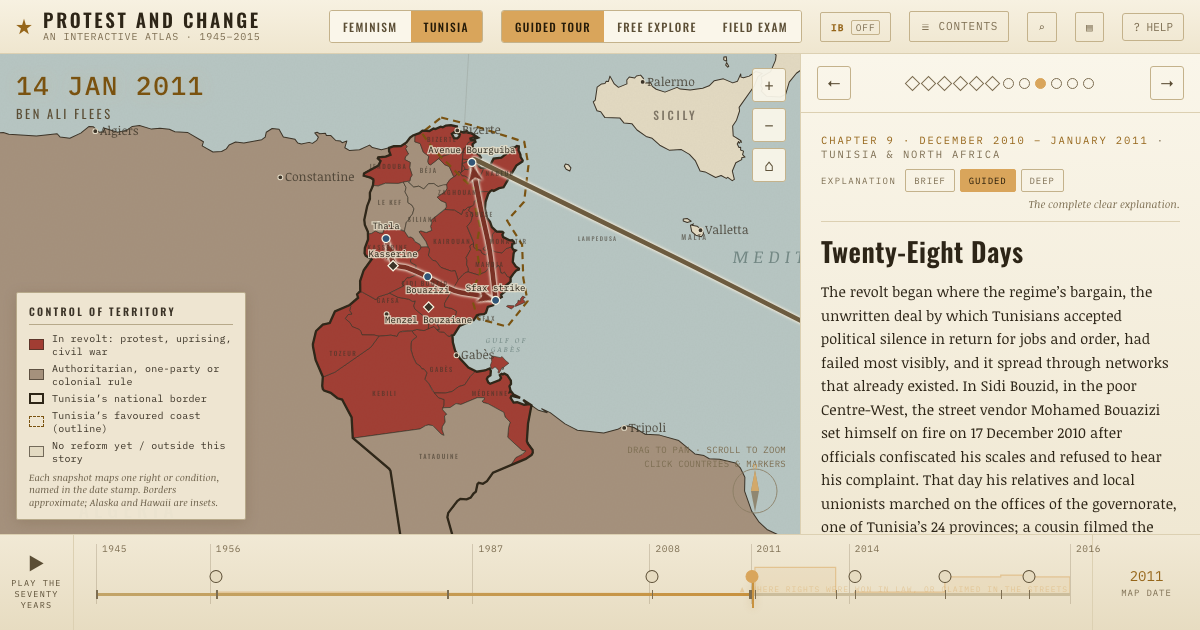
The atlas that shows it
THE FREE PRINTABLE STUDY GUIDE
Get the printable study guide for Protest and Change free. I’ll send you a few short letters, then one when a new atlas opens. That’s all. — Paul
NO TRACKING · YOUR ADDRESS IS USED FOR THE DISPATCH AND NOTHING ELSE · UNSUBSCRIBE ANYTIME