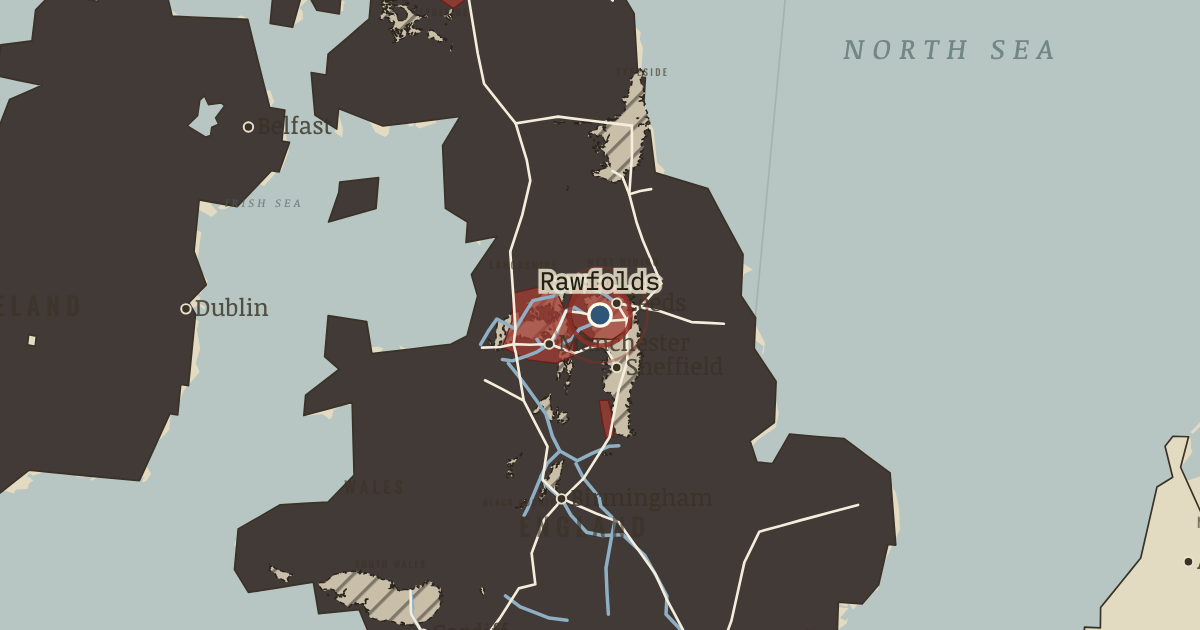
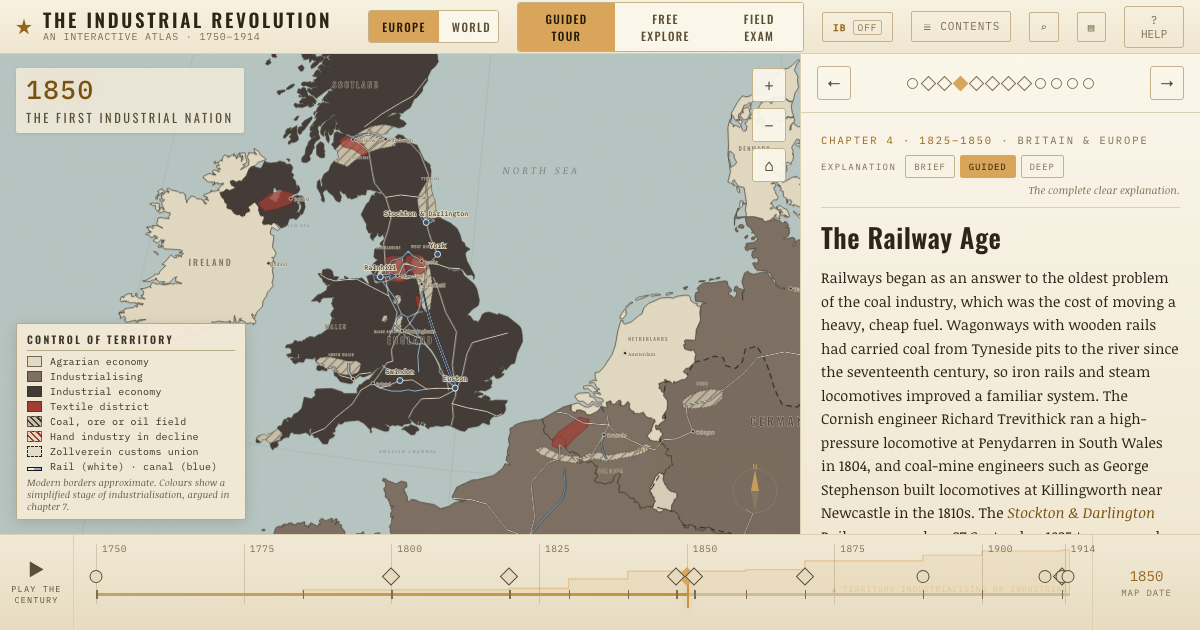
11–12 Apr 1812 — Shearing frames threaten the croppers' trade, and about 150 of them attack William Cartwright’s mill. The defenders fire muskets, killing two attackers. The Luddite rising reaches its crest and is broken.
WW2 is free in full, and chapter 1 of every atlas is free. A free account opens 3 more chapters a day. Starter, at $9 a month, opens all 21 with no daily limit — see the plans.
12 APRIL 1812 · THE INDUSTRIAL REVOLUTION, 1750–1914
The moment in context
A stocking knitter in the Midlands rented the frame on which he worked at home. Pay per stocking was falling, and wide frames produced cheap, poorly finished goods. From Arnold on 11 March 1811, knitters broke the frames of employers who paid low rates while sparing those who paid fairly. Their choice of target carried a demand about the terms of work.
Why it happened — Machines threatened skilled trades. A cropper had served a seven-year apprenticeship to finish woolen cloth by hand; a weaver might have earned a craftsman's wage. Shearing frames…
The turn — Peterloo, 16 August 1819. The crowd at St Peter's Field in Manchester came peacefully to demand the vote. Perhaps 60,000 attended, many marching in disciplined ranks behind…
What it changed — Reform reaches the middle classes first. In 1832 the Reform Act gave Manchester, Birmingham and Leeds their own MPs and enfranchised many middle-class men. Industrial wealth gained…
Get the printable study guide for The Industrial Revolution free. I’ll send you a few short letters, then one when a new atlas opens. That’s all. — Paul
NO TRACKING · YOUR ADDRESS IS USED FOR THE DISPATCH AND NOTHING ELSE ·
UNSUBSCRIBE ANYTIME