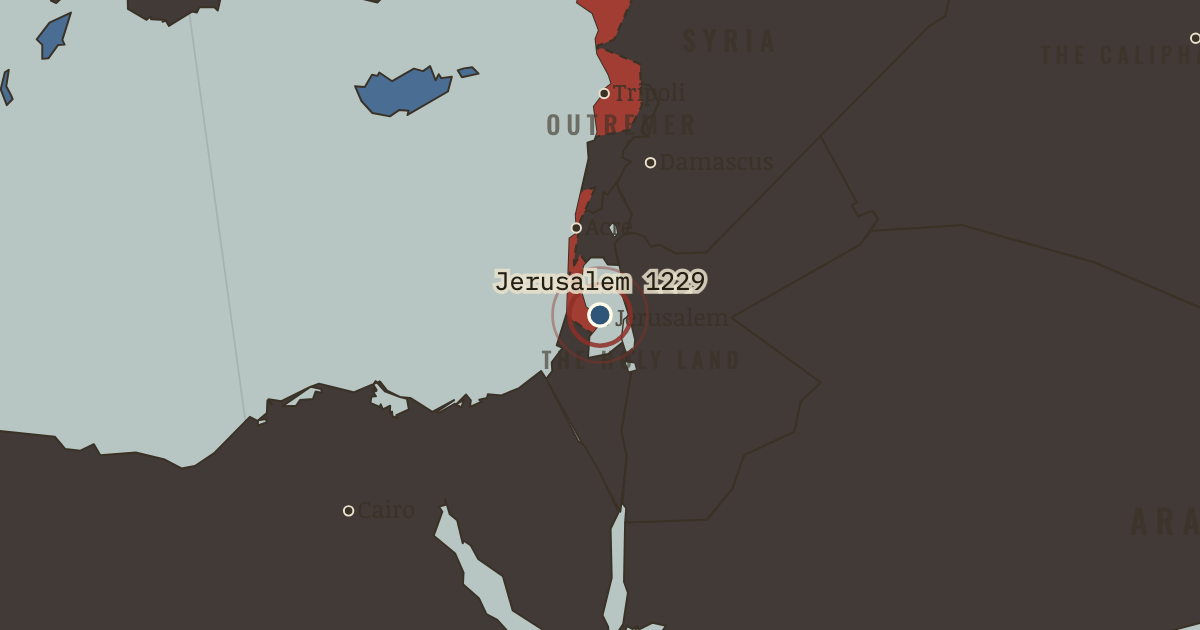
18 Feb 1229 — Emperor Frederick II regains Jerusalem by negotiation with Sultan al-Kamil, without a battle. Frederick has been excommunicated. The king condemned by the Pope is the one who takes the city.
WW2 is free in full, and chapter 1 of every atlas is free. A free account opens 3 more chapters a day. Starter, at $9 a month, opens all 21 with no daily limit — see the plans.
Richard’s judgment about Jerusalem shaped the campaigns that followed him. Egypt supplied regional rulers with grain, taxes and fleets; a crusade that weakened Egypt might therefore make Jerusalem more secure. This was a strategic reason to attack the Nile, even though the holy city lay elsewhere.
Why it happened — The Egypt-first doctrine. Richard’s insight (Ch. 7) led later crusade leaders to look to Egypt for a secure Jerusalem. Its resources made it a valuable target, but the…
The turn — Jerusalem regained by treaty, 18 February 1229. Frederick II and al-Kamil agreed on 18 February 1229 to return Jerusalem to Christian control. The city had been recovered by an excommunicated…
What it changed — A treaty-held Jerusalem, then gone. The Jerusalem Frederick obtained by treaty was poorly defended and did not remain under Christian control. Khwarezmian mercenaries sacked it in…
Then ask the room: Frederick II recovered Jerusalem by treaty and faced condemnation; Louis IX fought, failed and became a saint. What does the contrast tell us about crusading? The argued answer is on the chapter page →